i Short answer
MetaTrader 4 and MetaTrader 5 remain the most widely supported platforms among FSCA-regulated brokers.
Many brokers also offer proprietary web and mobile platforms with a more modern, streamlined interface.
📋 ON THIS PAGE
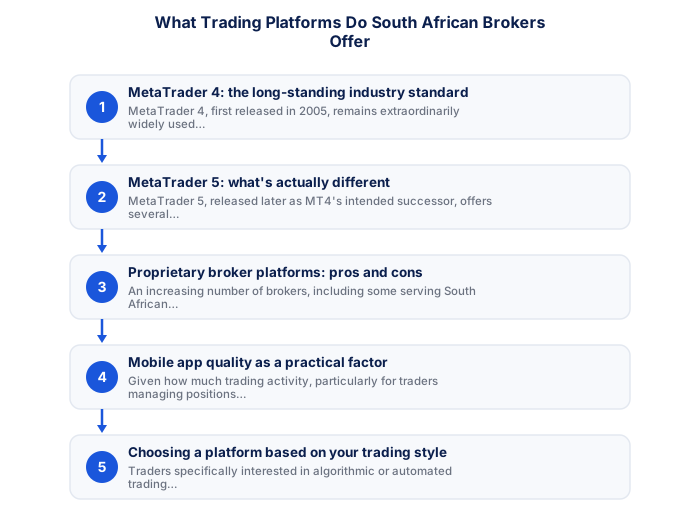
1. MetaTrader 4: the long-standing industry standard
MetaTrader 4, first released in 2005, remains extraordinarily widely used across the retail forex and CFD trading industry globally, including among FSCA-regulated South African brokers, despite its age. Its longevity reflects a genuinely large, mature ecosystem of third-party indicators, automated trading scripts (Expert Advisors), and educational resources built up over nearly two decades, along with broad familiarity among traders who may have learned on this specific platform.
MT4's interface, while dated by current design standards, remains functional and reliable for core trading needs: charting across multiple timeframes, a wide range of built-in and custom technical indicators, and straightforward order management. Many traders specifically value MT4 precisely because its long-established nature means fewer surprises and a large community generating ongoing tools and educational content around it.
See also: What Is an Account Base Currency and Can I Change It?
See also: What Are Common SA Trading Scams and How Do I Spot Them?
See also: How Do EFT Deposits Work for South African Trading Accoun
See also: What Is the FAIS Act and How Does It Relate to Trading?
See also: How Do I Read an Economic Calendar in South African Time?
| Feature | MT4 | MT5 |
|---|---|---|
| Industry adoption | Long-standing standard | Growing |
| Asset classes supported | Primarily forex/CFDs | Broader, including more instrument types |
| Programming language | MQL4 | MQL5 |
| Order types | Fewer | More |
2. MetaTrader 5: what's actually different
MetaTrader 5, released later as MT4's intended successor, offers several technical improvements: additional order types, more built-in timeframes and technical indicators, an integrated economic calendar, and improved backtesting capabilities for those developing and testing automated trading strategies. Despite these improvements, MT4 has remained stubbornly popular due to its established ecosystem, meaning many brokers continue offering both platforms in parallel rather than fully transitioning clients to MT5 alone.
For most retail traders without highly specific advanced needs (particularly around algorithmic trading strategy development, where MT5's improvements are most pronounced), the practical difference between MT4 and MT5 for everyday manual trading is often less significant than the difference between either MetaTrader platform and a fundamentally different proprietary platform interface.
- Search FSP name or number at fsca.co.za
- Confirm licence is current and not suspended
- Check scope covers forex and CFD activity
- Confirm client funds in segregated accounts
- Read FSCA enforcement actions history
- Test customer support before depositing
- Client funds legally segregated
- FSCA complaints process available
- SA consumer protections apply
- ZAR account, no FX conversion costs
- Some offshore brokers offer wider instruments
- Regulatory overhead passed on in spreads
- Stricter position limits for retail clients
- FICA verification required before trading
- Client funds segregated
- Formal FSCA complaints process
- SA consumer protections apply
- ZAR account available
- Fund safety not guaranteed
- Overseas disputes only
- SA law does not apply
- Currency conversion costs
3. Proprietary broker platforms: pros and cons
An increasing number of brokers, including some serving South African clients, have developed their own proprietary web-based and mobile trading platforms, often emphasising a more modern, streamlined visual design and sometimes integrating broker-specific features (like proprietary market analysis, social trading elements, or simplified onboarding flows) that aren't available within the standard MetaTrader ecosystem.
The trade-off is that proprietary platforms typically lack the extensive third-party tool ecosystem that's built up around MetaTrader over many years, and switching between different brokers' proprietary platforms (if you ever change broker) means learning an entirely new, broker-specific interface each time, compared to MetaTrader's relative consistency across different brokers that all support the same underlying platform.
4. Mobile app quality as a practical factor
Given how much trading activity, particularly for traders managing positions around work or other commitments, happens via mobile devices, the quality of a broker's mobile app, covering both official MetaTrader mobile apps and any proprietary mobile offerings, is a genuinely practical factor worth testing directly rather than assuming all mobile trading apps perform similarly. Differences in app stability, notification reliability for price alerts, and ease of placing and managing orders on a smaller screen can meaningfully affect your actual trading experience.
Testing a candidate broker's specific mobile app through a demo account, ideally over a period of days or weeks rather than a single brief session, gives a more reliable sense of real-world mobile usability than a quick initial impression, particularly if mobile access is likely to be your primary or frequent way of interacting with your trading account.
| Protection | FSCA Regulated | Offshore Unregulated |
|---|---|---|
| Client fund segregation | ✓ Required | Varies by broker |
| SA complaints process | ✓ Available | ✗ Not available |
| SA consumer law applies | ✓ Yes | ✗ No |
| ZAR account available | ✓ Typically | Often USD/EUR only |
5. Choosing a platform based on your trading style
Traders specifically interested in algorithmic or automated trading strategies, or wanting access to the largest possible library of existing third-party indicators and tools, are generally better served by MetaTrader (particularly MT5 for newer algorithmic development, given its improved backtesting capabilities) given the platform's mature, extensive ecosystem built up around these use cases over many years.
Traders prioritising a clean, modern interface and a more streamlined, simplified day-to-day experience, particularly newer traders who might find MetaTrader's more dated, feature-dense interface initially overwhelming, may find a well-designed proprietary platform more approachable, provided the specific broker's proprietary offering is genuinely well-built and not simply a thin, less capable wrapper around basic trading functionality.
6. Switching platforms later: what's involved
If you initially choose a broker based partly on platform preference and later want to switch, either to a different broker entirely, or because a broker you're using adds support for a platform you'd prefer, be aware this typically means learning a new interface from scratch, and any custom indicators, saved chart templates, or automated trading scripts built specifically for your previous platform generally don't transfer directly to a fundamentally different platform.
This is worth factoring into your initial platform choice if you anticipate investing significant time in building custom analysis templates or, particularly, automated trading scripts, choosing a platform with the ecosystem and long-term support most likely to remain relevant reduces the friction of a potential future switch, even though switching itself always remains a genuinely available option if circumstances change.
Ask specifically whether your account is ring-fenced against a negative balance. negative balance protection should be stated in the agreement rather than in support chat.
Proprietary platforms vary by broker and may lack EA support.
MT4 and MT5 are industry-standard platforms available at most South African brokers, with strong EA support and high customisation. Proprietary platforms vary significantly between brokers and rarely support external EAs.
★ Why It Matters
Something worth testing directly before committing: open a demo account on both MT4/MT5 and any proprietary platform a broker offers, and run the exact same simple task (placing and modifying an order) on each, the genuine usability difference is often more noticeable in practice than in any feature comparison list.
✕ Common mistakes
- Choosing a platform based on a feature comparison list alone. Direct hands-on testing of a simple task reveals usability differences a list doesn't capture.
- Assuming MetaTrader and proprietary platforms are functionally interchangeable. Genuine usability and feature differences can matter for your specific workflow.
- Not testing both order placement and modification on each platform before committing. This specific, simple test often reveals more than browsing marketing screenshots.
- Treating platform popularity as the only relevant selection factor. Personal fit with your own workflow matters just as much.
Key Takeaways
- MetaTrader 4/5 and proprietary web platforms are most common among FSCA-regulated brokers. Learn the differences and which suits your trading style.
- MetaTrader 4 and MetaTrader 5 remain the most widely supported platforms among FSCA-regulated brokers.
- Many brokers also offer proprietary web and mobile platforms with a more modern, streamlined interface.
- MetaTrader 4: the long-standing industry standard.
- MetaTrader 5: what's actually different.
Frequently asked follow-up questions
Is MT5 simply a better version of MT4 in every way?
Not entirely, MT5 offers genuine technical improvements, but MT4's massive existing ecosystem of third-party tools and broad familiarity among traders means it remains a genuinely competitive choice rather than being strictly outdated.
Can I use the same MetaTrader account login across different devices?
Yes, MetaTrader accounts are generally designed to be accessed across desktop, web, and mobile versions of the platform using the same login credentials, providing consistency across devices.
Do all FSCA-regulated brokers support MetaTrader?
Most do given its industry prevalence, but not universally, checking a specific broker's supported platforms directly before opening an account is worthwhile if platform choice matters significantly to you.
