i Short answer
This document explicitly states a broker's specific commitment and conditions around negative balance protection.
It's worth checking directly rather than assuming this protection applies universally or unconditionally.
📋 ON THIS PAGE
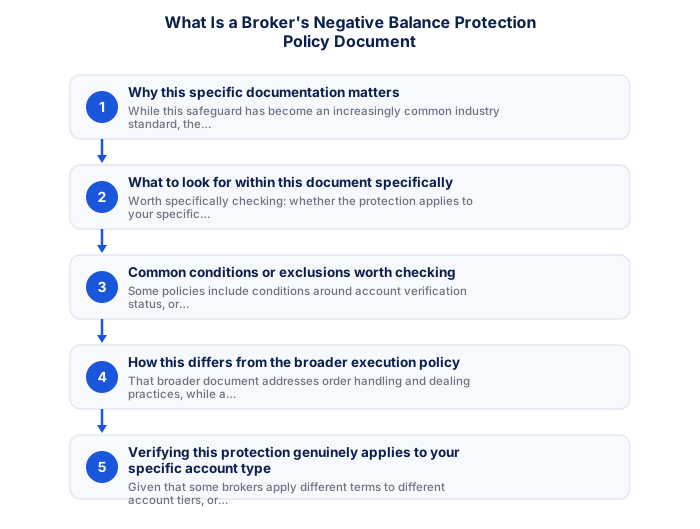
- Why this specific documentation matters
- What to look for within this document specifically
- Common conditions or exclusions worth checking
- How this differs from the broader execution policy
- Verifying this protection genuinely applies to your specific account type
- What to do if this documentation is unclear or missing
1. Why this specific documentation matters
It is worth establishing in writing whether a loss can exceed your balance. negative balance protection is a term, not a default.
It's worth treating marketing copy and the actual legal policy document as two genuinely different sources, even when they describe the same underlying protection. A broker's homepage might state 'negative balance protection included' in a single confident line, while the actual policy document lays out the specific conditions, account types, and edge cases that determine exactly when and how that protection genuinely applies.
2. What to look for within this document specifically
Worth checking: whether the protection applies to your specific account type (some brokers distinguish between retail and professional client classifications), whether it applies across all instrument categories, and any specific circumstances where the protection might not apply, such as extreme, exceptional market disruption events.
It's worth reading this section slowly rather than skimming for the headline commitment alone, since the specific conditions and exceptions are exactly where meaningful differences between brokers tend to live. Two brokers can both technically offer this protection while differing considerably in how broadly or narrowly it actually applies in practice.
- Search FSP name or number at fsca.co.za
- Confirm licence is current and not suspended
- Check scope covers forex and CFD activity
- Confirm client funds in segregated accounts
- Read FSCA enforcement actions history
- Test customer support before depositing
- Client funds legally segregated
- FSCA complaints process available
- SA consumer protections apply
- ZAR account, no FX conversion costs
- Some offshore brokers offer wider instruments
- Regulatory overhead passed on in spreads
- Stricter position limits for retail clients
- FICA verification required before trading
- Client funds segregated
- Formal FSCA complaints process
- SA consumer protections apply
- ZAR account available
- Fund safety not guaranteed
- Overseas disputes only
- SA law does not apply
- Currency conversion costs
3. Common conditions or exclusions worth checking
Some policies include conditions around account verification status tied to FICA requirements, or specific exclusions for certain unusual circumstances. Understanding these specific conditions, rather than assuming blanket, unconditional protection, ensures you have an accurate picture of exactly when and how this safeguard genuinely applies to your account.
This is worth checking specifically if your account isn't yet fully FICA-verified, since a policy conditioned on verified status could leave a newly opened, still-unverified account with less certain protection than you might assume, worth confirming directly rather than discovering the gap only if it ever actually mattered.
4. How this differs from the broader execution policy
The broader execution policy document addresses order handling and dealing practices, while a negative balance protection policy specifically addresses this particular safeguard. Some brokers combine this within their broader execution policy, while others publish it as a separate, dedicated document.
Knowing which specific document to check, rather than assuming this detail is covered somewhere within general terms and conditions, saves time when you're specifically trying to verify this protection rather than researching a broker's policies more broadly.
| Protection | FSCA Regulated | Offshore Unregulated |
|---|---|---|
| Client fund segregation | ✓ Required | Varies by broker |
| SA complaints process | ✓ Available | ✗ Not available |
| SA consumer law applies | ✓ Yes | ✗ No |
| ZAR account available | ✓ Typically | Often USD/EUR only |
5. Verifying this protection genuinely applies to your specific account type
Given that some brokers apply different terms to different account tiers or different client classifications, confirming this protection applies to your particular account type, rather than assuming a general statement applies universally across all account variations, gives more accurate, personally relevant assurance.
This is worth revisiting if you ever consider applying for professional client reclassification, discussed elsewhere on this site, since that specific change can directly affect whether negative balance protection continues to apply to your account, a detail worth confirming explicitly before making that particular decision.
6. What to do if this documentation is unclear or missing
If you can't locate clear documentation on this specific topic, contacting your broker's support team directly for explicit written confirmation gives a more reliable basis for understanding this protection than relying on general industry assumptions or informal verbal statements alone.
A genuinely well-regulated broker will also keep client funds in segregated accounts, separate from the company's own operating capital, so your deposited funds aren't exposed if the broker itself runs into financial difficulty.
A negative balance protection policy should clearly state it resets your balance to zero after an extreme event exceeding your deposit. Reading for exclusions and verifying it applies to retail accounts matters.
★ Why It Matters
Worth checking for a specific clause: some negative balance protection policies exclude extreme, exceptional market events (a specific historical event many brokers reference). Confirming whether this carve-out exists in your broker's policy matters more during genuinely extreme conditions than in normal trading.
✕ Common mistakes
- Assuming this protection applies unconditionally in every scenario. Some policies exclude genuinely extreme, historic volatility events.
- Not checking for this specific exclusion clause before relying heavily on leverage. This detail matters most precisely during the conditions where protection would matter most.
- Treating verbal or marketing claims as equivalent to the actual policy document. The written policy is the only reliable source for the actual terms.
- Assuming all brokers' protection policies are worded identically. Specific conditions and exclusions vary between providers.
Key Takeaways
- This document explicitly states a broker's specific commitment and conditions around negative balance protection, worth checking directly rather than assuming.
- This document explicitly states a broker's specific commitment and conditions around negative balance protection.
- It's worth checking directly rather than assuming this protection applies universally or unconditionally.
- Why this specific documentation matters.
- What to look for within this document specifically.
Frequently asked follow-up questions
Is negative balance protection guaranteed for all South African traders?
Most FSCA-regulated brokers offer this as standard, though checking your specific broker's actual published policy gives the most accurate confirmation for your particular situation.
Does this protection ever come with a specific cost?
Generally included as standard without separate cost, though confirming this directly with your broker avoids any assumption-based misunderstanding.
Can this protection policy change after I've opened my account?
Yes, similar to other broker terms and conditions, this specific policy could potentially be updated, making periodic review worthwhile.
