i Short answer
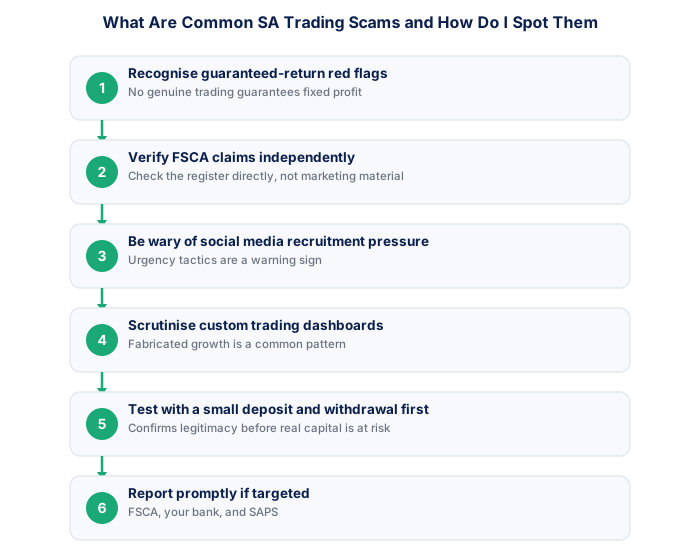
South African trading scams typically follow recurring patterns: guaranteed or fixed returns, fabricated or misused FSCA regulatory claims, high-pressure recruitment through social media, and requests to trade through unverifiable or unlicensed platforms.
The single most reliable protection is direct, independent verification, checking a broker or scheme against the FSCA's own register rather than trusting screenshots, testimonials, or claims made by the scheme itself.
📋 ON THIS PAGE
1. Guaranteed or fixed-return schemes
Any scheme promising a fixed or guaranteed monthly return, commonly framed as something like "5% per month guaranteed", is a definitive warning sign. Genuine trading, regardless of skill, involves variable returns and periods of loss; no legitimate trading activity can honestly guarantee a fixed positive return.
These schemes often operate as Ponzi structures in practice, paying early investors from new investor deposits rather than genuine trading profit, which is why they can appear to work convincingly for months before collapsing once new deposits slow.
2. Fabricated or misused FSCA regulatory claims
Scammers frequently claim FSCA regulation or display what appears to be an official FSCA logo or registration number. This claim is trivially easy to fabricate and equally easy to verify independently, since the FSCA maintains a public, searchable register of all licensed financial services providers.
A genuine FSP number should be checked directly on the FSCA's own register, not simply trusted because it appears on the scheme's marketing material or website. Scammers sometimes use a real FSP number belonging to a different, legitimate entity entirely, which is why matching the exact registered company name matters, not just the number itself.
- FSCA-regulated broker verified at fsca.co.za
- Demo account tested for minimum 60 days
- Trading plan written: entry, exits, position sizing
- Risk per trade defined (1-2% of account)
- Backup internet connection tested for load shedding
- Tax implications understood
| Signal | Red Flag | Green Flag |
|---|---|---|
| Returns | Guaranteed or fixed monthly percentage | Variable, no guarantees made |
| FSCA claims | Unverifiable or borrowed FSP number | Matches exactly on the FSCA register |
| Recruitment | Urgency, lifestyle imagery, limited spots | No pressure tactics |
| Platform | Custom, unverifiable dashboard | Recognised platform like MT4/MT5 |
3. High-pressure social media recruitment
A recurring South African pattern involves recruitment through WhatsApp groups, Telegram channels, or Instagram accounts showcasing a lifestyle of cars, watches, and cash, often from someone presenting as a "mentor" or "signal provider" who ultimately directs followers toward depositing into a specific unverified platform.
The urgency tactics common to this recruitment style, limited spots, time-pressured bonuses, exclusive access, are themselves a warning sign; legitimate financial education and legitimate brokers rarely need to manufacture artificial urgency to attract clients.
4. Fake or cloned trading platforms
Some schemes present a custom dashboard showing impressive account growth that is entirely fabricated, disconnected from any real trading activity or genuine market execution. Withdrawal requests on these platforms are typically delayed, met with additional fee demands, or simply ignored once a meaningful amount is requested.
A genuine, FSCA-regulated broker's platform is typically a recognised, established system, MetaTrader 4 or 5 being the most common, rather than a custom-built dashboard unique to the specific scheme, which is itself worth treating as a signal for closer scrutiny.
| Item | Detail |
|---|---|
| Regulator | FSCA, fsca.co.za |
| Exchange control | SARB, resbank.co.za |
| Tax authority | SARS, sars.gov.za |
| JSE hours | 09:00-17:00 SAST Mon-Fri |
| Best forex session | 15:00-17:00 SAST |
| CGT annual exclusion | R50,000 (individuals) |
5. Practical verification steps before depositing anywhere
Search the FSCA's online register directly for the exact company name and FSP number claimed, confirming both match and that the licence is currently active rather than lapsed or under review. Independently search the company name alongside terms like "review" or "complaint" rather than relying only on testimonials the scheme itself provides.
A short trial with a small, comfortably affordable deposit, followed by an actual test withdrawal before committing further funds, is a practical way to confirm a platform behaves as claimed before meaningful capital is at risk.
6. What to do if you suspect you have already been targeted
Stop any further deposits immediately and attempt a withdrawal request as documentation of the platform's response. Report the scheme to the FSCA directly and, if funds were transferred via traditional banking channels, notify your bank promptly since some fraud-related reversals are time-sensitive.
Reporting to the South African Police Service through a formal case number, even where full recovery is unlikely, creates an official record that can support both your own position and broader FSCA or law enforcement action against the scheme.
★ Why It Matters
Worth remembering that FSCA regulation itself does not guarantee profitable trading, it only confirms the entity meets specific conduct and capital requirements; genuine regulation reduces certain risks but does not eliminate ordinary trading risk, which is a distinction scam recruiters sometimes deliberately blur.
✕ Common mistakes
- Trusting a claimed FSP number without checking the FSCA register directly. Numbers are easily fabricated or borrowed from an unrelated legitimate entity.
- Being drawn in by lifestyle-focused social media recruitment. Genuine trading education rarely relies on manufactured urgency or lifestyle imagery.
- Depositing a large amount before testing a withdrawal. A small test withdrawal early reveals platform legitimacy before significant capital is at risk.
- Assuming a professional-looking dashboard confirms legitimacy. Fabricated account growth on a custom platform is one of the most common scam patterns.
Key Takeaways
- South African trading scams typically follow recurring patterns: guaranteed or fixed returns, fabricated or misused FSCA regulatory claims, high-pressure recruitment through social media, and requests to trade through unverifiable or unlicensed platforms.
- Guaranteed or fixed-return schemes.
- Fabricated or misused FSCA regulatory claims.
- High-pressure social media recruitment.
- Fake or cloned trading platforms.
See also: How Do I Start Investing With R1,000? and What Are Common Trading Education Scams to Avoid?.
Frequently asked follow-up questions
Can I get my money back from a trading scam?
Recovery is often difficult, particularly once funds have left South African banking channels, though prompt reporting to your bank and the FSCA improves the chances of any possible reversal or referral action.
How do I check the FSCA register myself?
The FSCA maintains a public online register searchable by company name or FSP number, accessible directly through the FSCA's own website rather than any third-party link a scheme provides.
Are all high-return trading claims automatically scams?
Not automatically, but any claim framed as guaranteed or fixed regardless of market conditions is inconsistent with how genuine trading works and warrants serious scrutiny.
