i Short answer
Unlike some jurisdictions with formal investor compensation schemes, South Africa relies primarily on fund segregation requirements rather than a separate guarantee fund.
📋 ON THIS PAGE
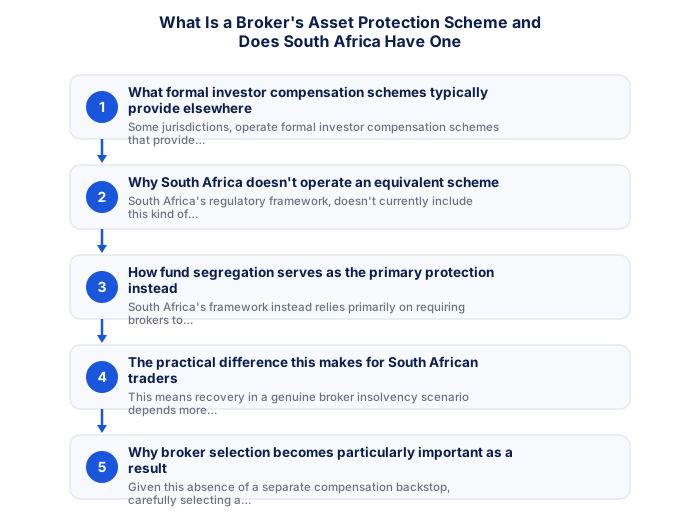
- What formal investor compensation schemes typically provide elsewhere
- Why South Africa doesn't operate an equivalent scheme
- How fund segregation serves as the primary protection instead
- The practical difference this makes for South African traders
- Why broker selection becomes particularly important as a result
- How this compares internationally
1. What formal investor compensation schemes typically provide elsewhere
Some jurisdictions operate formal investor compensation schemes that guarantee a payout up to a certain limit if a regulated broker becomes insolvent, an extra backstop beyond the broker's own fund segregation practices, one of the more notable differences between FSCA regulation and some other global regulators.
These schemes typically work by pooling contributions from participating regulated firms into a shared fund, drawn on specifically when a member firm fails and client assets can't be fully recovered through the normal insolvency process alone. It's worth understanding this as a genuinely different layer of protection from fund segregation itself, a backstop that activates specifically when segregation, for whatever reason, doesn't fully protect client money.
2. Why South Africa doesn't operate an equivalent scheme
South Africa's regulatory framework doesn't currently include a dedicated compensation fund for forex and CFD broker clients, a different regulatory design choice compared to some other major jurisdictions.
This is worth understanding as a genuine regulatory design choice rather than an oversight or gap the FSCA has simply failed to address. Different jurisdictions weigh the costs and benefits of mandatory industry-funded compensation schemes differently, and South Africa's current framework reflects a deliberate emphasis on segregation and licensing standards as the primary protective mechanism instead.
- Search FSP name or number at fsca.co.za
- Confirm licence is current and not suspended
- Check scope covers forex and CFD activity
- Confirm client funds in segregated accounts
- Read FSCA enforcement actions history
- Test customer support before depositing
- Client funds legally segregated
- FSCA complaints process available
- SA consumer protections apply
- ZAR account, no FX conversion costs
- Some offshore brokers offer wider instruments
- Regulatory overhead passed on in spreads
- Stricter position limits for retail clients
- FICA verification required before trading
- Client funds segregated
- Formal FSCA complaints process
- SA consumer protections apply
- ZAR account available
- Fund safety not guaranteed
- Overseas disputes only
- SA law does not apply
- Currency conversion costs
3. How fund segregation serves as the primary protection instead
South Africa's framework instead relies primarily on requiring brokers to keep client accounts genuinely separate from the broker's own operational funds, meant to protect client money from the broker's general creditors in the event of insolvency.
This places real weight on segregation actually being implemented correctly and consistently, not just formally required on paper. It's worth understanding segregation as an operational practice that depends on a broker's genuine internal controls and honesty, rather than a guarantee that functions automatically and independently of how well any specific broker actually manages it day to day.
4. The practical difference this makes for South African traders
This means recovery in a genuine broker insolvency depends more on how properly fund segregation was actually maintained, rather than falling back on a guaranteed, separate compensation scheme as an additional safety net.
In practice, this means the specific broker you choose carries somewhat more weight in a South African context than it might in a jurisdiction with an additional compensation scheme layered on top of segregation requirements. Two brokers might both be properly FSCA-licensed, but genuine differences in their financial stability and operational discipline matter more here, since there's no separate, guaranteed fallback if segregation practices were ever found lacking.
| Protection | FSCA Regulated | Offshore Unregulated |
|---|---|---|
| Client fund segregation | ✓ Required | Varies by broker |
| SA complaints process | ✓ Available | ✗ Not available |
| SA consumer law applies | ✓ Yes | ✗ No |
| ZAR account available | ✓ Typically | Often USD/EUR only |
5. Why broker selection becomes particularly important as a result
Given this absence of a separate compensation backstop, carefully choosing a genuinely well-regulated, financially stable broker matters more for South African traders, since segregation quality and broker financial health carry more direct weight in this regulatory environment.
This is worth translating into concrete due diligence habits: favouring brokers with a longer, stable operating history, checking for any past regulatory action or complaints through the FSCA, and being appropriately cautious about newer, less established operators offering unusually aggressive promotional terms to attract clients quickly.
6. How this compares internationally
This is one of the more significant structural differences between FSCA regulation and some other major jurisdictions' broker protection frameworks.
Before trusting any broker with real capital, it's worth directly verifying their FSP licence number on the FSCA's public register, since this single check confirms both that the licence is genuinely active and what specific activities it actually covers.
The FSCA regulatory framework provides South African retail traders with meaningful protection that extends beyond simply verifying a broker's licence number. The requirement for FSCA-regulated brokers to maintain segregated client accounts means your deposited funds are legally separated from the broker's operating funds. In the event of broker insolvency, this segregation protects client money from creditor claims against the company. FSCA-regulated brokers must also maintain adequate financial resources, submit to regulatory oversight, and adhere to disclosure requirements covering fees, risks, and conflicts of interest. For traders considering offshore brokers outside FSCA supervision, the loss of these domestic protections is a material risk consideration, particularly for larger account balances where the downside of unregulated broker failure would be financially significant.
Verifying genuine fund segregation is the closest practical equivalent.
South Africa doesn't have a UK or EU-style statutory deposit protection scheme. Verifying that your broker genuinely maintains segregated client accounts is the most important practical safeguard instead.
★ Why It Matters
Worth understanding precisely: the absence of a formal compensation scheme here means fund segregation requirements are doing more of the practical protective work than they would in a jurisdiction with both, making it worth confirming segregation specifically rather than assuming broader protection exists by default.
✕ Common mistakes
- Assuming South Africa has a formal compensation scheme like some other jurisdictions. It relies primarily on fund segregation requirements instead.
- Not confirming segregation specifically given the absence of a broader compensation fund. This makes segregation verification more important here than in jurisdictions with both protections.
- Treating the absence of a compensation scheme as meaning no protection exists at all. Segregation requirements still provide meaningful protection on their own.
- Assuming all brokers operating here are equally diligent about segregation in practice. This is worth verifying directly rather than assuming uniformly.
Key Takeaways
- Unlike some jurisdictions with formal compensation schemes, South Africa relies primarily on fund segregation requirements rather than a separate guarantee fund.
- Unlike some jurisdictions with formal investor compensation schemes, South Africa relies primarily on fund segregation requirements rather than a separate guarantee fund.
- What formal investor compensation schemes typically provide elsewhere.
- Why South Africa doesn't operate an equivalent scheme.
- How fund segregation serves as the primary protection instead.
Frequently asked follow-up questions
Could South Africa introduce a compensation scheme in the future?
Regulatory frameworks do evolve over time. Checking current FSCA announcements and policy developments gives you the most accurate, up-to-date picture of any potential future changes.
Does this mean South African traders have less protection overall?
It reflects a different regulatory structure rather than necessarily less protection overall. Fund segregation still provides meaningful protection when properly maintained.
Can I choose to use an internationally regulated broker for this additional protection instead?
Some traders do consider this, though using an international broker from South Africa brings its own separate considerations around jurisdiction and accessibility.
Does negative balance protection relate to this compensation scheme discussion?
These are distinct concepts. Negative balance protection caps losses at your deposit, while compensation schemes address broker insolvency recovery specifically.
Should this factor heavily into my broker selection decision?
It's one consideration among several, worth weighing alongside regulation, costs, and platform quality together.
