i Short answer
Fading involves deliberately trading against a current price move, anticipating its reversal, the opposite philosophy to momentum trading.
This is a higher-risk contrarian approach requiring strong supporting evidence, like clear resistance rejection.
📋 ON THIS PAGE
- The contrarian logic behind fading explained
- When fading might have genuine, evidence-based merit
- The elevated risk this approach genuinely carries
- How deliberate fading differs from simply being wrong about direction
- The psychological temptation that sometimes drives this approach
- A disciplined approach if you choose to fade a move
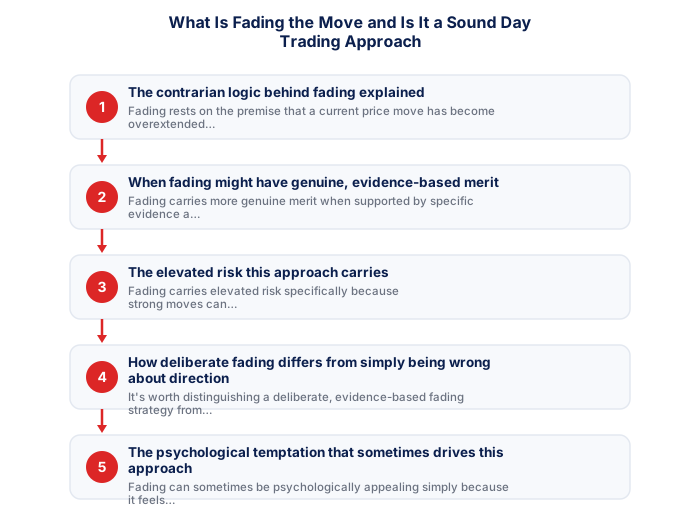
1. The contrarian logic behind fading explained
Fading rests on the premise that a current price move has become overextended and is therefore due for at least a partial reversal or pullback, representing essentially the opposite directional bet to the momentum trading, which instead bets on continuation of an existing move rather than its exhaustion.
It's worth appreciating why this approach is genuinely harder to execute well than trend-following, discussed elsewhere on this site, betting against an established, visible direction requires more conviction and precise timing than simply moving with what's already happening.
See also: A Trading VPS vs a Dedicated Laptop
2. When fading might have genuine, evidence-based merit
Fading carries more genuine merit when supported by specific evidence, a clear rejection at a significant resistance level, divergence between price and a momentum oscillator suggesting weakening underlying strength, or a clear overextension relative to typical volatility, rather than simply betting against a move purely because it has moved "far enough" by some subjective, undefined judgement.
It's worth backtesting your specific fading criteria thoroughly before trading it live, discussed elsewhere on this site regarding backtesting generally, confirming through your own historical analysis that your specific overextension signals genuinely preceded reversals, rather than assuming the general contrarian premise applies reliably to your particular approach.
3. The elevated risk this approach genuinely carries
Fading carries elevated risk specifically because strong moves can continue considerably further than a contrarian trader might expect, meaning a poorly-timed or poorly-justified fade attempt can produce significant, rapid loss if the anticipated reversal simply doesn't materialise as expected.
It's worth respecting this elevated risk through correspondingly tighter risk management, a smaller position size and more disciplined stop-loss placement than you might use for a trend-following trade, given the genuine possibility that a seemingly overextended move simply continues further.
- Economic calendar checked for high-impact events
- Key levels marked for target instruments
- Maximum trades per session defined
- Stop-losses set on overnight positions
- Backup connectivity available
- Eskom schedule checked
- Post-session journal time scheduled
4. How deliberate fading differs from simply being wrong about direction
It's worth distinguishing a deliberate, evidence-based fading strategy from simply being wrong about a trend's direction and continuing to hold a losing position hoping for reversal, genuine fading involves a specific, predetermined thesis and risk management plan decided in advance, rather than an ad-hoc justification for holding an already-losing position.
It's worth being honest with yourself about which category any specific trade actually falls into, reviewing your trading journal for genuine, criteria-based fading trades versus trades that were simply incorrect directional calls dressed up as intentional fading after the fact.
| Session | SAST | Instruments | Liquidity |
|---|---|---|---|
| Pre-market | 07:00-09:00 | Any | Low |
| JSE morning | 09:00-12:00 | JSE shares | High |
| Midday lull | 12:00-15:00 | Any | Low |
| London-NY overlap | 15:00-17:00 | Major forex | Very high |
| NY afternoon | 17:00-21:00 | Major forex | Medium |
5. The psychological temptation that sometimes drives this approach
Fading can sometimes be psychologically appealing simply because it feels intuitively satisfying to "catch the top" or "catch the bottom" of a move, even when this intuitive appeal isn't genuinely supported by the kind of solid evidence, being honest about whether your specific fade is evidence-based or simply emotionally appealing matters considerably for sound decision-making.
It's worth checking your own motivation honestly before entering any fading trade, if the impulse comes from a feeling that a move has 'gone too far' without concrete, predetermined criteria supporting that judgement, that's worth treating as a warning sign rather than genuine analysis.
6. A disciplined approach if you genuinely choose to fade a move
If choosing to fade a specific move, applying particularly disciplined, tight risk management, given this approach's elevated risk profile, and requiring the kind of multiple confirming evidence before committing, rather than fading based on a single, weaker signal alone, supports a more sound, evidence-based application of this higher-risk contrarian approach.
For a trader in South Africa, the late afternoon carries the heaviest volume, because that is when the two largest sessions overlap. liquidity
Fading carries higher risk as it opposes short-term momentum.
Fading a move means trading against an extreme short-term move, expecting a reversal. It carries higher risk than trend trading and works best with specific confirmation, not recommended as a primary approach for beginners.
★ Why It Matters
Worth being honest about the risk asymmetry here: fading a genuine, strong trending move can produce a string of small losses followed by one large one if the move simply continues, this strategy's risk profile rewards strict, predetermined stop discipline more than most other approaches.
✕ Common mistakes
- Fading a move without strict, predetermined stop discipline. A continuing trend can produce mounting losses if this contrarian approach isn't tightly managed.
- Assuming every extended move is due for a reversal. Some moves continue well beyond what feels intuitively sustainable.
- Not requiring strong supporting evidence before fading a move. Clear technical confirmation, like resistance rejection, reduces this approach's elevated risk.
- Treating fading as equally low-risk as trend-following. This is a genuinely higher-risk, contrarian approach by design.
Key Takeaways
- Fading involves trading against a current price move, anticipating reversal, a genuinely higher-risk approach requiring strong supporting evidence to justify.
- Fading involves deliberately trading against a current price move, anticipating its reversal, the opposite philosophy to momentum trading.
- This is a higher-risk contrarian approach requiring strong supporting evidence, like clear resistance rejection.
- The contrarian logic behind fading explained.
- When fading might have genuine, evidence-based merit.
See also: What Is Momentum Trading and How Does It Relate to Day Trading?.
Frequently asked follow-up questions
Is fading ever recommended for beginners?
Given its genuinely elevated risk profile, many experienced traders suggest beginners build foundational skill with momentum or range-based approaches, before considering this more advanced, contrarian approach.
How is fading different from mean-reversion trading?
These concepts are closely related; fading often refers to the specific, deliberate act of trading against a strong current move, while mean-reversion is the broader underlying philosophy this specific action reflects.
Can fading be combined with momentum trading in the same overall approach?
Some traders do apply different approaches depending on current market conditions, rather than committing exclusively to just one philosophy.
