i Short answer
Tracking combined risk exposure across simultaneous positions, rather than evaluating each in isolation, and setting a predetermined maximum concurrent position limit, helps maintain discipline.
📋 ON THIS PAGE
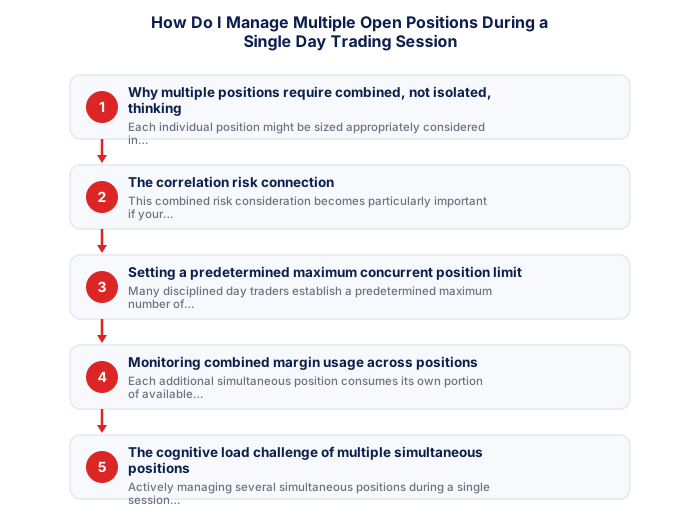
- Why multiple positions require combined, not isolated, thinking
- The correlation risk connection
- Setting a predetermined maximum concurrent position limit
- Monitoring combined margin usage across positions
- The cognitive load challenge of multiple simultaneous positions
- A practical approach for managing this complexity
1. Why multiple positions require combined, not isolated, thinking
Each individual position sizing decision might be appropriate considered in isolation, but holding several simultaneously means your combined account-level risk exposure can be considerably larger than any single position's individual risk percentage might suggest, requiring genuinely combined, account-level thinking rather than purely position-by-position evaluation.
It's worth calculating this combined figure explicitly before adding any new position while others remain open, rather than relying on a general sense that each individual position seems reasonable, a quick, concrete calculation of total risk across all open positions together catches exactly the kind of accumulation this section is warning about.
The urge to trade outside qualified setups consistently produces losses that exceed the cost of missing valid setups. Define your maximum daily trades before each session begins.
2. The correlation risk connection
This combined risk consideration becomes particularly important if your multiple simultaneous positions share underlying correlation, since correlated positions can move adversely together during a single underlying market event, compounding your effective combined exposure.
It's worth checking this correlation specifically before opening a second or third simultaneous position, rather than assuming diversification automatically because the instruments have different names, two positions that move together during exactly the conditions that would hurt you most offer considerably less genuine protection than they might appear to at first glance.
3. Setting a predetermined maximum concurrent position limit
Many disciplined day traders establish a predetermined maximum number of simultaneous open positions they'll maintain at any given time, giving a concrete, structural safeguard against gradually accumulating an excessive, difficult-to-manage number of concurrent positions during an active session.
It's worth setting this limit conservatively when you're still developing this specific skill, rather than starting with an ambitious number and scaling down if it proves unmanageable, a lower starting limit that you can comfortably manage well tends to produce better outcomes than an aggressive limit that stretches your genuine capacity too thin.
- Economic calendar checked for high-impact events
- Key levels marked for target instruments
- Maximum trades per session defined
- Stop-losses set on overnight positions
- Backup connectivity available
- Eskom schedule checked
- Post-session journal time scheduled
4. Monitoring combined margin usage across positions
Each additional simultaneous position consumes its own portion of available margin, meaning monitoring your combined margin usage across all open positions, rather than checking each one's margin requirement in isolation, becomes increasingly important as the number of concurrent positions grows.
It's worth checking this figure specifically before considering any additional position, not just periodically throughout the session, since margin usage can shift meaningfully as existing positions move, meaning a check performed earlier in the session may no longer accurately reflect your current available capacity.
| Session | SAST | Instruments | Liquidity |
|---|---|---|---|
| Pre-market | 07:00-09:00 | Any | Low |
| JSE morning | 09:00-12:00 | JSE shares | High |
| Midday lull | 12:00-15:00 | Any | Low |
| London-NY overlap | 15:00-17:00 | Major forex | Very high |
| NY afternoon | 17:00-21:00 | Major forex | Medium |
5. The cognitive load challenge of multiple simultaneous positions
Actively managing several simultaneous positions during a single session genuinely increases cognitive load, tied to decision fatigue, potentially degrading the quality of decisions across all your positions if the total number exceeds what you can genuinely track and manage attentively at once.
It's worth being honest with yourself about your own genuine capacity here, rather than assuming you can handle whatever number of positions your account technically allows, some traders genuinely manage several positions well, while others make noticeably worse decisions once past just one or two simultaneous positions, worth knowing your own realistic limit through honest self-observation.
6. A practical approach for managing this complexity
Using a trading dashboard that displays all open positions and their combined risk metrics together in one consolidated view, alongside the predetermined position-count limit above, supports more manageable, disciplined oversight of multiple simultaneous positions during an active day trading session.
Volume concentrates late in the day in South African time, in the hours London and New York share. liquidity
Multiple simultaneous positions compound risk and decision load.
Each individual position's risk is straightforward, but managing several simultaneously compounds correlation risk, margin pressure, and decision fatigue, which is why many traders set a predetermined maximum.
★ Why It Matters
A check worth running before adding a third or fourth simultaneous position: calculate your combined risk if all open positions hit their stop-loss at once, not just each one individually, this combined number is often considerably larger than traders expect when they're sized one trade at a time.
✕ Common mistakes
- Not setting a maximum number of concurrent positions in advance. Without this limit, exposure can grow unnoticed during an active session.
- Opening correlated positions without recognising the overlap. This can unintentionally double up on the same underlying risk.
- Losing track of which position needs attention as more get added. More open positions increase the cognitive load on every decision.
Key Takeaways
- Tracking combined risk exposure across simultaneous positions and setting a maximum concurrent position limit helps maintain discipline during active sessions.
- Tracking combined risk exposure across simultaneous positions, rather than evaluating each in isolation, and setting a predetermined maximum concurrent position limit, helps maintain discipline.
- Why multiple positions require combined, not isolated, thinking.
- The correlation risk connection.
- Setting a predetermined maximum concurrent position limit.
Frequently asked follow-up questions
How many simultaneous positions is generally considered reasonable?
There's no universal figure. Many disciplined day traders limit themselves to a small number, perhaps two or three, though this depends on your specific strategy and genuine capacity to manage attentively.
Does holding multiple positions always increase risk proportionally?
Not necessarily proportionally if positions are genuinely uncorrelated, though correlated positions can compound risk more than simple addition would suggest.
Should beginners avoid holding multiple positions simultaneously?
Many experienced traders suggest beginners start with single-position focus before progressing toward managing multiple simultaneous positions confidently.
