i Short answer
Discipline is built through specific, concrete habits rather than willpower alone, which tends to be unreliable under genuine pressure.
The most effective habits include writing strategy rules in advance, keeping a detailed trading journal, and gradually exposing yourself to real pressure through small live positions.
📋 ON THIS PAGE
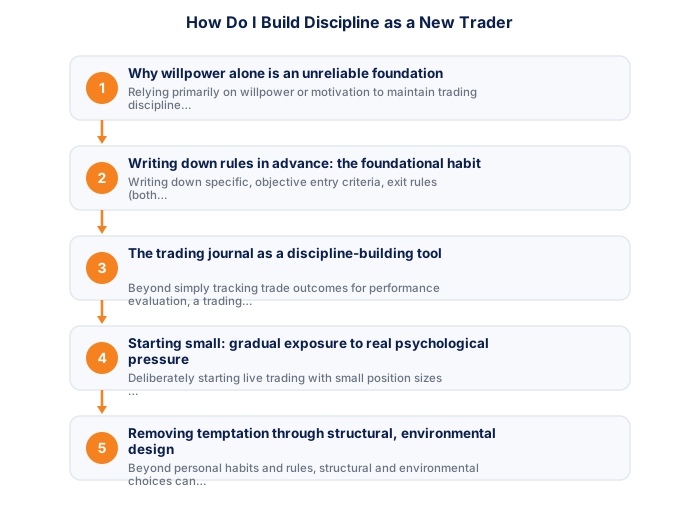
- Why willpower alone is an unreliable foundation
- Writing down rules in advance: the foundational habit
- The trading journal as a discipline-building tool specifically
- Starting small: gradual exposure to real psychological pressure
- Removing temptation through structural, environmental design
- Measuring discipline itself, not just outcomes
1. Why willpower alone is an unreliable foundation
Relying primarily on willpower or motivation to maintain trading discipline is a fragile foundation, since willpower is a genuinely limited psychological resource that depletes under sustained pressure, fatigue, or stress, exactly the conditions often present during a difficult trading session involving real financial risk and emotionally charged decisions. Behavioural psychology research broadly supports the idea that building specific habits and structural safeguards tends to be considerably more reliable and sustainable than depending on consistent, strong willpower in the moment, particularly under the kind of sustained, repeated pressure that active trading genuinely involves.
This means the most effective approach to building trading discipline focuses less on simply "trying harder" to be disciplined in the moment, and more on building specific habits, structures, and predetermined rules that reduce how much discipline is actually required at the most psychologically difficult decision points, the approaches outlined below all reflect this underlying principle.
More retail traders fail from psychological errors than analytical ones. Rules that are clear on paper become difficult to follow when real money is at risk.
It's worth accepting this limitation honestly rather than treating every discipline lapse as a personal character failing, willpower genuinely does deplete under pressure for everyone, which means a trader who builds structural safeguards isn't somehow weaker than one who claims to rely purely on willpower, they're simply working with a more realistic understanding of how human psychology actually functions.
2. Writing down rules in advance: the foundational habit
Writing down specific, objective entry criteria, exit rules (both profit-taking and stop-loss levels), and position sizing rules during a calm planning moment, well before any actual trade is being considered in real time, creates a clear, concrete reference point that significantly reduces the number of genuinely difficult judgement calls that need to be made under real-time emotional pressure.
This single habit is foundational precisely because it shifts the hardest psychological work (defining what discipline actually requires in specific, concrete terms) to the moment when sound judgement is easiest to access, rather than leaving these definitions vague or undefined until the exact moment they're needed, when emotional pressure makes sound judgement hardest to maintain reliably.
- Emotional state is neutral
- Yesterday's results not influencing today
- Trading plan is open and reviewed
- Loss limit for today defined and accepted
- Phone notifications silenced
- Backup connectivity confirmed
- Written rules eliminate in-the-moment decisions
- Journalling creates a feedback loop for improvement
- Pre-session checks reduce emotionally-driven entries
- Regular breaks prevent compounding mistakes
- Building discipline requires active daily effort
- Losses immediately test emotional stability
- No external accountability in retail trading
- Social pressure to perform can override rules
Write your trading plan
Entry rules, risk rules, and conditions to NOT trade, all in writing.
Pre-session check
Check your emotional state before opening your platform. Skip if not neutral.
Execute only plan setups
Take only positions that fully match your written criteria.
Journal after each trade
Record rationale, emotion at entry, and outcome immediately after closing.
Weekly rules review
Assess rule adherence weekly. Adjust strategy based on evidence, not emotion.
It's worth treating this written document as something to actively reference during live trading, not simply a one-time exercise, keeping it visible and genuinely consulting it before each trade decision reinforces the habit far more effectively than writing the rules once and then relying on memory alone.
3. The trading journal as a discipline-building tool specifically
Beyond simply tracking trade outcomes for performance evaluation, a trading journal serves a specific discipline-building function when it explicitly records whether your predetermined rules were actually followed on each specific trade, alongside your emotional state and reasoning at the time. Reviewing this journal regularly, ideally on a consistent weekly rhythm, creates an accountability mechanism and builds genuine, evidence-based self-awareness about your own specific patterns of rule-following versus rule-deviation over time.
This consistent review habit transforms discipline from an abstract aspiration into something concretely measurable and trackable, allowing you to notice and address specific recurring patterns of deviation (for example, consistently moving stop-losses, or consistently deviating from entry criteria during certain types of market conditions) with the kind of specific, evidence-based clarity that vague, general intentions to "be more disciplined" simply can't provide on their own.
It's worth being genuinely honest in these entries even when, especially when, the honest answer is uncomfortable, a journal that only records flattering, disciplined moments while omitting the lapses loses most of its actual diagnostic value for identifying and addressing your real patterns.
4. Starting small: gradual exposure to real psychological pressure
Genuine trading discipline under real psychological pressure can't be fully developed through demo trading alone, since demo trading lacks the real financial stakes that create genuine emotional pressure. Deliberately starting live trading with small position sizes specifically allows you to build genuine experience with real psychological pressure while limiting the financial consequences of the discipline lapses that are a normal, expected part of this specific learning process.
This gradual exposure approach, increasing position size and live trading scale only as demonstrated discipline (not simply profitability, which can reflect luck rather than genuine skill) accumulates over a meaningful track record, builds discipline in a structured, progressively challenging way, rather than either avoiding real psychological pressure entirely through extended demo-only practice, or exposing yourself to overwhelming pressure too quickly through an oversized initial live position.
It's worth resisting the urge to scale up quickly simply because early live results look encouraging, since a short winning stretch reflects a genuinely small sample size, discussed in more detail regarding trading edge verification elsewhere on this site, and doesn't yet constitute the kind of demonstrated, sustained discipline this gradual approach is specifically designed to build and confirm.
5. Removing temptation through structural, environmental design
Beyond personal habits and rules, structural and environmental choices can meaningfully support discipline: using pending orders and predetermined stop-losses set in advance (rather than requiring active, real-time manual decisions during a live, moving trade) removes some of the most psychologically difficult real-time decisions entirely, by having already made the decision in advance during a calmer planning moment. Similarly, deliberately limiting how frequently you check open positions during the trading day, rather than continuously monitoring and creating repeated opportunities for emotional, in-the-moment intervention, reduces the frequency of situations where discipline is actively tested and potentially compromised.
These structural, environmental approaches work by reducing the sheer number of moments where active discipline is required, rather than by making you somehow more naturally disciplined in each individual moment, this distinction matters because it reflects a more sustainable, scalable approach to discipline-building than simply attempting to strengthen willpower directly through repeated effort and practice alone.
It's worth auditing your own trading environment honestly for these kinds of structural weaknesses, checking whether your platform, workspace, and habits genuinely minimise the number of moments requiring active, in-the-moment discipline, or whether they inadvertently create more such moments than necessary.
6. Measuring discipline itself, not just outcomes
A genuinely useful, often underused practice involves specifically tracking and evaluating your own rule-following consistency as a distinct metric, separate from raw trading profitability, particularly during the earlier stages of developing trading discipline. A trader who consistently follows their predetermined rules but experiences a losing period due to normal statistical variance (Generally more favourable position than a trader who happens to profit during a similar period specifically because they violated their own rules and got fortunate.
Recognising and explicitly valuing this distinction, disciplined process versus simple outcome, helps build a more sustainable, long-term approach to trading discipline, since outcomes in any single period or short series of trades are influenced by genuine randomness that disciplined process execution alone can't fully control, while consistent process execution itself remains genuinely within your control and is the more reliable, useful thing to actually measure and reinforce as you build trading discipline over time.
Relying primarily on willpower to maintain discipline is a fragile foundation. Written, specific, objective criteria hold up far better under real trading pressure.
★ Why It Matters
A distinction worth internalising early: discipline isn't the absence of the urge to break a rule, it's having a predetermined response ready for the moment that urge shows up, traders who wait to 'feel disciplined enough' tend to wait indefinitely.
✕ Common mistakes
- Waiting to 'feel disciplined enough' before starting. Discipline tends to develop through repeated action, not a felt readiness threshold.
- Having no predetermined response ready for rule-breaking urges. A plan prepared in advance works better than relying on willpower in the moment.
- Treating one broken rule as proof discipline doesn't work. A single lapse is a data point, not a verdict.
- Skipping a written checklist because the rules feel obvious. Written rules hold up better under pressure than memorised ones.
How do I know if my trading problem is psychological or strategy-related?
If you follow your rules consistently on demo but deviate on live accounts, the issue is primarily psychological. If you lose money even when following your rules exactly, the issue is more likely the strategy itself. Most traders experience elements of both.
Is it normal to feel anxious about this?
Some is ordinary and some is a signal the position is too large for your tolerance. Fear before entry covers where the line sits.
Key Takeaways
- Discipline is built through specific habits: written rules, a trading journal, and gradual real-money exposure, not through willpower alone.
- Discipline is built through specific, concrete habits rather than willpower alone, which tends to be unreliable under genuine pressure.
- The most effective habits include writing strategy rules in advance, keeping a detailed trading journal, and gradually exposing yourself to real pressure through small live positions.
- Why willpower alone is an unreliable foundation.
- Writing down rules in advance: the foundational habit.
Frequently asked follow-up questions
How long does it typically take to feel genuinely disciplined?
This varies considerably between individuals, but building genuine, reliable discipline under real pressure typically takes meaningful time and accumulated live trading experience, often in the range of months rather than days or weeks.
Is it normal to still struggle with discipline even after months of trading?
Yes, this is common; discipline is an ongoing, practised skill that even experienced traders continue actively maintaining, rather than a challenge that's permanently and completely resolved at some fixed point.
Can working with a trading mentor help build discipline faster?
A experienced, trustworthy mentor providing honest, specific feedback can potentially accelerate discipline development through outside accountability and perspective, though the core habits discussed above remain valuable regardless of whether a mentor is involved.
