i Short answer
Dedicated trading journal apps offer automated trade import and built-in analytics, but a simple spreadsheet achieves the same core discipline-building purpose.
Dedicated software offers genuine convenience, but isn't a strict necessity. Whichever you use, our Trading Journal Statistics Calculator turns a plain list of logged trade results into win rate, profit factor, and drawdown statistics in one click.
📋 ON THIS PAGE
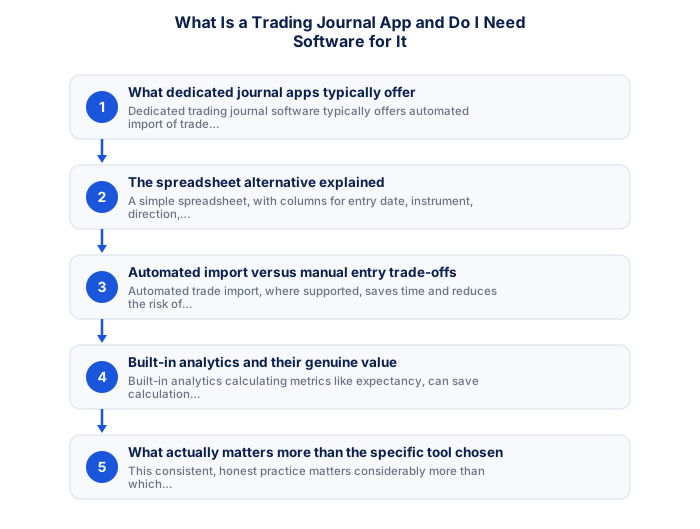
1. What dedicated journal apps typically offer
Dedicated trading journal software typically offers automated import of trade history directly from supported brokers, pre-built analytics calculating metrics like win rate, average risk-reward ratio, and expectancy, and sometimes features for tagging trades by strategy or setup type, supporting more granular performance analysis across different trading approaches.
Some also include screenshot or chart-annotation capability alongside each logged trade, letting you attach the actual setup you saw at entry to the record itself. This can be genuinely useful during review, since it lets you compare what you thought you saw in the moment against what the chart actually looked like in hindsight, a comparison that's harder to make from numbers alone.
2. The spreadsheet alternative explained
A simple spreadsheet, with columns for entry date, instrument, direction, entry and exit price, position size, outcome, and a free-text field for reasoning and reflection, captures the same essential information effective journaling requires, without requiring any specialised software or associated cost.
Many experienced traders use exactly this kind of simple spreadsheet approach throughout their entire trading careers, finding it perfectly adequate for the genuine discipline-building and analysis purpose journaling serves, without feeling a need to upgrade to more specialised, often paid, dedicated software.
- Two-factor authentication enabled
- Unique password not shared with other sites
- Broker mobile app installed and tested
- Mobile data backup connection tested
- Price alerts set for active instruments
- Broker emergency number saved in phone
- Know how to close all positions in under 30 seconds
- Desktop: full charting, multi-monitor, all order types
- Mobile: real-time monitoring and load shedding backup
- Mobile: price alerts when away from desk
- Desktop: useless during load shedding without UPS
- Mobile: limited charting for detailed analysis
- Mobile: higher risk of fat-finger errors
- Full charting and analysis
- Best for trade entry
- Multi-monitor support
- More order types available
- Monitor and manage on the go
- Load shedding backup use
- Push price alerts
- Limited charting tools
A basic template, once set up, takes only a minute or two to complete after each trade, which matters more than it might seem. Any friction in the journaling process, having to open a separate paid app, log in, and manage an unfamiliar interface, makes it that much easier to skip an entry "just this once," and those skipped entries are disproportionately likely to be exactly the emotionally charged trades most worth reflecting on honestly.
3. Automated import versus manual entry trade-offs
Automated trade import, where supported, saves time and reduces the risk of transcription errors compared to manual entry, but manual entry itself carries a genuine, underappreciated benefit. The simple act of manually recording each trade's details and reasoning reinforces the reflective habit more directly than passive, automated import might, since manual entry requires actively engaging with each trade's specifics rather than simply letting data populate automatically.
A reasonable middle ground some traders adopt is using automated import for the objective, factual fields, entry price, exit price, position size, while still manually writing a short reflection on reasoning and emotional state for each trade. This captures the time-saving benefit of automation for the mechanical details while preserving the reflective value that comes specifically from manually engaging with the more subjective, judgement-based part of the record.
| Feature | MT4 | MT5 |
|---|---|---|
| Broker availability | Very wide | Growing |
| EA library | Largest available | Smaller but growing |
| Timeframes | 9 built-in | 21 built-in |
| Asset classes | Forex and CFDs | Forex, CFDs, stocks |
| Mobile app | Good | More modern UI |
4. Built-in analytics and their genuine value
Built-in analytics calculating metrics like expectancy can save calculation time compared to performing these calculations manually in a spreadsheet, though spreadsheets can also calculate these same metrics through relatively simple formulas, meaning this specific convenience, while genuine, isn't exclusively available only through dedicated paid software.
Where dedicated analytics genuinely earn their keep is in visualising patterns across a larger number of trades, such as an equity curve, or performance broken down by specific setup type or time of day, that would take real spreadsheet skill to replicate manually. For a trader with a small, growing trade history, this advantage is modest; for one with hundreds of logged trades, it can meaningfully speed up the kind of pattern recognition that honest review depends on.
5. What actually matters more than the specific tool chosen
The genuine value of journaling comes from consistent, honest, reflective practice, recording not just outcomes but reasoning, emotional state, and strategy adherence, connecting to patterns like overconfidence and revenge trading. This consistent, honest practice matters considerably more than which specific tool captures the information, and a beautifully-designed but inconsistently-used journal app provides less genuine value than a simple, consistently-maintained spreadsheet.
6. A practical recommendation for most traders
For most traders, particularly those just beginning to build the journaling habit, starting with a simple spreadsheet removes any barrier to entry that learning new dedicated software might otherwise introduce, allowing immediate focus on building the core habit itself. Traders who later find themselves wanting specific additional features, automated import, more sophisticated built-in analytics, can then evaluate dedicated journal software once they've already established the fundamental discipline a simpler tool supports equally well.
A dedicated app adds automated import and analytics at a subscription cost.
A spreadsheet is free and highly flexible but requires full manual entry. A dedicated journal app adds automated broker import and built-in analytics at a subscription cost, better for those wanting structure quickly.
★ Why It Matters
Worth testing for yourself: try a simple spreadsheet for a month before paying for dedicated software. Many traders discover the actual bottleneck to consistent journaling isn't the tool's sophistication but their own discipline in filling it out, which no software purchase fixes by itself.
✕ Common mistakes
- Choosing a journal app based on features rather than actual likelihood of consistent use. A simple tool you'll actually use beats a sophisticated one you'll abandon.
- Not testing import or integration features before committing to a paid plan. Friction here often determines whether journaling becomes a sustained habit.
- Assuming software alone will fix inconsistent journaling habits. The habit itself matters more than which specific tool supports it.
Key Takeaways
- Dedicated journal apps offer automated trade import and analytics, but a simple spreadsheet works equally well for the core discipline-building purpose.
- Dedicated trading journal apps offer automated trade import and built-in analytics, but a simple spreadsheet achieves the same core discipline-building purpose.
- Dedicated software offers genuine convenience, but isn't a strict necessity.
- What dedicated journal apps typically offer.
- The spreadsheet alternative explained.
See also: Home Loan Repayment Calculator and Bond Affordability Calculator.
Frequently asked follow-up questions
Are dedicated trading journal apps expensive?
Pricing varies considerably; some offer free tiers with basic functionality, while more advanced features often require a paid subscription.
Can I switch from a spreadsheet to dedicated software later?
Yes, most dedicated software supports importing existing historical data, though the specific import process varies by platform.
Does using dedicated software guarantee better trading discipline?
No, the software itself doesn't create discipline. Consistent, honest use of whichever tool you choose is what genuinely builds the discipline that matters.
