i Short answer
Sequence your learning sensibly: foundational concepts first, then risk management, then strategy development and backtesting, with psychology and discipline woven throughout.
Pacing this based on genuine demonstrated readiness, rather than a fixed timeline, supports more sustainable skill development.
📋 ON THIS PAGE
- Stage one: foundational concepts and trading mechanics
- Stage two: risk management principles thoroughly
- Stage three: strategy development and rigorous testing
- Weaving in psychology throughout, not just at the end
- Using demo trading as an ongoing checkpoint, not a single step
- Staying flexible rather than following a rigid timeline
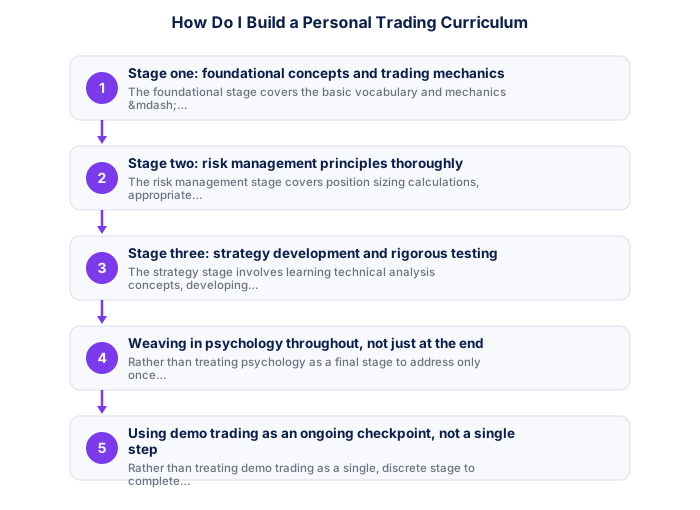
1. Stage one: foundational concepts and trading mechanics
The foundational stage covers basic vocabulary and mechanics, pips, spreads, margin, leverage, lot sizes, alongside understanding how orders work, pending orders and stop-loss/take-profit mechanics, and the basic regulatory and account-opening environment. This foundational stage should feel genuinely solid before progressing further, since later stages build directly on this vocabulary and understanding.
It's worth resisting any urge to rush through this stage simply because the underlying vocabulary feels straightforward once you've encountered it a few times. Genuine fluency, being able to explain a concept clearly to someone else, or apply it instantly without pausing to recall the definition, takes more repeated exposure than a single read-through typically provides.
| Stage | Focus | Key Concepts |
|---|---|---|
| 1. Foundations | Mechanics and vocabulary | Pips, spreads, margin, leverage, orders |
| 2. Risk Management | Capital protection | Position sizing, drawdown, risk-reward |
| 3. Strategy Development | Method and testing | Technical analysis, backtesting, forward-testing |
| Throughout | Psychology and demo checkpoints | Discipline, ongoing demo validation |
2. Stage two: risk management principles thoroughly
The risk management stage covers position sizing calculations, appropriate risk percentage per trade, genuine capital considerations, and understanding concepts like drawdown and risk-reward ratio thoroughly before moving toward active strategy development. Given how directly risk management connects to capital preservation, this stage deserves particularly careful, thorough attention before progressing.
It's worth treating this stage as the one most worth genuinely mastering before advancing, even at the cost of spending longer here than initially planned, since weak risk management understanding tends to undermine even a genuinely sound strategy developed in the next stage, while strong risk management can meaningfully limit the damage from an imperfect strategy.
- FSCA-regulated broker verified at fsca.co.za
- Demo account tested for minimum 60 days
- Trading plan written: entry, exits, position sizing
- Risk per trade defined (1-2% of account)
- Backup internet connection tested for load shedding
- Tax implications understood
3. Stage three: strategy development and rigorous testing
The strategy stage involves learning technical analysis concepts, developing a specific, well-defined trading approach, and rigorously backtesting and forward-testing this approach before considering live application. This stage typically takes considerable time and iteration, since developing a genuinely sound, tested strategy rarely happens on the first attempt.
It's worth being honest with yourself if this stage feels like it's taking considerably longer than the earlier ones, since that's often a genuine reflection of how much more involved strategy development and proper testing actually is compared to learning foundational concepts, not a sign you're somehow progressing more slowly than you should be.
4. Weaving in psychology throughout, not just at the end
Rather than treating psychology as a final stage to address only once technical skills are developed, weaving psychological awareness and discipline-building into every stage from the very beginning, starting the journaling habit early, building awareness of biases like overconfidence from the outset, supports more integrated, genuine skill development than treating psychology as a separate, later add-on.
This early integration matters because psychological patterns tend to be easier to shape while they're still forming than to correct once firmly established, a trader who builds honest journaling and self-reflection habits from the very first demo trade develops a fundamentally different relationship with their own psychology than one who only starts paying attention to it after encountering a genuine, costly problem live.
| Item | Detail |
|---|---|
| Regulator | FSCA, fsca.co.za |
| Exchange control | SARB, resbank.co.za |
| Tax authority | SARS, sars.gov.za |
| JSE hours | 09:00-17:00 SAST Mon-Fri |
| Best forex session | 15:00-17:00 SAST |
| CGT annual exclusion | R50,000 (individuals) |
5. Using demo trading as an ongoing checkpoint, not a single step
Rather than treating demo trading as a single, discrete stage to complete before moving to live trading, using demo trading as an ongoing checkpoint throughout your curriculum, testing foundational order mechanics early, testing risk management discipline once those principles are learned, testing your developing strategy once it's defined, provides continuous, practical validation throughout your learning progression rather than concentrated only at one specific point.
This ongoing use is worth contrasting explicitly with the more common, single-pass approach of treating demo trading as a box to check once before going live, returning to demo practice periodically throughout your curriculum, specifically to test new concepts as you learn them, extracts considerably more genuine learning value from the same tool.
6. Staying flexible rather than following a rigid timeline
Genuine readiness varies considerably between individuals, making a rigid, fixed timeline less useful than pacing progression based on honest, demonstrated readiness at each stage, spending additional time on any stage where genuine understanding or discipline hasn't yet solidified, rather than progressing simply because a predetermined timeframe has elapsed.
A sensible curriculum builds foundational vocabulary and risk management early, with psychology and demo practice woven throughout rather than addressed only at the end.
★ Why It Matters
Worth building in deliberately: a recurring checkpoint where you revisit your very first trading journal entries, the gap between your early self-assessment and your current understanding is often the clearest evidence of genuine progress, more so than any single profitable month.
✕ Common mistakes
- Treating curriculum building as a one-time task. A good curriculum evolves as your weaknesses become clearer.
- Ignoring psychology and discipline until 'later'. These should be woven throughout, not addressed only after strategy is set.
- Following someone else's curriculum without adapting it. Your own gaps and strengths should shape the structure.
- Not setting any way to measure progress along the way. Without checkpoints, it's hard to know the curriculum is actually working.
Key Takeaways
- Sequence your learning from foundational concepts through risk management, strategy development, and psychology, pacing progression to genuine demonstrated readiness.
- Sequence your learning sensibly: foundational concepts first, then risk management, then strategy development and backtesting, with psychology and discipline woven throughout.
- Pacing this based on genuine demonstrated readiness, rather than a fixed timeline, supports more sustainable skill development.
- Stage one: foundational concepts and trading mechanics.
- Stage two: risk management principles thoroughly.
For turning that sequence into your own structured plan with milestones, see building your own trading curriculum.
See also: How Long Does It Take to Learn to Trade Properly?.
Frequently asked follow-up questions
How long should each stage of this curriculum take?
This varies considerably by individual. The broader learning timeline generally suggests measuring progress in months rather than days or weeks for genuine, lasting skill development.
Can I skip stages if I already have some trading experience?
Some prior experience may accelerate certain stages, though honestly assessing genuine competence at each stage, rather than assuming experience alone is sufficient, remains worthwhile.
Should I follow this curriculum alone or with a course or mentor?
Either approach can work. This curriculum structure applies whether you're self-directing your learning or following structured guidance from a course or mentor.
How long should a complete beginner's curriculum typically span?
This varies by individual, though many traders find several months of structured foundational learning genuinely valuable before significant live trading.
Should I follow someone else's published curriculum or build my own entirely from scratch?
Either can work; adapting an existing structured curriculum from a reputable source to your own specific needs can save time compared to building entirely from scratch.
Can I skip topics that seem less relevant to my chosen trading style?
Some topics matter more for certain styles, though maintaining basic foundational knowledge across core areas generally still provides value regardless of your specific eventual focus.
Should I revisit earlier curriculum topics once I've moved past them?
Yes, periodically revisiting foundational concepts as your understanding deepens often reveals additional nuance you may have missed during initial, more basic learning.
