Home โ€บ Brokers & Platforms โ€บ What Should I Check in a Broker's Terms and Conditions?

What Should I Check in a Broker's Terms and Conditions?

i Short answer

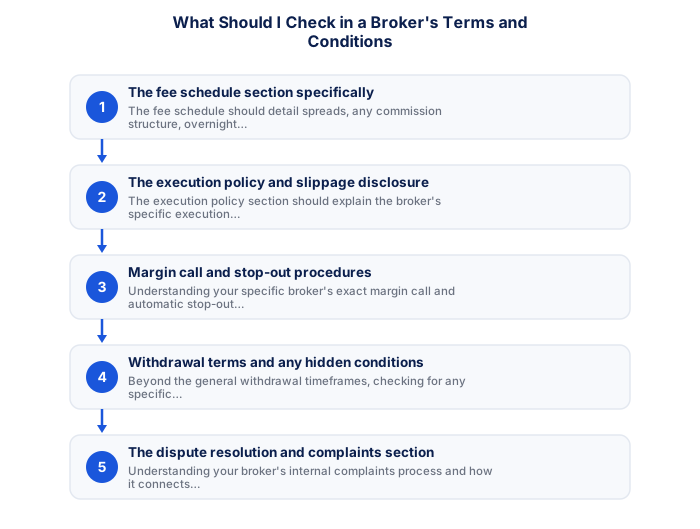
Check the fee schedule, execution policy, margin call and stop-out procedures, withdrawal terms, and the dispute resolution process.

These reveal the practical details that matter most, beyond the marketing claims most broker websites lead with.

1. The fee schedule section specifically

The fee schedule should detail spreads, any commission structure, overnight financing rates, any hidden fees, and any inactivity or withdrawal fees, giving you a complete picture of the broker's actual cost structure rather than relying solely on whatever headline figures their marketing materials might emphasise most prominently.

It's worth reading this section with genuine attention to the less prominently advertised charges, discussed elsewhere on this site regarding hidden trading fees, the headline spread figures a broker promotes are only part of the genuine, complete cost picture terms and conditions actually disclose.

!
Unregulated brokers have no SA consumer protection

Using an unregulated offshore broker means SA law does not apply. SARS, FSCA, and SA courts have no jurisdiction. Disputes must go through the overseas regulator only.

ZA
SA-specific: Verify any broker holds a current FSCA FSP licence at fsca.co.za before depositing. The FSP number must appear on the broker's website and marketing materials.

2. The execution policy and slippage disclosure

The execution policy section should explain the broker's specific execution model and their stated approach to slippageSlippage tolerance sets the maximum acceptable price deviation before an order is rejected rather than executed at a significantly different price..Click to read more โ†’, including whether they apply any specific slippage tolerance thresholds or simply execute at the best available price regardless of deviation from your requested price.

It's worth reading this section specifically alongside understanding the market maker versus ECN distinction discussed elsewhere on this site, since a broker's execution policy document often reveals which specific model actually applies to your account.

Broker Verification Checklist
  • Search FSP name or number at fsca.co.za
  • Confirm licence is current and not suspended
  • Check scope covers forex and CFD activity
  • Confirm client funds in segregated accounts
  • Read FSCA enforcement actions history
  • Test customer support before depositing
Pros
  • Client funds legally segregated
  • FSCA complaints process available
  • SA consumer protections apply
  • ZAR account, no FX conversion costs
Cons
  • Some offshore brokers offer wider instruments
  • Regulatory overhead passed on in spreads
  • Stricter position limits for retail clients
  • FICA verification required before trading
FSCA-regulated
  • Client funds segregated
  • Formal FSCA complaints process
  • SA consumer protections apply
  • ZAR account available
Offshore unregulated
  • Fund safety not guaranteed
  • Overseas disputes only
  • SA law does not apply
  • Currency conversion costs

3. Margin call and stop-out procedures

Understanding your specific broker's exact marginMargin is the deposit required to open and maintain a leveraged position, acting as collateral against potential losses.Click to read more โ†’ call and automatic stop-out thresholds, the specific margin level percentages that trigger a warning versus automatic position closure, helps you understand precisely how much buffer you have before risking this kind of forced closure during adverse market movement.

It's worth confirming your specific broker's exact stop-out level explicitly through this section, discussed elsewhere on this site regarding margin calls and liquidation, rather than assuming a generic industry standard applies to your particular account.

checkmarkFSP licence required
R0cost to verify at fsca.co.za
24hrtypical FSCA complaint acknowledgement
5 yearsFSCA can investigate historical activity
DODON'T
Verify FSP number at fsca.co.za before depositing
Trust marketing alone, always verify independently
Confirm client funds are legally segregated
Assume segregation without reading the client agreement
Use FSCA complaints process for unresolved disputes
Assume offshore brokers have equivalent SA consumer protections
Keep records of all deposits and withdrawals
Deposit more than you can afford to lose entirely

4. Withdrawal terms and any hidden conditions

Beyond the general withdrawal timeframes, checking for any specific conditions attached to withdrawals, minimum withdrawal amounts, fees for certain withdrawal methods, or any volume requirements connected to bonus terms, avoids unexpected friction when you actually want to access your funds.

It's worth checking specifically for any bonus-related withdrawal restrictions here, discussed elsewhere on this site regarding broker bonuses, since these conditions can meaningfully affect when and how much you can actually withdraw.

FSCA Regulated vs Unregulated
ProtectionFSCA RegulatedOffshore Unregulated
Client fund segregationโœ“ RequiredVaries by broker
SA complaints processโœ“ Availableโœ— Not available
SA consumer law appliesโœ“ Yesโœ— No
ZAR account availableโœ“ TypicallyOften USD/EUR only
FSCA Verification Quick Check
Regulator
FSCA, Financial Sector Conduct Authority
Verify at
fsca.co.za, public FSP register
Licence type
Category I or II FSP
Client funds
Must be segregated
Complaints
fsca.co.za/complaints
Required docs
ID + address proof + bank statement

When evaluating brokers operating in South Africa, the FSCA register is the definitive verification resource. Checking not only that a broker is listed but also that their specific scope of authorisation covers the instruments and services you intend to use is an important step that many traders skip. The FSCA also publishes enforcement actions and consumer warnings on its website, which are worth reviewing for any broker you are considering.

5. The dispute resolution and complaints section

Understanding your broker's internal complaints process and how it connects to the broader FSCA complaints process before you actually need to use it, ensures you know the proper channel and reasonable expected timeline if a genuine dispute or concern ever does arise during your relationship with that broker.

It's worth understanding this section's content in the context of the broader complaints process discussed elsewhere on this site, confirming your specific broker's internal complaints procedure before you ever genuinely need to use it.

Example
FSCA regulated: You dispute an incorrect trade execution. You file with the FSCA. The regulator investigates and can require restitution. Unregulated offshore: Same dispute. SA FSCA has no jurisdiction. You must pursue the overseas regulator through their own process.

6. A practical approach to reviewing lengthy terms documents

Given how lengthy and dense full terms and conditions documents typically are, using your browser or document viewer's search function to jump directly to the sections that matter most, searching for terms like "withdrawal," "margin call," or "dispute", provides a more practical, time-efficient approach than attempting to read every single clause in sequential, exhaustive detail.

It's also worth checking whether a broker offers negative balance protection, a feature many FSCA-regulated brokers now provide as standard, which caps your maximum possible loss at your account balance even during extreme, fast-moving market conditions.

The FSCA regulatory framework provides South African retail traders with meaningful protection that extends beyond simply verifying a broker's licence number. The requirement for FSCA-regulated brokers to maintain segregated client accounts means your deposited funds are legally separated from the broker's operating funds. In the event of broker insolvency, this segregation protects client money from creditor claims against the company. FSCA-regulated brokers must also maintain adequate financial resources, submit to regulatory oversight, and adhere to disclosure requirements covering fees, risks, and conflicts of interest. For traders considering offshore brokers outside FSCA supervision, the loss of these domestic protections is a material risk consideration, particularly for larger account balances where the downside of unregulated broker failure would be financially significant.

The FSCA regulatory framework provides South African retail traders with meaningful protection that extends beyond simply verifying a broker's licence number. The requirement for FSCA-regulated brokers to maintain segregated client accounts means your deposited funds are legally separated from the broker's operating funds. In the event of broker insolvency, this segregation protects client money from creditor claims against the company. FSCA-regulated brokers must also maintain adequate financial resources, submit to regulatory oversight, and adhere to disclosure requirements covering fees, risks, and conflicts of interest. For traders considering offshore brokers outside FSCA supervision, the loss of these domestic protections is a material risk consideration, particularly for larger account balances where the downside of unregulated broker failure would be financially significant.

โ˜… Why It Matters

Worth searching for specifically using your browser's find function: the word 'dormant' or 'inactive', this single search often jumps you directly to the inactivity fee clause, one of the more commonly overlooked sections buried in lengthy terms documents.

Fee schedule
Essential reading
Spread, commission, overnight financing all here
Withdrawal terms
Essential reading
Processing time, any conditions
Other sections worth reading
Margin policy
stop-out level
Bonus conditions
if accepting one
Account closure
process and timeline
Conflict of interest
Section 45 disclosure

The fee schedule and withdrawal terms are the most important sections to read in any broker's terms and conditions. The margin policy, bonus conditions if applicable, and conflict of interest disclosures also deserve attention.

โœ• Common mistakes

  • Not reading the dispute resolution section before any issue arises. Understanding this process in advance saves time and confusion if a dispute occurs.
  • Assuming all brokers' terms are functionally similar. Genuine, meaningful differences exist between providers worth identifying directly.
  • Treating terms and conditions as a formality rather than a source of practical information. They reveal real operational details that marketing material doesn't cover.
How long does account verification take at most South African brokers?

Most FSCA-regulated brokers complete identity verification within one to three business days when all required documents are submitted correctly. Electronic document submission often accelerates the process.

What documents do I need to open a trading account in South Africa?

You typically need a South African ID or passport, proof of residential address dated within three months, and proof of bank account ownership. Some brokers require additional documentation for higher deposit tiers.

Key Takeaways

  1. Check fee schedules, execution policy, margin call procedures, withdrawal terms, and dispute resolution processes before committing to any broker.
  2. Check the fee schedule, execution policy, margin call and stop-out procedures, withdrawal terms, and the dispute resolution process.
  3. These reveal the practical details that matter most, beyond the marketing claims most broker websites lead with.
  4. The fee schedule section specifically.
  5. The execution policy and slippage disclosure.

Frequently asked follow-up questions

Are terms and conditions legally binding once I open an account?

Yes, opening an account generally constitutes acceptance of the broker's terms and conditions, making prior review genuinely important rather than optional.

Can a broker change terms and conditions after I've opened an account?

Most brokers reserve the right to update terms with appropriate notice; checking how your specific broker handles and communicates such changes is worth understanding.

Should I keep a copy of the terms I originally agreed to?

Yes, saving a copy at the time of account opening provides a useful reference point, particularly if terms are later updated or if any dispute arises.

๐Ÿ“š Sources & further reading

This article draws on general information published by the South African regulators and established financial education resources listed below. Always check each source directly for the most current detail.

Explore more South African trading guides on TradeAnswers.

๐Ÿ›ก๏ธ
Practice without risk

Experience a Regulated Platform Yourself

See the spreads, tools, and execution firsthand on an FSCA-regulated demo account, no deposit required.

Open a Free Demo
  • FSCA RegulatedTrade with confidence
  • Practice Risk FreeReal market conditions
  • Beginner FriendlyPerfect for learning

79% of retail CFD accounts lose money. Demo accounts do not guarantee future profits.