i Short answer
If you have an unresolved dispute with an FSCA-regulated broker, start by lodging a complaint through your broker's internal complaints procedure.
If unresolved within a reasonable timeframe, escalate to the FSCA directly with documentation for independent investigation.
📋 ON THIS PAGE
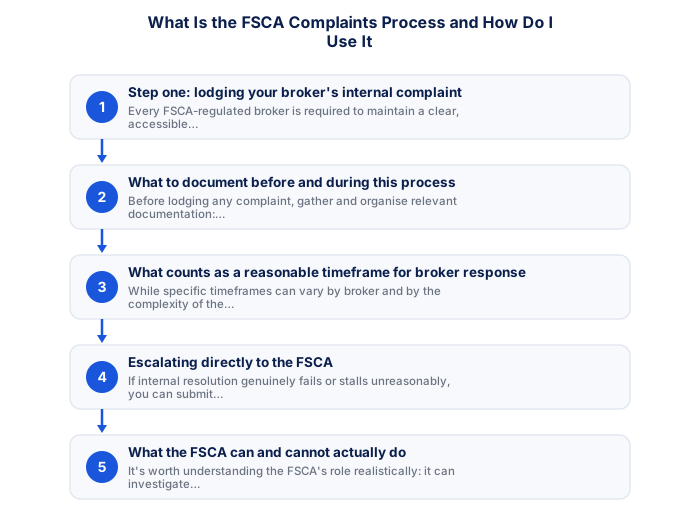
1. Step one: lodging your broker's internal complaint
Every FSCA-regulated broker is required to maintain a clear, accessible internal complaints procedure, typically detailed on their website or provided upon request. This usually involves submitting your complaint in writing, through a dedicated complaints email address, online form, or sometimes a formal letter, clearly describing the issue, the specific account and transaction details involved, and what resolution you're seeking.
Starting here rather than going straight to the FSCA isn't just a formality, many genuine misunderstandings or administrative errors get resolved satisfactorily at this internal stage, and the FSCA itself generally expects this internal process to have been attempted first before accepting an escalated complaint for independent investigation.
2. What to document before and during this process
Before lodging any complaint, gather and organise relevant documentation: account statements and trade history showing the specific transactions in question, any written communication with the broker regarding the issue (emails, chat transcripts, support ticket records), and a clear, chronological timeline of what happened and when. This documentation serves you well both during the internal complaint process and, if needed, during any subsequent FSCA escalation.
See also: How Do I Compare FSCA-Regulated Brokers Properly?
Keeping a copy of everything you submit to the broker, along with their specific responses (including dates), creates the kind of clear paper trail that significantly strengthens any later escalation, since the FSCA will want to see evidence that you genuinely attempted internal resolution and exactly how the broker responded.
- Search FSP name or number at fsca.co.za
- Confirm licence is current and not suspended
- Check scope covers forex and CFD activity
- Confirm client funds in segregated accounts
- Read FSCA enforcement actions history
- Test customer support before depositing
- Client funds legally segregated
- FSCA complaints process available
- SA consumer protections apply
- ZAR account, no FX conversion costs
- Some offshore brokers offer wider instruments
- Regulatory overhead passed on in spreads
- Stricter position limits for retail clients
- FICA verification required before trading
- Client funds segregated
- Formal FSCA complaints process
- SA consumer protections apply
- ZAR account available
- Fund safety not guaranteed
- Overseas disputes only
- SA law does not apply
- Currency conversion costs
3. What counts as a reasonable timeframe for broker response
While specific timeframes can vary by broker and by the complexity of the issue, regulated brokers are generally expected to acknowledge a complaint promptly (often within a few business days) and provide a substantive response within a defined period, commonly somewhere in the range of a few weeks depending on the issue's complexity. If your broker's own complaints policy specifies a timeframe, that becomes the relevant benchmark for what counts as reasonable in your specific case.
If a broker is significantly exceeding their own stated timeframe without clear, specific explanation, or is simply not responding at all, this itself becomes relevant evidence supporting an FSCA escalation, since unreasonable delay in handling complaints is itself a conduct issue the FSCA can consider.
4. Escalating directly to the FSCA
If internal resolution genuinely fails or stalls unreasonably, you can submit a complaint directly to the FSCA through their official complaints channel, typically involving a formal submission describing the issue, the broker involved (including their FSP number), and the steps you've already taken internally, along with your supporting documentation. The FSCA will generally expect to see evidence of this internal attempt before taking on the matter directly.
Once accepted, the FSCA can investigate the broker's specific conduct in relation to your complaint, potentially as part of a broader pattern if similar complaints have been received about the same broker, and has the authority to take regulatory action, ranging from formal warnings through to licence suspension or revocation, if it finds genuine misconduct.
| Protection | FSCA Regulated | Offshore Unregulated |
|---|---|---|
| Client fund segregation | ✓ Required | Varies by broker |
| SA complaints process | ✓ Available | ✗ Not available |
| SA consumer law applies | ✓ Yes | ✗ No |
| ZAR account available | ✓ Typically | Often USD/EUR only |
5. What the FSCA can and cannot actually do
It's worth understanding the FSCA's role realistically: it can investigate broker conduct, enforce compliance with FAIS and FSCA-specific regulations, and impose regulatory penalties on brokers found to have breached their obligations. What it generally cannot do is act as a financial arbitrator awarding you direct compensation for trading losses that resulted from normal market risk rather than broker misconduct, since this distinction between conduct risk and market risk remains central to what regulatory recourse can and cannot address.
If your specific complaint involves a genuine conduct issue, unfair execution, fund mishandling, misleading disclosure, the FSCA process is the right avenue. If your complaint is fundamentally about disagreeing with normal trading outcomes from a fairly executed trade, this falls outside what FSCA escalation can meaningfully address.
6. Alternative dispute resolution avenues worth knowing about
Beyond the FSCA's own complaints process, some disputes may also be eligible for resolution through the Financial Services Tribunal, which provides a more formal, quasi-judicial avenue for reconsidering certain regulatory decisions or disputes, particularly where you're unsatisfied with how a matter was handled at the FSCA level itself. For larger or more complex disputes, consulting an attorney familiar with financial services law may also be worth considering alongside these regulatory channels.
For most retail trader disputes, however, the combination of a clear internal complaint followed by FSCA escalation if needed covers the realistic range of practical recourse available, and pursuing more formal legal avenues is generally reserved for situations involving significant amounts or particularly serious, clear-cut misconduct.
This fits within South Africa's Twin Peaks regulatory model, which splits oversight between the FSCA (market conduct) and the Prudential Authority (financial soundness), each with a distinct mandate over regulated financial firms.
The FSCA complaints process starts with a written complaint to the broker. If unresolved satisfactorily, it's escalated to the FSCA with supporting documentation. The FAIS Ombud handles advice-specific disputes separately.
★ Why It Matters
Something worth doing from day one of any dispute: keep a dated, written log of every interaction with your broker about the issue, complaints submitted with clear, chronological documentation tend to move through the FSCA process more efficiently than those relying on the complainant's memory of events.
✕ Common mistakes
- Filing a complaint without a clear, dated, written record of prior interactions. Documentation strengthens a complaint considerably more than memory alone.
- Skipping the broker's internal complaints process before escalating. Most processes expect this first step before involving the FSCA directly.
- Filing a complaint about normal market risk rather than genuine conduct issues. Understanding what the FSCA actually addresses prevents a misdirected complaint.
- Expecting an immediate resolution without understanding the typical process timeline. Realistic expectations about timing help manage frustration during the process.
Key Takeaways
- Start with your broker's internal complaints process, then escalate to the FSCA if unresolved. Learn the practical steps and what to prepare.
- If you have an unresolved dispute with an FSCA-regulated broker, start by lodging a complaint through your broker's internal complaints procedure.
- If unresolved within a reasonable timeframe, escalate to the FSCA directly with documentation for independent investigation.
- Step one: lodging your broker's internal complaint.
- What to document before and during this process.
Frequently asked follow-up questions
Is there a cost to lodging an FSCA complaint?
The FSCA's standard complaints process is generally free to use for consumers; costs may arise if you pursue more formal legal avenues separately.
How long does an FSCA investigation typically take?
This varies considerably depending on complexity, but investigations into specific complaints generally take longer than the initial internal broker complaint stage, sometimes extending over several months.
Can I escalate to the FSCA without first complaining to my broker?
Generally the FSCA expects evidence of an internal complaint attempt first; skipping this step can result in your escalation being redirected back to the internal process before being accepted for independent investigation.
Will I be kept updated during an FSCA investigation into my complaint?
The FSCA generally provides some level of update or outcome communication once an investigation concludes, though the specific frequency and detail of interim updates can vary by case complexity.
Can I complain to the FSCA anonymously?
Some regulatory bodies accept anonymous tips about broader misconduct patterns, but pursuing your own specific individual complaint generally requires identifying yourself, since the FSCA needs your account and transaction details to investigate properly.
