i Short answer
A broker bonus typically offers a percentage match on your deposit, for example, a 50% bonus on R10,000 credits an extra R5,000.
These often come with significant withdrawal restrictions and trading volume requirements, so evaluate the specific terms carefully.
📋 ON THIS PAGE
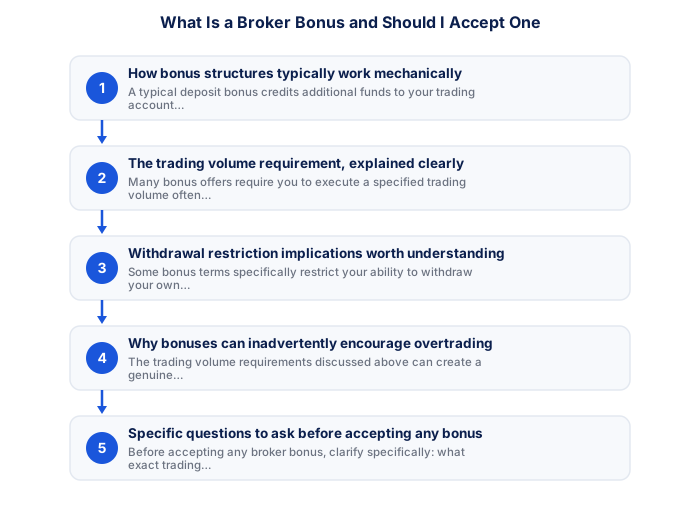
- How bonus structures typically work mechanically
- The trading volume requirement, explained clearly
- Withdrawal restriction implications worth understanding
- Why bonuses can inadvertently encourage overtrading
- Specific questions to ask before accepting any bonus
- When a bonus might genuinely make sense for your situation
1. How bonus structures typically work mechanically
A typical deposit bonus credits additional funds to your trading account based on a percentage of your actual deposit, increasing your available trading capital and, correspondingly, your potential position sizing capacity given the same risk percentage. This appears, on the surface, as straightforwardly beneficial, more capital to trade with at no additional cost.
The genuine complexity emerges in the specific terms governing when and how this bonus amount, and sometimes even your own original deposited funds, can actually be withdrawn, these terms vary considerably between brokers and specific promotional offers, making careful reading of the full terms essential before assuming the bonus provides unambiguous benefit.
It's worth treating any promotional offer with this level of scrutiny by default, regardless of how straightforwardly generous it appears at first glance. A genuinely well-intentioned bonus and a deliberately restrictive one can look nearly identical in their headline marketing, the actual difference only becomes clear once you've read the specific conditions governing how and when that bonus, and sometimes your own funds, can actually be accessed.
The bonus itself is only part of the picture, what matters is whether the attached trading volume requirement is realistic for how you actually trade.
2. The trading volume requirement, explained clearly
Many bonus offers require you to execute a specified trading volume, often measured in total lots traded, before the bonus amount (and sometimes your original deposit) becomes eligible for withdrawal. This volume requirement can sometimes be substantial, effectively requiring you to trade considerably more frequently or with larger position sizes than your own strategy might otherwise naturally call for, simply to meet this externally imposed threshold.
This creates a genuine tension with disciplined, criteria-based trading: meeting an artificial volume requirement to access bonus funds can directly conflict with the principle that trading frequency should be driven by genuine strategy signals, not external incentive structures imposed by promotional terms.
- Search FSP name or number at fsca.co.za
- Confirm licence is current and not suspended
- Check scope covers forex and CFD activity
- Confirm client funds in segregated accounts
- Read FSCA enforcement actions history
- Test customer support before depositing
- Client funds legally segregated
- FSCA complaints process available
- SA consumer protections apply
- ZAR account, no FX conversion costs
- Some offshore brokers offer wider instruments
- Regulatory overhead passed on in spreads
- Stricter position limits for retail clients
- FICA verification required before trading
- Client funds segregated
- Formal FSCA complaints process
- SA consumer protections apply
- ZAR account available
- Fund safety not guaranteed
- Overseas disputes only
- SA law does not apply
- Currency conversion costs
It's worth calculating this requirement concretely against your own realistic trading pattern before accepting any offer. A volume requirement stated as a round number of lots can sound modest in the abstract, but translating it into how many actual trades, at your own typical position size, it would genuinely require gives a far clearer sense of whether meeting it naturally fits your existing strategy or would demand trading considerably more than you otherwise would.
3. Withdrawal restriction implications worth understanding
Some bonus terms specifically restrict your ability to withdraw your own original deposited funds until the bonus-related volume requirement is met, not just the bonus amount itself, this is a particularly important detail to understand clearly, since it means accepting a bonus could temporarily restrict access to your own capital, not merely the promotional bonus funds, in ways you might not have anticipated if you only skimmed the headline bonus offer without reading the complete terms.
Reading the complete, specific terms regarding exactly which funds are restricted, under what conditions, and for how long, before accepting any bonus offer is essential precisely because of this potential implication for your own capital's liquidity and accessibility, not just the promotional bonus amount.
This is worth checking specifically before depositing any amount you might need access to on short notice. A bonus that temporarily locks your own original capital behind a volume requirement can create genuine inconvenience, or worse, if an unexpected need for that money arises before the requirement has been met.
4. Why bonuses can inadvertently encourage overtrading
The trading volume requirements discussed above can create a genuine incentive toward overtrading, trading more frequently, or with larger position sizes than your strategy's genuine criteria would otherwise call for, specifically to meet an externally imposed volume threshold rather than because genuine, qualifying trading opportunities have actually presented themselves.
This represents a meaningful, practical risk: bonus offers can introduce precisely the kind of undisciplined, criteria-violating trading behaviour that damages genuine trading outcomes over time, the bonus's apparent benefit needs to be weighed honestly against this real behavioural risk it can introduce.
| Protection | FSCA Regulated | Offshore Unregulated |
|---|---|---|
| Client fund segregation | ✓ Required | Varies by broker |
| SA complaints process | ✓ Available | ✗ Not available |
| SA consumer law applies | ✓ Yes | ✗ No |
| ZAR account available | ✓ Typically | Often USD/EUR only |
This risk is worth taking seriously specifically because it can operate below conscious awareness. A trader working toward a bonus volume target may genuinely believe each individual trade is well-reasoned, while a look back at their trading journal afterward reveals a meaningful uptick in criteria-violating entries that coincides suspiciously closely with the period they were actively chasing that specific bonus requirement.
5. Specific questions to ask before accepting any bonus
Before accepting any broker bonus, clarify specifically: what exact trading volume is required before the bonus becomes withdrawable, whether this requirement also restricts withdrawal of your own original deposited funds, what happens to the bonus if you decide to withdraw before meeting the volume requirement, and whether there's a time limit by which the volume requirement must be met or the bonus is forfeited.
If a broker's support team can't or won't answer these specific questions clearly and directly, or if the terms seem deliberately complex or opaque, this itself is worth treating as a meaningful caution sign about the overall transparency and client-friendliness of that specific promotional offer.
Getting these answers in writing, rather than relying on a verbal explanation from a support agent, matters here for the same reason it matters when confirming other important account terms: a written record gives you something concrete to point back to if the broker's actual practice ever seems to diverge from what was initially communicated.
6. When a bonus might genuinely make sense for your situation
A bonus might genuinely make sense if you're already planning to trade at a volume that would naturally meet the requirement through your own genuine, disciplined strategy activity anyway, without needing to artificially inflate your trading frequency specifically to access the bonus, in this specific scenario, the bonus represents genuine additional benefit without introducing the overtrading risk discussed above.
For traders whose natural, disciplined trading volume wouldn't otherwise meet a bonus's specific requirement, the more cautious, generally advisable approach is declining the bonus offer entirely, trading according to your own genuine strategy without this external incentive distorting your decision-making, rather than accepting an offer that might pressure you toward behaviour inconsistent with sound, disciplined trading practice.
Ask specifically whether your account is ring-fenced against a negative balance. negative balance protection should be stated in the agreement rather than in support chat.
High volume thresholds often make bonus funds practically inaccessible.
Bonuses add temporary capital but restrict withdrawals until volume conditions are met. High thresholds make bonus funds practically inaccessible for most traders, making them less attractive than they appear.
★ Why It Matters
Worth calculating before accepting: the exact trading volume required to access full withdrawal rights, divided by your normal trading frequency. This often reveals the bonus effectively requires you to trade considerably more than you otherwise would, which is the real cost behind an apparently free offer.
✕ Common mistakes
- Assuming the bonus amount is immediately withdrawable. Most bonuses carry conditions before any withdrawal rights apply.
- Not reading what happens to the bonus if you close the account early. Unmet conditions typically mean forfeiting the bonus entirely.
- Treating a bonus offer as a primary reason to choose a broker. Regulatory status and execution quality should matter more than promotional offers.
Key Takeaways
- Deposit bonuses often come with withdrawal restrictions and trading volume requirements. Learn what to check before accepting any broker bonus offer.
- A broker bonus typically offers a percentage match on your deposit, for example, a 50% bonus on R10,000 credits an extra R5,000.
- These often come with significant withdrawal restrictions and trading volume requirements, so evaluate the specific terms carefully.
- How bonus structures typically work mechanically.
- The trading volume requirement, explained clearly.
See also: What Is a Broker's Client Categorisation Process?.
Frequently asked follow-up questions
Are broker bonuses legal and regulated in South Africa?
FSCA-regulated brokers offering bonuses must do so within a broader fair-treatment and disclosure framework, though specific bonus terms still require careful individual review.
Can I simply decline a bonus if I don't want the associated terms?
Yes, accepting any bonus offer is generally optional, and declining it allows you to deposit and withdraw funds without the specific volume requirements and restrictions that come with bonus acceptance.
Do all brokers offer the same type of bonus structure?
No, specific bonus structures, percentages, and terms vary considerably between brokers and even between different promotional periods with the same broker, making individual review of any specific offer essential.
