i Short answer
Natural gas CFDs are available through many FSCA-regulated brokers, alongside oil trading.
Natural gas shows notably high volatility tied to weather patterns and seasonal heating and cooling demand.
📋 ON THIS PAGE
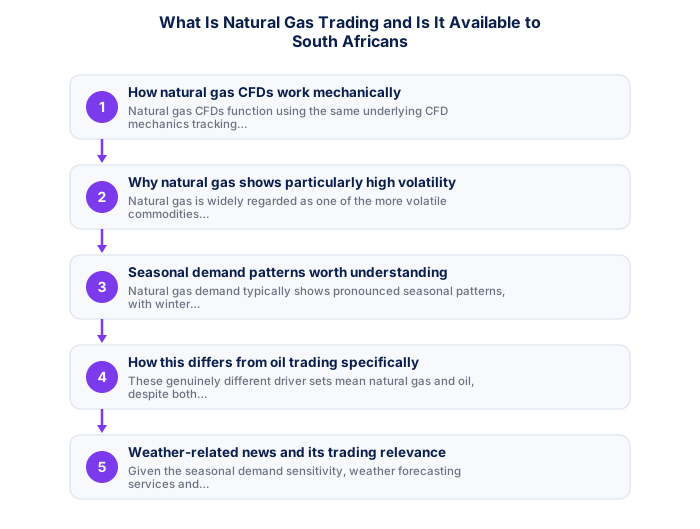
1. How natural gas CFDs work mechanically
Natural gas CFDs work using the same underlying CFD mechanics as any other instrument, tracking the live price without requiring physical delivery, using margin and leverage, and letting you go long or short based on your analysis. The same position sizing and risk management principles apply, just calibrated to natural gas's own volatility profile.
It's worth checking your specific broker's natural gas offering directly, since availability and specific contract terms vary between providers, worth confirming this instrument is genuinely accessible on your platform before building any strategy around it.
2. Why natural gas shows particularly high volatility
Natural gas is widely seen as one of the more volatile commodities available to retail traders, reflecting its sensitivity to weather forecasts, more limited storage flexibility than oil, and the fairly immediate, inelastic nature of heating and cooling demand, which can't easily be deferred or substituted in the short term the way demand for some other commodities can.
It's worth checking current volatility figures directly using a tool like the volatility calculator discussed elsewhere on this site before trading this instrument, given how significantly natural gas volatility can exceed more commonly traded instruments, adjusting your position sizing accordingly matters considerably here.
See also: What Are CFDs on Bonds, and Do South Africans Trade Them?
See also: What Is a Heat Map Tool and How Do Traders Use It?
- SARB economic calendar checked for the week
- Next Eskom load shedding schedule reviewed
- GNU stability news reviewed
- Stats SA data releases noted
- Credit agency review dates checked
- US/global events that move EM risk noted
3. Seasonal demand patterns worth understanding
Natural gas demand typically shows pronounced seasonal patterns, with winter heating demand and summer cooling demand (where gas-fired electricity generation matters) both driving real price sensitivity to seasonal weather. That context explains why weather forecasts carry outsized relevance for natural gas compared to many other commodities.
It's worth building awareness of these seasonal patterns into your broader analytical routine if you trade this instrument regularly, understanding the typical annual demand cycle gives useful context for interpreting price movement beyond any single day's news.
| Event | Frequency | ZAR impact | Source |
|---|---|---|---|
| SARB MPC | 6x per year | High | resbank.co.za |
| Budget Speech | Annual (February) | Very high | treasury.gov.za |
| Credit reviews | Annual each agency | Very high | Agency sites |
| Stats SA CPI | Monthly | Medium | statssa.gov.za |
| Eskom stage | As needed | Low-medium | eskomsepush.com |
- SA context provides genuine informational edge
- ZAR pairs accessible via FSCA brokers in ZAR accounts
- Rand volatility creates larger intraday ranges
- 6 SARB meetings/year create regular macro setups
- Higher geopolitical risk than G10 pairs
- Load shedding creates unique operational disruptions
- SA rand liquidity thinner than major G10 pairs
- SA-specific news requires constant local monitoring
4. How this differs from oil trading specifically
Oil's price drivers include OPEC+ production decisions and broader global economic demand trends, while natural gas's drivers centre more on regional weather patterns and gas-specific storage dynamics. Different driver sets mean natural gas and oil, despite both being energy commodities, don't necessarily move together and need somewhat separate fundamental analysis.
It's worth adjusting your analytical framework specifically when moving from oil to natural gas trading, discussed elsewhere on this site regarding oil trading, the considerably more pronounced weather and seasonal sensitivity here requires a genuinely different research focus than oil's more geopolitically-driven dynamics.
6. Risk management considerations specific to this instrument
Given natural gas's notably high typical volatility, applying disciplined position sizing calibrated to current volatility readings through tools like ATR helps make sure your risk exposure genuinely reflects this commodity's elevated volatility profile compared to many other instruments.
Oil is more directly linked to the Rand given South Africa's net importer status.
Natural gas CFDs are available through some FSCA-regulated brokers and carry very high volatility with strong seasonal patterns. Oil is more directly connected to the Rand given South Africa's status as a net oil importer.
★ Why It Matters
Worth knowing: natural gas inventory reports, typically released weekly, tend to produce some of the sharpest short-term price reactions in the commodity space, worth tracking on an economic calendar if you trade this market.
✕ Common mistakes
- Treating natural gas like other energy commodities without adjustment. Seasonal heating and cooling demand creates a distinctly different dynamic.
- Not checking liquidity before sizing a position in this less commonly traded instrument. Liquidity tends to be thinner than for majors or even other commodities.
- Assuming price drivers are identical to oil's despite both being energy commodities. Each has its own specific seasonal and demand dynamics.
Key Takeaways
- Natural gas CFDs are available through many brokers, characterised by high volatility tied to weather patterns and seasonal demand cycles.
- Natural gas CFDs are available through many FSCA-regulated brokers, alongside oil trading.
- Natural gas shows notably high volatility tied to weather patterns and seasonal heating and cooling demand.
- How natural gas CFDs work mechanically.
- Why natural gas shows particularly high volatility.
Frequently asked follow-up questions
Is natural gas suitable for beginners?
Given its notably high volatility, many traders consider natural gas a more advanced instrument, better suited to those with established risk management discipline.
Does natural gas correlate with oil prices?
There can be some loose correlation since both are energy commodities, but the distinct driver sets above mean the relationship isn't as strong or consistent as some traders assume.
Are there different natural gas contracts available?
Some brokers offer different natural gas CFD products, so checking your broker's documentation will clarify exactly which contract specification applies to your trading.
