i Short answer
Your trading account generally remains open and your funds remain accessible even if you stop trading for an extended period.
However, many brokers apply an inactivity fee once your account has been dormant for a defined period, commonly around 90 days.
📋 ON THIS PAGE
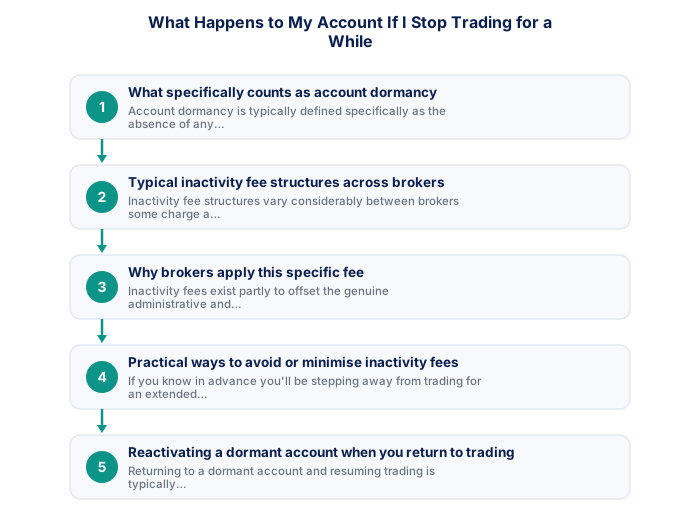
1. What specifically counts as account dormancy
Account dormancy is typically defined specifically as the absence of any trading activity, opening or closing positions, over a defined period, regardless of whether you log into the platform to simply view your account or check balances during that time. Some brokers may define this slightly differently, so checking your specific broker's exact dormancy definition is worthwhile if you're planning an extended pause from active trading.
This means logging in periodically just to check your account, without placing any actual trades, generally doesn't reset the dormancy clock under most brokers' specific definitions, the relevant trigger is genuine trading activity specifically, not simply platform access.
This distinction between platform access and genuine trading activity is worth confirming explicitly with your specific broker if you're someone who likes checking in periodically without necessarily trading, since assuming your login activity alone keeps an account active, when the broker's actual policy defines dormancy purely by trade execution, could mean fees accumulate despite your regular check-ins.
2. Typical inactivity fee structures across brokers
Inactivity fee structures vary considerably between brokers, some charge a flat monthly fee once the dormancy threshold is crossed, others charge a fee that increases the longer the account remains dormant, and some brokers waive this fee entirely as part of their specific business model and competitive positioning. The specific threshold triggering this fee (commonly somewhere in the 90-day range, though this varies) and the exact fee amount should be detailed in your broker's published fee schedule.
Some brokers cap the total inactivity fee that can be charged over time, or stop charging once the account balance reaches a certain low threshold, rather than allowing fees to continue accumulating indefinitely, checking these specific details for your broker helps you understand the realistic worst-case cost of an extended, unplanned dormancy period.
- South African ID or valid passport
- Proof of residential address dated within 3 months
- Proof of bank account ownership
- Selfie or photo for biometric verification (some brokers)
- Source of funds declaration if depositing above threshold
- Full charting and analysis
- Best for trade entry
- Multi-monitor support
- More order types available
- Monitor and manage on the go
- Load shedding backup use
- Push price alerts
- Limited charting tools
It's worth reading this specific section of your broker's fee schedule now, before you ever need it, rather than discovering the details only once an unplanned absence has already triggered the fee. A few minutes spent understanding the realistic worst-case scenario removes any unpleasant surprise later.
3. Why brokers apply this specific fee
Inactivity fees exist partly to offset the genuine administrative and compliance costs of maintaining dormant accounts (ongoing record-keeping, compliance monitoring, and system resource allocation continue regardless of whether an account is actively trading), and partly as a business incentive structure encouraging clients to either actively use the platform or formally close accounts they no longer intend to use, rather than leaving numerous dormant, unused accounts indefinitely within the broker's systems.
Understanding this rationale helps frame the fee as a reasonable, if sometimes inconvenient, business practice rather than an arbitrary or punitive charge, though it remains genuinely worth factoring into your planning if you anticipate any extended period away from trading.
It's worth comparing this specific policy across a few candidate brokers if inactivity fees are a genuine concern for your situation, some brokers position themselves more favourably on this specific dimension as a competitive differentiator, worth factoring into your broader broker comparison if you know your own trading pattern tends to include extended breaks.
4. Practical ways to avoid or minimise inactivity fees
If you know in advance you'll be stepping away from trading for an extended period, due to travel, a personal life change, or simply a deliberate trading break, several options can help manage this: withdrawing your funds before the dormancy period begins, then redepositing when you return to active trading, avoiding any inactivity fee exposure during the pause entirely; placing a single small, deliberate trade periodically (if this aligns reasonably with your broader strategy) specifically to reset the dormancy clock, though this should never be done purely to avoid a fee in a way that conflicts with sound trading discipline; or simply accepting the inactivity fee as a known, budgeted cost of maintaining the account ready for your eventual return.
Whichever approach you choose, making this a deliberate decision based on your specific broker's actual fee structure and your own planning, rather than discovering the fee unexpectedly after an unplanned absence, reflects sound, proactive financial awareness.
| Rejection reason | Fix |
|---|---|
| Address proof older than 3 months | Get a recent utility bill or bank statement |
| Name mismatch between documents | Use documents with exactly matching full name |
| Poor quality scan | Retake with good lighting, all corners visible |
| PO Box address | Brokers require physical residential address only |
It's worth being honest with yourself about the second option specifically, placing a token trade purely to reset the dormancy clock, since this can quietly drift into exactly the kind of criteria-violating, undisciplined trading behaviour that sound risk management is meant to prevent. If you choose this route, it's worth holding it to the same strategy-based standards as any other trade, rather than treating it as an exception.
5. Reactivating a dormant account when you return to trading
Returning to a dormant account and resuming trading is typically straightforward, simply logging in and placing a new trade generally reactivates the account and stops any further accumulation of inactivity fees from that point forward, though any fees already charged during the dormancy period typically remain applied and aren't usually retroactively refunded simply because you've resumed activity.
If your dormancy period has been particularly extended, it's worth checking whether your specific broker requires any additional re-verification of your account details or documentation before allowing you to resume full trading activity, since FICA compliance requirements can sometimes require periodic refresh after extended account inactivity.
6. Planning ahead for a deliberate, planned trading break
If you know a break from trading is coming, extended travel, a demanding period at work, or simply a deliberate pause to reassess your strategy, deciding in advance how you'll handle your account specifically (withdraw and redeposit later, accept the inactivity fee as a budgeted cost, or some other approach) removes the need to make this decision reactively once the break has already begun.
This kind of advance planning mirrors the broader predetermined-decision-making principle found throughout sound trading psychology: deciding calmly, before the situation arises, tends to produce better outcomes than reactive decisions made once you're already mid-break and potentially less focused on optimising this particular administrative detail.
A single trade typically resets the inactivity clock at most brokers.
Most brokers apply a monthly inactivity fee after a set period of no trading activity, typically 3-12 months. A single trade usually resets the clock if you intend to keep the account open.
★ Why It Matters
Worth checking specifically before a planned break: the exact inactivity fee trigger date and amount for your specific broker, this varies enough between providers that 'most brokers charge around 90 days' isn't precise enough to plan around for your own account.
✕ Common mistakes
- Assuming logging in alone prevents an inactivity fee. Some brokers only count an actual trade as resetting the clock.
- Leaving funds in a dormant account without checking the fee structure first. A few minutes of checking avoids an unwelcome surprise.
- Forgetting about a dormant secondary account entirely. Secondary accounts are easy to lose track of and can quietly accrue fees.
Key Takeaways
- Your account remains open, but inactivity fees may apply after a defined dormancy period. Learn what to expect and how to manage a paused account.
- Your trading account generally remains open and your funds remain accessible even if you stop trading for an extended period.
- However, many brokers apply an inactivity fee once your account has been dormant for a defined period, commonly around 90 days.
- What specifically counts as account dormancy.
- Typical inactivity fee structures across brokers.
Frequently asked follow-up questions
Will my account be permanently closed if it stays dormant too long?
Some brokers may eventually close accounts that remain dormant for a very extended period, particularly if balance reaches zero through accumulated fees; checking your specific broker's policy on this is worthwhile for genuinely long-term breaks.
Does opening a demo account avoid inactivity fee concerns entirely?
Yes, demo accounts generally don't carry inactivity fees in the same way live accounts can, since no real funds are at stake in a demo account.
Can I negotiate or have an inactivity fee waived?
Some brokers may waive fees in specific circumstances if you contact support directly, particularly for longstanding clients, though this isn't guaranteed and depends on the specific broker's policies and discretion.
