i Short answer
Many broker comparison sites earn affiliate commission from featured brokers, meaning published rankings can reflect partnership arrangements as much as genuine assessment.
📋 ON THIS PAGE
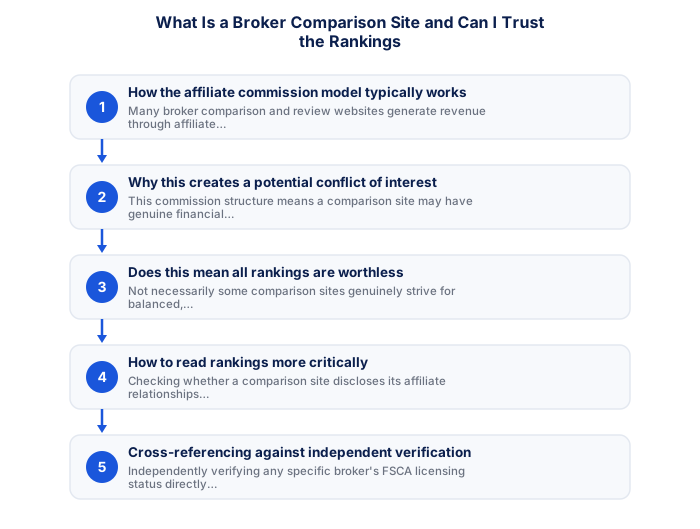
1. How the affiliate commission model typically works
Many broker comparison and review websites generate revenue through affiliate partnerships, earning a commission when a visitor clicks through and opens an account with a featured broker, similar in structure to the revenue incentives that influencer trading content often carries too.
This model itself is worth understanding as fairly standard across much of the online financial content industry, not something unique or specifically suspicious about broker comparison sites. The existence of an affiliate relationship doesn't automatically indicate dishonesty, but it does mean the underlying business model rewards traffic converting into sign-ups, an incentive worth keeping in mind while reading any specific ranking or recommendation.
2. Why this creates a potential conflict of interest
This commission structure means a comparison site may have genuine financial incentive to rank or feature brokers offering more favourable commission terms, rather than necessarily ranking based purely on objective service quality, fees, or execution, this doesn't automatically mean every ranking is dishonest, but the underlying incentive structure is worth understanding clearly.
See also: How Does Trading Real Estate Investment Trusts (REITs) Wo
It's worth thinking about this the same way you might evaluate any recommendation with a financial incentive attached, a real estate agent recommending a specific bond originator, for example. The recommendation isn't automatically wrong, but understanding that an incentive exists changes how much independent verification is worth doing before relying on it fully.
- Search FSP name or number at fsca.co.za
- Confirm licence is current and not suspended
- Check scope covers forex and CFD activity
- Confirm client funds in segregated accounts
- Read FSCA enforcement actions history
- Test customer support before depositing
- Client funds legally segregated
- FSCA complaints process available
- SA consumer protections apply
- ZAR account, no FX conversion costs
- Some offshore brokers offer wider instruments
- Regulatory overhead passed on in spreads
- Stricter position limits for retail clients
- FICA verification required before trading
- Client funds segregated
- Formal FSCA complaints process
- SA consumer protections apply
- ZAR account available
- Fund safety not guaranteed
- Overseas disputes only
- SA law does not apply
- Currency conversion costs
3. Does this mean all rankings are worthless
Not necessarily, some comparison sites genuinely strive for balanced, well-researched assessment despite this commission structure, and a broker offering good affiliate terms isn't automatically a poor choice for traders either, since these two factors aren't necessarily connected. The key is recognising this incentive exists rather than assuming any specific ranking is entirely free of commercial influence.
A useful way to separate the two: a broker paying a comparison site well for placement tells you something about that broker's marketing budget and affiliate program terms, not directly about their spread quality, execution speed, or regulatory standing, factors worth verifying through the independent channels discussed below regardless of how prominently a broker features in any specific ranking.
4. How to read rankings more critically
Checking whether a comparison site discloses its affiliate relationships transparently, looking for specific, substantive comparison criteria rather than vague, generic praise, and noting whether genuinely negative aspects of featured brokers are ever mentioned at all, helps distinguish more genuinely balanced comparison content from purely promotional material dressed up as objective comparison.
A comparison site that never has anything even mildly critical to say about any featured broker is worth treating with particular scepticism, since genuine, balanced comparison almost inevitably surfaces some trade-offs or limitations for every broker, no product or service is perfect on every single dimension simultaneously.
| Protection | FSCA Regulated | Offshore Unregulated |
|---|---|---|
| Client fund segregation | ✓ Required | Varies by broker |
| SA complaints process | ✓ Available | ✗ Not available |
| SA consumer law applies | ✓ Yes | ✗ No |
| ZAR account available | ✓ Typically | Often USD/EUR only |
5. Cross-referencing against independent verification
Independently verifying any specific broker's FSCA licensing status directly through the official register, checking genuinely independent user reviews from forums or communities unconnected to the comparison site itself, and reading the broker's own terms and conditions directly, provides verification beyond what any single comparison site's ranking alone can offer.
This independent verification step is worth treating as mandatory rather than optional, regardless of how thorough or trustworthy any specific comparison site appears to be. The FSCA register check specifically takes only a few minutes and confirms the single most important fact, genuine regulatory legitimacy, directly from the primary source rather than through any intermediary's summary of it.
6. A practical approach to using these sites
Using comparison sites as one helpful starting point for discovering options and understanding general feature categories, while treating any specific ranking or recommendation as requiring independent verification before final decision-making, reflects a balanced, appropriately informed approach to this kind of content.
It is worth establishing in writing whether a loss can exceed your balance. negative balance protection is a term, not a default.
Verifying independently the details that matter most for your own trading is essential.
Broker comparison site rankings are often influenced by affiliate commissions. Independently verifying FSCA licence status and testing real-world execution quality matters more than any published ranking.
★ Why It Matters
Worth doing as a specific check: search whether the comparison site discloses its affiliate relationships anywhere on the page, sites that are transparent about earning commission from listed brokers tend to be more trustworthy overall than those that present rankings as purely independent with no disclosure at all.
✕ Common mistakes
- Assuming a top-ranked broker is automatically the best fit for you. Rankings reflect the site's criteria, not necessarily your specific needs.
- Not cross-referencing rankings against independent regulatory verification. A comparison site's claims are no substitute for checking the FSCA register directly.
- Treating sponsored placement as equivalent to genuine editorial recommendation. These are often blended in ways that aren't immediately obvious.
Key Takeaways
- Many comparison sites earn commission from featured brokers, meaning rankings can reflect partnership arrangements as much as genuine, independent quality.
- Many broker comparison sites earn affiliate commission from featured brokers, meaning published rankings can reflect partnership arrangements as much as genuine assessment.
- How the affiliate commission model typically works.
- Why this creates a potential conflict of interest.
- Does this mean all rankings are worthless.
See also: How Do I Evaluate YouTube and Influencer Trading Content?.
Frequently asked follow-up questions
Should I avoid broker comparison sites entirely?
Not necessarily. They can provide a useful starting point for discovering options, provided you apply independent verification before final decisions.
How can I tell if a site discloses its affiliate relationships?
Many sites include a disclosure statement, sometimes in their footer or about page; its absence doesn't necessarily mean no affiliate relationship exists, but its presence reflects more transparent practice.
Does a broker appearing on multiple comparison sites mean it's genuinely good?
Not necessarily on its own; broad affiliate programme participation can produce this pattern regardless of genuine service quality, making independent verification still important.
