i Short answer
Minimum deposits among FSCA-regulated brokers typically range from R200 to R1,500, though it varies by broker and account type.
Practical, sustainable trading usually requires considerably more than this bare minimum.
📋 ON THIS PAGE
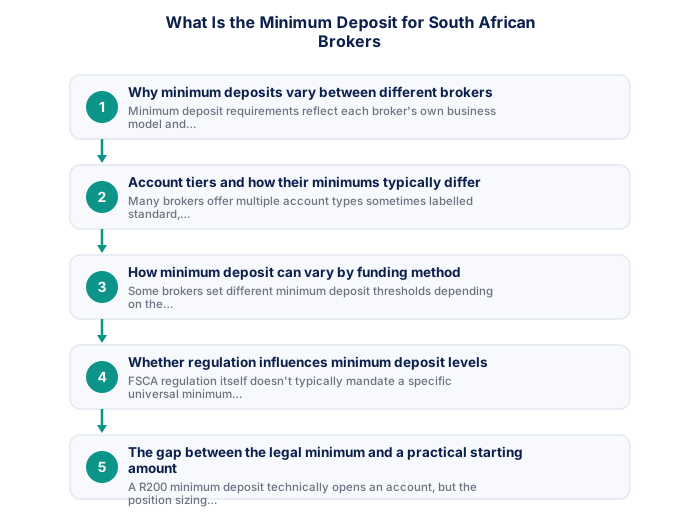
- Why minimum deposits vary between different brokers
- Account tiers and how their minimums typically differ
- How minimum deposit can vary by funding method
- Whether regulation influences minimum deposit levels
- The gap between the legal minimum and a practical starting amount
- Why checking current minimums directly with brokers matters
1. Why minimum deposits vary between different brokers
Minimum deposit requirements reflect each broker's own business model and target client base rather than any single universal regulatory requirement. Brokers targeting a broader, more accessible retail client base tend to set lower minimums to reduce the barrier to account opening, while brokers offering more premium account tiers with additional features or dedicated support may set higher minimums for those tiers.
This variation means shopping around and comparing minimum deposit requirements directly across a few FSCA-regulated candidate brokers, alongside other comparison factors, is worthwhile if minimum deposit accessibility is a meaningful consideration in your decision.
It's worth being aware that a lower minimum deposit isn't automatically a sign of a more beginner-friendly or more trustworthy broker either. Some brokers deliberately set low minimums specifically to attract higher volumes of smaller retail accounts, which is a legitimate business strategy but not, by itself, a signal about the broker's overall quality, execution, or service standard.
See also: What Does Pending Order Mean in Trading?
| Account Tier | Typical Minimum |
|---|---|
| Micro/Basic | R200 to R2,000 |
| Standard | R5,000 to R10,000 |
| VIP/Premium | R50,000 and above |
2. Account tiers and how their minimums typically differ
Many brokers offer multiple account types, sometimes labelled standard, premium, or VIP tiers, each with different minimum deposit requirements and sometimes different associated features like tighter spreads, dedicated account management, or access to additional research and analysis tools. Entry-level account tiers typically carry the lowest minimum deposit requirements discussed above, while higher tiers can require minimums considerably above this entry-level range.
For most beginning traders, starting with a broker's standard, entry-level account tier is generally sufficient and appropriate, with upgrading to a higher tier (if a broker offers genuinely valuable additional features at that tier) being a consideration worth revisiting only once you have meaningful trading experience and a larger account balance justifying the higher minimum.
- Search FSP name or number at fsca.co.za
- Confirm licence is current and not suspended
- Check scope covers forex and CFD activity
- Confirm client funds in segregated accounts
- Read FSCA enforcement actions history
- Test customer support before depositing
- Client funds legally segregated
- FSCA complaints process available
- SA consumer protections apply
- ZAR account, no FX conversion costs
- Some offshore brokers offer wider instruments
- Regulatory overhead passed on in spreads
- Stricter position limits for retail clients
- FICA verification required before trading
- Client funds segregated
- Formal FSCA complaints process
- SA consumer protections apply
- ZAR account available
- Fund safety not guaranteed
- Overseas disputes only
- SA law does not apply
- Currency conversion costs
It's worth being sceptical of marketing that frames higher tiers as clearly superior by default. Some of the additional features attached to premium tiers, dedicated account managers in particular, carry their own considerations worth weighing carefully rather than assuming more expensive automatically means more suitable for your specific needs at your current stage of trading experience.
3. How minimum deposit can vary by funding method
Some brokers set different minimum deposit thresholds depending on the funding method used, for example, a slightly lower minimum for EFT deposits compared to card deposits, or vice versa, reflecting the different processing costs and risk considerations associated with each payment method.
Checking this specific detail for your intended funding method, rather than assuming a single universal minimum applies regardless of how you plan to deposit, avoids potential confusion or a rejected initial deposit attempt if your intended amount happens to fall below the specific threshold for your chosen method.
This detail is easy to overlook when comparing brokers purely by their most prominently advertised headline minimum figure. Reading the specific terms for your intended payment method, rather than the general minimum quoted in marketing material, gives a more accurate picture of what you'll actually need to deposit to open the account the way you specifically plan to fund it.
4. Whether regulation influences minimum deposit levels
FSCA regulation itself doesn't typically mandate a specific universal minimum deposit figure that all regulated brokers must follow. This remains primarily a business decision for each individual broker, operating within the broader regulatory framework but not specifically dictated by it. This is different from, for example, leverage caps in some other jurisdictions, which can be more directly regulator-mandated.
This means minimum deposit comparison is genuinely a broker-specific business policy comparison, rather than something where regulatory compliance alone determines a uniform figure across the entire regulated South African market.
| Protection | FSCA Regulated | Offshore Unregulated |
|---|---|---|
| Client fund segregation | ✓ Required | Varies by broker |
| SA complaints process | ✓ Available | ✗ Not available |
| SA consumer law applies | ✓ Yes | ✗ No |
| ZAR account available | ✓ Typically | Often USD/EUR only |
This distinction is worth keeping in mind when comparing South African broker terms against what you might read about brokers operating under different regulatory regimes elsewhere. A minimum deposit figure that seems unusual relative to international norms isn't itself a regulatory red flag, since this specific figure was never something FSCA regulation standardised across the industry in the first place.
5. The gap between the legal minimum and a practical starting amount
The legal or policy minimum deposit a broker accepts is rarely the same figure as a genuinely practical starting amount for sustainable, sound risk management. A R200 minimum deposit technically opens an account, but the position sizing math reveals why this amount severely constrains your ability to apply sound, consistent risk management in practice.
Treating the advertised minimum deposit as informational, confirming a broker is accessible and doesn't require an unreasonably high barrier to entry, rather than as a target starting amount itself, helps avoid the common mistake of starting with an amount that's technically permitted but practically too small for genuinely sound trading practice.
Working backward from your intended risk percentage per trade and realistic position sizing, rather than forward from the smallest amount a broker happens to accept, gives a far more useful figure for deciding how much you should actually deposit to begin trading in a genuinely sustainable, disciplined way.
6. Why checking current minimums directly with brokers matters
Minimum deposit requirements, along with other specific account terms, can change over time as brokers adjust their business policies, promotional offers, or account tier structures. Rather than relying on potentially outdated information from older articles, reviews, or secondhand sources, confirming the current, specific minimum deposit directly on a broker's official website or by contacting their support team ensures you're working with accurate, up-to-date information before making any account opening decision.
This direct verification habit, similar to regulatory licence verification, reflects the broader principle of confirming important account details directly with the source rather than relying on potentially stale secondhand information when making decisions involving your actual money.
Local EFT deposits and withdrawals run through the infrastructure overseen by PASA (the Payments Association of South Africa), which is part of why Rand-denominated transfers between South African bank accounts tend to clear faster than international wire transfers.
The FSCA doesn't set a minimum deposit. Broker minimums vary widely. While some allow accounts from R500, a more meaningful starting amount of R5,000-R20,000 allows genuine risk management discipline from the start.
★ Why It Matters
Worth checking: whether a broker's advertised minimum deposit applies to all account types they offer or just their most basic tier. The headline minimum sometimes doesn't reflect what's actually required for the account type and features you'd genuinely want to use.
✕ Common mistakes
- Choosing a broker based on minimum deposit alone. This figure says little about regulatory status, execution quality, or support.
- Treating the minimum deposit as a recommended starting amount. Minimums exist to remove account-opening friction, not to suggest an appropriate trading amount.
- Not checking whether a low minimum comes with other trade-offs. Some lower-tier accounts carry less favourable spreads or features.
What documents do I need to open a trading account in South Africa?
You typically need a South African ID or passport, proof of residential address dated within three months, and proof of bank account ownership. Some brokers require additional documentation for higher deposit tiers.
Key Takeaways
- Minimum deposits typically range from R200 to R1,500 among FSCA-regulated brokers, though practical trading usually requires more. Learn the actual range.
- Minimum deposits among FSCA-regulated brokers typically range from R200 to R1,500, though it varies by broker and account type.
- Practical, sustainable trading usually requires considerably more than this bare minimum.
- Why minimum deposits vary between different brokers.
- Account tiers and how their minimums typically differ.
Frequently asked follow-up questions
Is a lower minimum deposit always better when choosing a broker?
Not necessarily. Minimum deposit accessibility is just one factor among many in broker selection, and shouldn't be weighted more heavily than regulatory standing, spreads, and platform quality.
Can I deposit more than the stated minimum on my first deposit?
Yes, the minimum is simply a floor requirement, you can deposit any amount at or above this minimum, subject to any maximum limits the broker might also specify.
Do minimum deposits change for South African clients specifically versus other countries?
Minimum deposits can sometimes vary by jurisdiction-specific entity for multi-jurisdiction brokers, so checking the specific South African-facing terms directly is worthwhile.
