i Short answer
Major pairs include the US Dollar paired with other large, heavily-traded economies' currencies, while minor and exotic pairs progressively involve smaller, less liquid markets.
USD/ZAR is typically classified as an exotic pair given South Africa's emerging-market status.
📋 ON THIS PAGE
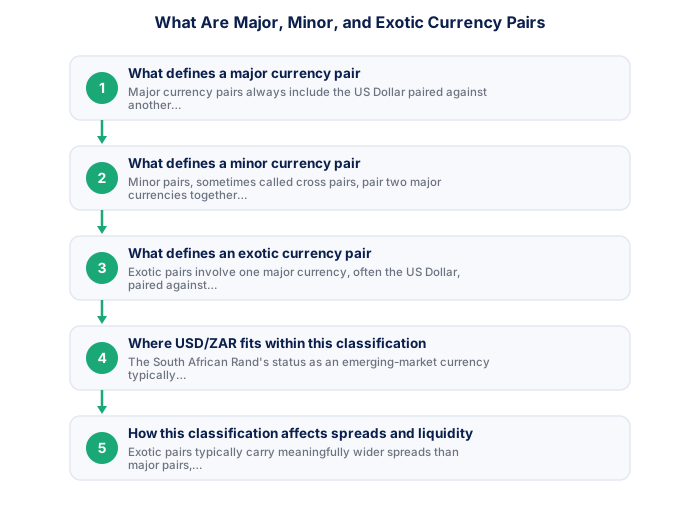
1. What defines a major currency pair
Major currency pairs always include the US Dollar paired against another large, heavily-traded economy's currency, including pairs like EUR/USD, GBP/USD, and USD/JPY, representing the most heavily traded, highest-liquidity segment of the global forex market.
It's worth understanding why this specific category enjoys such favourable trading conditions, the sheer volume of daily trading activity across these particular pairs creates deep, genuinely liquid markets, which translates directly into the tighter spreads and more reliable execution that make majors a sensible starting point for most beginning traders.
See also: What Is EUR/USD and Why Is It the Most Traded Pair?
| Category | Example | Typical Liquidity |
|---|---|---|
| Major | EUR/USD, GBP/USD | Highest |
| Minor (Cross) | EUR/GBP, AUD/JPY | Moderate to high |
| Exotic | USD/ZAR, USD/TRY | Lower, wider spreads |
2. What defines a minor currency pair
Minor pairs, sometimes called cross pairs, pair two major currencies together without involving the US Dollar directly, such as EUR/GBP or GBP/JPY, representing a step down in typical liquidity compared to true major pairs.
See also: EUR/USD: Why Is It the Most Traded Pair?
It's worth building genuine familiarity with at least one or two specific minor pairs if you plan to trade them regularly, similar to the depth-over-breadth principle discussed elsewhere on this site, since each minor pair carries its own particular behavioural characteristics worth understanding beyond the general category definition.
| Lot type | Size | USD/ZAR pip value | Min recommended account |
|---|---|---|---|
| Standard | 100,000 units | ~R1.00 | R100,000+ |
| Mini | 10,000 units | ~R0.10 | R10,000+ |
| Micro | 1,000 units | ~R0.01 | R1,000+ |
| Nano | 100 units | ~R0.001 | R100+ |
- V = Pip value in account currency
- E = Current exchange rate of quote vs account currency
- L = Lot size (100,000 standard / 10,000 mini / 1,000 micro)
- USD/ZAR example = 1 pip = R1 per standard lot
- Leveraged instrument
- Long and short available
- Overnight financing applies
- No ownership of asset
- Typically unleveraged
- Physical currency received
- No daily financing
- Currency ownership
3. What defines an exotic currency pair
Exotic pairs involve one major currency, often the US Dollar, paired against a currency from a smaller or emerging-market economy, typically showing considerably lower liquidity and wider spread costs compared to major or minor pairs.
It's worth checking a specific exotic pair's actual current spread before trading it, rather than assuming a general 'wider spread' description tells you enough, the specific gap can vary considerably between different exotic pairs and between different brokers offering the same pair.
4. Where USD/ZAR fits within this classification
The South African Rand's status as an emerging-market currency typically places this pair within the exotic category, meaning South African traders' most relevant currency pair often carries the wider spreads and lower liquidity characteristics typical of this broader category.
It's worth appreciating this classification as useful context rather than a reason for concern specifically, USD/ZAR's exotic status reflects genuine emerging-market characteristics worth understanding, discussed throughout this site's economy content, rather than suggesting the pair is somehow less legitimate or tradeable than major pairs.
5. How this classification affects spreads and liquidity
Exotic pairs typically carry meaningfully wider spreads than major pairs, reflecting their lower trading volume and the correspondingly higher cost liquidity providers, typically charge for facilitating trading in these less liquid markets.
6. Does this classification matter for your strategy choice
Understanding whether you're trading a major, minor, or exotic pair helps set realistic expectations around typical spread costs and liquidity, which can meaningfully affect strategies particularly sensitive to these factors, like scalping.
Minor and exotic pairs carry wider spreads and can be more erratic.
Major pairs offer the tightest spreads and most predictable liquidity. Minor and exotic pairs, including ZAR crosses, typically carry wider spreads and can show more erratic behaviour.
South African traders have a natural analytical advantage on rand-paired currencies because they observe the domestic drivers of ZAR directly and continuously. The technical relationships between major currency pairs and the USD/ZAR, particularly the negative correlation between USD/ZAR and risk-on periods, become more predictable once you understand which component of USD/ZAR movement is driven by global USD strength and which is driven by SA-specific fundamental factors. Building this analytical separation into your daily market review produces more precise ZAR trading hypotheses than treating USD/ZAR as a single undifferentiated signal.
★ Why It Matters
Worth knowing specifically about USD/ZAR: despite its exotic classification, it's actually one of the more liquid exotic pairs globally given South Africa's relatively developed financial markets, so while spreads are wider than majors, it's far more tradeable than many other exotics.
✕ Common mistakes
- Applying major-pair spread expectations to exotic pairs. Wider spreads are normal and expected for this classification.
- Not adjusting position sizing for the typically higher volatility of exotics. Exotic pairs often move more sharply than majors on a percentage basis.
- Treating all exotic pairs as equally risky or liquid. Liquidity and volatility vary considerably even within this single classification.
Key Takeaways
- Major pairs include the US Dollar paired with other large economies' currencies, while minor and exotic pairs progressively involve smaller, less liquid markets.
- Major pairs include the US Dollar paired with other large, heavily-traded economies' currencies, while minor and exotic pairs progressively involve smaller, less liquid markets.
- USD/ZAR is typically classified as an exotic pair given South Africa's emerging-market status.
- What defines a major currency pair.
- What defines a minor currency pair.
See also: What Is a Currency War and Has This Ever Affected the Rand?.
Frequently asked follow-up questions
Does exotic classification mean USD/ZAR is inherently a bad pair to trade?
No, this simply means understanding the typically wider spreads and different liquidity characteristics involved, rather than this classification implying the pair is inherently unsuitable.
Can a currency pair's classification change over time?
In principle yes, if an economy's market status genuinely evolves, though established classifications tend to remain relatively stable over typical trading timeframes.
Are minor pairs always cheaper to trade than exotic pairs?
Generally yes given typically higher liquidity, though specific spreads still vary by broker and current market conditions rather than following an absolutely fixed rule.
Does this classification affect available leverage for different pairs?
Yes, brokers often apply more conservative leverage limits to exotic pairs given their typically higher volatility and lower liquidity.
Should beginners avoid exotic pairs entirely when starting out?
Many educators suggest beginners start with major pairs specifically given their typically tighter spreads and more predictable liquidity while still building foundational skill.
