i Short answer
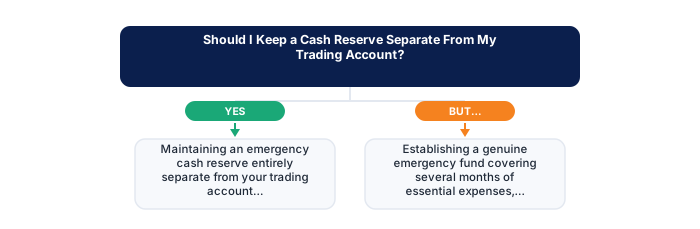
Yes. Maintaining an emergency cash reserve entirely separate from your trading account prevents financial pressure from forcing premature or poorly-timed withdrawals.
📋 ON THIS PAGE
- Why an emergency reserve matters before trading at all
- How financial pressure can distort trading decisions specifically
- How much reserve is generally considered sufficient
- The sequencing this suggests for new traders specifically
- Keeping this reserve genuinely separate and accessible
- Revisiting this reserve as your circumstances change
1. Why an emergency reserve matters before trading at all
Establishing a genuine emergency fund covering several months of essential expenses, held entirely separate from any trading or speculative capital, gives a foundational layer of financial security that should generally exist before allocating any money specifically toward discretionary trading activity.
It's worth treating this reserve as a genuine prerequisite rather than a nice-to-have addition, in the same way you wouldn't begin actively trading before opening a properly verified account, establishing this foundational financial buffer first belongs at the very start of your trading journey, not somewhere to get to eventually.
2. How financial pressure can distort trading decisions specifically
Genuine financial pressure, needing to withdraw trading funds urgently to cover an unexpected expense, can force poorly-timed withdrawals during a temporary drawdown, or create exactly the kind of desperate, pressured mindset that undermines the disciplined decision-making sound trading requires.
See also: Reinvest Trading Profits or Withdraw Regularly?
It's worth recognising this specific scenario as one of the more damaging, avoidable outcomes discussed throughout this site, being forced to close a position at a genuinely unfavourable moment purely because you need the cash urgently, rather than because your strategy called for that exit, represents exactly the kind of externally-imposed, undisciplined decision sound planning is meant to prevent.
- FSCA-regulated broker verified at fsca.co.za
- Demo account tested for minimum 60 days
- Trading plan written: entry, exits, position sizing
- Risk per trade defined (1-2% of account)
- Backup internet connection tested for load shedding
- Tax implications understood
3. How much reserve is generally considered sufficient
While individual circumstances vary, broader personal finance guidance commonly suggests an emergency reserve covering three to six months of essential living expenses as a reasonable general benchmark, giving genuine financial buffer before any consideration of additional discretionary trading capital allocation.
It's worth calculating your own specific figure explicitly rather than relying on a rough, general sense of what feels adequate, working through your actual essential monthly expenses and multiplying by your chosen number of months gives a concrete, personally relevant target rather than an abstract guideline.
4. The sequencing this suggests for new traders specifically
A sensible sequencing involves establishing this emergency reserve first, then addressing other core financial priorities, before allocating any genuinely discretionary remainder toward trading. Attempting to fund trading capital before this foundational reserve exists risks the kind of financial pressure covered above.
It's worth being patient with this sequencing even if it means delaying your trading start, the temporary delay in beginning to trade is a small cost compared to the genuine protection this proper financial foundation provides once you do begin.
| Item | Detail |
|---|---|
| Regulator | FSCA, fsca.co.za |
| Exchange control | SARB, resbank.co.za |
| Tax authority | SARS, sars.gov.za |
| JSE hours | 09:00-17:00 SAST Mon-Fri |
| Best forex session | 15:00-17:00 SAST |
| CGT annual exclusion | R50,000 (individuals) |
5. Keeping this reserve genuinely separate and accessible
This emergency reserve should generally be held in a genuinely separate, easily accessible account, distinct from your trading account, and ideally distinct from longer-term investment holdings too, ensuring it remains immediately available specifically for its intended emergency purpose without requiring liquidating trading positions or investments under pressure.
6. Revisiting this reserve as your circumstances change
As your income, expenses, and broader financial circumstances evolve over time, periodically revisiting whether your emergency reserve remains genuinely adequate ensures this foundational financial security continues matching your current actual situation rather than an earlier, potentially outdated assessment.
Keeping them separate prevents cross-contamination under pressure.
Your trading account and emergency cash reserve serve completely different purposes. Keeping them clearly separate prevents the common, damaging mistake of drawing on your reserve to fund trading losses.
★ Why It Matters
Worth doing concretely: physically separate this reserve into a different bank account or product entirely, not just a different mental category within the same account. The psychological barrier of an extra transfer step measurably reduces the temptation to dip into it during a rough trading patch.
✕ Common mistakes
- Keeping the reserve mentally separate but in the same account. Physical separation creates a meaningful psychological barrier against dipping into it.
- Treating the reserve as available during a rough trading patch. This defeats the purpose of having it as a genuine safety net.
- Not defining in advance what circumstances justify using the reserve. Clear rules prevent rationalised exceptions under pressure.
- Sizing the reserve without considering your actual monthly expenses. A reserve disconnected from real costs may be insufficient when needed.
What if this goes wrong with the broker?
Complain to the firm in writing first, then to the FAIS Ombud after about six weeks, free of charge. Broker disputes covers the route.
Key Takeaways
- Yes, maintaining an emergency cash reserve outside your trading account prevents financial pressure from forcing premature or poorly-timed withdrawals.
- Maintaining an emergency cash reserve entirely separate from your trading account prevents financial pressure from forcing premature or poorly-timed withdrawals.
- Why an emergency reserve matters before trading at all.
- How financial pressure can distort trading decisions specifically.
- How much reserve is generally considered sufficient.
Frequently asked follow-up questions
Can my emergency reserve and trading capital be the same account?
This isn't generally advisable, given the discretionary capital principle. Genuine separation supports both clearer thinking and protects your essential financial security.
What if I can't afford both an emergency fund and trading capital right now?
Prioritising the emergency fund first is generally the more financially sound sequencing, with trading capital allocation following once this foundational security is established.
Emergency reserves are generally kept in readily accessible, low-volatility forms specifically because they may be needed urgently and unpredictably, differing from longer-term investment capital.
