i Short answer
Unrealised profit reflects an open position's current paper gain, which remains subject to change as price continues moving.
Realised profit becomes final only once a position is closed, converting the paper gain into an actual change in your balance.
📋 ON THIS PAGE
1. How unrealised profit is calculated and displayed
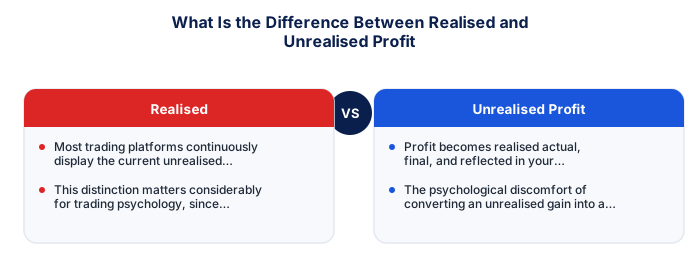
Most trading platforms continuously display the current unrealised profit or loss on any open position, calculated as the difference between your entry price and the current live market price, multiplied by your position size position size. This figure updates continuously in real time as price moves, meaning it can swing between positive and negative repeatedly while a position remains open.
It's worth checking this figure specifically as part of your regular position monitoring, discussed elsewhere on this site regarding equity in a trading account, rather than only focusing on your account balance, which doesn't reflect this genuine, current gain.
See also: How Do I Complete the SARS ITR12 for Trading Income?
2. The moment profit actually becomes realised
Profit becomes realised, actual, final, and reflected in your account balance, only at the moment a position is closed, whether manually or automatically through a stop-loss or take-profit order. Before this moment, no matter how favourable the unrealised figure currently appears, nothing is genuinely locked in, and the position remains fully exposed to further price movement in either direction.
It's worth appreciating that this closing moment doesn't create the profit, it simply locks in a gain that already genuinely existed, worth remembering this whenever you're debating whether to close a profitable position, the profit is real either way.
- FSCA-regulated broker verified at fsca.co.za
- Demo account tested for minimum 60 days
- Trading plan written: entry, exits, position sizing
- Risk per trade defined (1-2% of account)
- Backup internet connection tested for load shedding
- Tax implications understood
| Aspect | Unrealised Profit | Realised Profit |
|---|---|---|
| Also called | Floating profit, open P&L | Closed profit, booked profit |
| When it appears | While position is open | When position is closed |
| Effect on balance | Changes equity, not account balance | Permanently increases account balance |
| Can it disappear? | Yes: market reversal can wipe it | No: it's locked in |
| Tax implications (SARS) | Not yet assessable | Assessable in the tax year it is realised |
| Psychological risk | High: creates premature confidence | Lower: outcome is final |
| Withdrawable? | No: position must be closed first | Yes: once settled |
3. Why this distinction matters psychologically
This distinction matters considerably for trading psychology, since traders sometimes mentally treat a large unrealised gain as though it were already secured, becoming reluctant to close the position and lock in the actual profit, only to watch the unrealised gain shrink or disappear entirely as price subsequently reverses before they eventually do close the position.
It's worth being aware of the specific opposite psychological pull profits can create compared to losses, discussed elsewhere on this site regarding loss aversion and exiting winners too early, an unrealised profit can trigger anxious urgency to lock it in, sometimes prematurely relative to your actual strategy.
4. The connection to loss aversion
Behavioural research calls this loss aversion, and it explains why holding a losing position feels easier than closing it.
It's worth recognising this asymmetric response explicitly, the same underlying psychological mechanism that makes losses feel disproportionately significant also makes traders anxious about losing an unrealised gain back to breakeven, worth applying the same predetermined-exit discipline to both situations.
| Item | Detail |
|---|---|
| Regulator | FSCA, fsca.co.za |
| Exchange control | SARB, resbank.co.za |
| Tax authority | SARS, sars.gov.za |
| JSE hours | 09:00-17:00 SAST Mon-Fri |
| Best forex session | 15:00-17:00 SAST |
| CGT annual exclusion | R50,000 (individuals) |
5. How this affects the different balance displays on your platform
Most platforms display multiple distinct balance figures: your account balance (reflecting only realised results from closed positions), your equity (balance plus current unrealised profit or loss from open positions), and sometimes margin-related figures. Understanding which figure represents genuinely locked-in results versus which includes still-fluctuating unrealised amounts avoids confusion about your actual, secured financial position.
It's worth understanding exactly which figure your platform is showing you at any given moment, checking both your balance and equity figures together, discussed elsewhere on this site, gives you the complete, accurate picture of your genuine current financial position.
6. Practical implications for your decision-making
Practically, treating unrealised profit with appropriate caution, recognising it as a current, fluctuating estimate rather than a secured outcome, supports disciplined, predetermined exit planning, including setting take-profit levels in advance specifically to convert favourable unrealised positions into genuinely realised gains at a predetermined, rational point, rather than relying on in-the-moment judgement about when a paper gain feels sufficiently large to finally close.
Realised profit is permanently settled and part of your declarable income.
Unrealised profit increases your equity while a position is open, but it can disappear if price reverses before you close. Once closed, it becomes realised profit, permanently settled and declarable to SARS.
★ Why It Matters
Worth testing on yourself honestly: notice whether you treat unrealised profit differently in your risk decisions than realised profit, for example, taking larger risks because you're "playing with the market's money." This distinction shouldn't affect sound risk management, but it often does in practice.
✕ Common mistakes
- Treating unrealised profit as guaranteed before the position is actually closed. It remains subject to change as price continues moving.
- Not noticing if you treat realised and unrealised profit differently in risk decisions. This personal pattern is worth checking honestly in your own behaviour.
- Holding a winning position purely because the unrealised gain feels significant. The decision to hold should rest on current analysis, not the size of the paper gain.
Key Takeaways
- Unrealised profit reflects an open position's current paper gain, while realised profit is locked in only once a position is actually closed.
- Unrealised profit reflects an open position's current paper gain, which remains subject to change as price continues moving.
- Realised profit becomes final only once a position is closed, converting the paper gain into an actual change in your balance.
- How unrealised profit is calculated and displayed.
- The moment profit actually becomes realised.
The mirror image, and the one that matters more for tax, is covered in realised versus unrealised losses.
See also: Is Forex Trading the Same as Gambling?.
Frequently asked follow-up questions
Does unrealised profit count toward my available margin?
Generally yes, most platforms factor unrealised profit into your equity calculation, which can affect your available free margin for new positions.
Can unrealised profit become unrealised loss without me doing anything?
Yes, since this figure continuously updates with live price movement, a position showing unrealised profit can shift to unrealised loss if price reverses, without any action on your part.
Is there a way to lock in partial profit without fully closing a position?
Some platforms support partial position closure, letting you realise some profit while keeping a portion of the position open, depending on your platform's functionality.
