i Short answer
Trading bot marketplaces sell pre-built Expert Advisors and automated trading scripts.
Verifying genuine, independently audited performance matters considerably more than marketing claims before purchasing.
📋 ON THIS PAGE
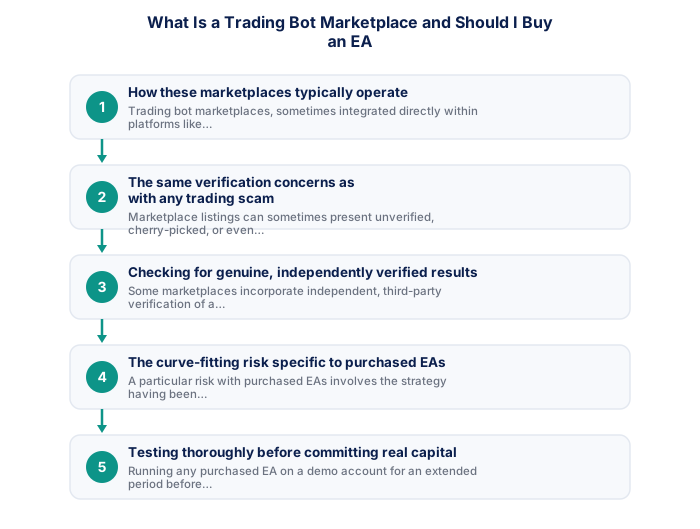
1. How these marketplaces typically operate
Trading bot marketplaces, sometimes built directly into platforms like MetaTrader, or operating as independent third-party websites, let developers sell pre-built automated trading scripts to traders who may not have the programming skill to build their own Expert Advisors from scratch.
2. The same verification concerns as with any trading scam
Marketplace listings can sometimes present unverified, cherry-picked, or even fabricated performance claims. The marketplace format itself doesn't guarantee the underlying product's quality or honesty, so the same scepticism and verification that applies to any trading claim matters just as much here.
- FSCA-regulated broker verified at fsca.co.za
- Demo account tested for minimum 60 days
- Trading plan written: entry, exits, position sizing
- Risk per trade defined (1-2% of account)
- Backup internet connection tested for load shedding
- Tax implications understood
3. Checking for genuine, independently verified results
Some marketplaces include independent, third-party verification of a listed EA's actual trading history, which is more reliable evidence than the developer's own self-reported claims. Seeking out and prioritising listings with this kind of independent verification, rather than relying solely on developer-provided screenshots or claims, supports better-informed purchasing decisions.
4. The curve-fitting risk specific to purchased EAs
A particular risk with purchased EAs is overfitting in backtesting: the strategy may have been optimised, sometimes excessively, to perform impressively on the historical data used for marketing, without genuine robustness to perform similarly well on new, future, unseen conditions. That's harder for a buyer to detect than for the original developer who built and potentially over-optimised the strategy in the first place.
| Item | Detail |
|---|---|
| Regulator | FSCA, fsca.co.za |
| Exchange control | SARB, resbank.co.za |
| Tax authority | SARS, sars.gov.za |
| JSE hours | 09:00-17:00 SAST Mon-Fri |
| Best forex session | 15:00-17:00 SAST |
| CGT annual exclusion | R50,000 (individuals) |
5. Testing thoroughly before committing real capital
Running any purchased EA on a demo account for an extended period before committing real capital gives you your own independent, current verification beyond whatever historical claims the marketplace listing made, forward-testing being the natural complement to any historical backtesting claims.
6. Building versus buying an automated strategy
For traders with the interest and aptitude for it, building your own automated strategy based on a manually-developed and tested approach gives you considerably more confidence in genuine understanding and robustness than buying an opaque, pre-built strategy whose internal logic you may not fully understand or be able to independently verify.
South African traders who maintain a weekly review routine, checking the SARB economic calendar for the coming week, reviewing the Eskom load shedding schedule, assessing the current GNU coalition stability backdrop, and marking key support and resistance levels on the instruments they trade, consistently outperform traders who approach each session without any structured preparation. This weekly routine takes 30 to 45 minutes and produces a clearer analytical framework that reduces impulsive decisions and improves the quality of trade selection throughout the week.
Most EA marketplaces are filled with curve-fitted results that performed on historical data but fail going forward. A genuine verified track record with independent forward testing data is rare and worth demanding.
★ Why It Matters
Worth requesting before any purchase: the EA's actual live trading results (not just backtested ones) from an independent, verifiable source like a public tracking service. Backtested performance and real live performance diverge more often than marketplace listings tend to suggest.
✕ Common mistakes
- Not testing a purchased EA on demo before deploying with real capital. This step catches issues backtests alone sometimes miss.
- Assuming a high marketplace rating reflects genuine, sustained performance. Ratings can reflect early enthusiasm rather than long-term results.
- Buying based on marketing claims rather than requesting verifiable evidence. Confident vendors are generally willing to provide this when asked directly.
What should I do if I have a dispute with my broker?
Raise the issue through the broker's formal complaints process first. If unresolved, escalate to the FSCA for FSCA-regulated brokers or to the relevant overseas regulator for offshore brokers. Document all communications in writing.
The difference between traders who improve systematically and those who plateau for extended periods is typically not natural talent or market insight but the quality of their record-keeping and review process. Traders who maintain a detailed journal, review every trade against their original rationale, and update their trading plan based on accumulated evidence rather than gut feeling develop a feedback loop that continuously improves their decision quality. This structured approach is available to every trader regardless of experience level and costs nothing except the discipline to apply it consistently.
Key Takeaways
- Marketplaces sell pre-built Expert Advisors, but verifying genuine, independently audited performance matters more than marketing claims before purchasing.
- Trading bot marketplaces sell pre-built Expert Advisors and automated trading scripts.
- Verifying genuine, independently audited performance matters considerably more than marketing claims before purchasing.
- How these marketplaces typically operate.
- The same verification concerns as with any trading scam.
Frequently asked follow-up questions
Are all marketplace EAs scams?
No, some are genuinely developed with reasonable rigour, though the verification concerns above mean careful, independent evaluation still matters before any purchase.
Should I avoid marketplace EAs entirely and build my own instead?
Not strictly necessary, but building your own does give you more genuine understanding and confidence than relying on an opaque, purchased product.
Does a higher price guarantee a better EA?
No. Price alone isn't a reliable quality indicator, much like paid trading courses generally.
