i Short answer
Agricultural commodity CFDs covering products like corn, wheat, and soybeans are available through some FSCA-regulated brokers, alongside energy commodities.
Prices are driven heavily by weather patterns, seasonal harvest cycles, and global supply and demand dynamics distinct from precious metals or energy.
📋 ON THIS PAGE
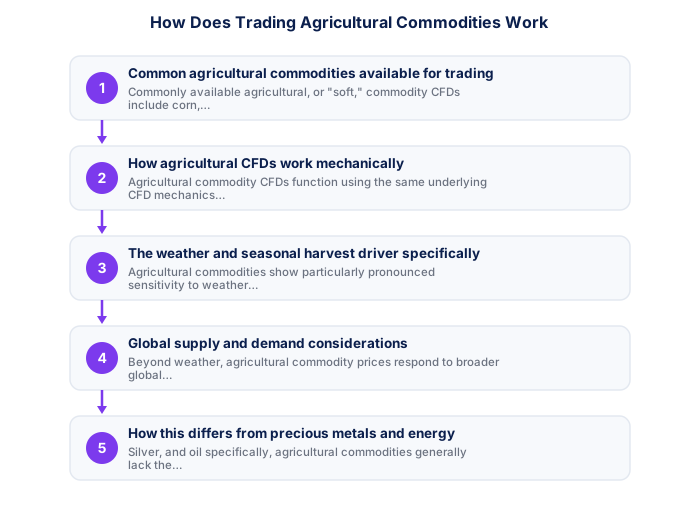
1. Common agricultural commodities available for trading
Commonly available agricultural, or "soft," commodity CFDs include corn, wheat, soybeans, sugar, and coffee, among others, depending on your broker's instrument range, giving exposure to global agricultural markets beyond the more commonly discussed forex, metals, and index instruments.
It's worth checking your specific broker's available range directly, since agricultural commodity CFD coverage tends to be narrower and less universal than the major precious metals or energy instruments, worth confirming availability before building a strategy around a specific soft commodity.
| Commodity | Primary Driver |
|---|---|
| Wheat | Weather, global supply |
| Corn | Weather, biofuel demand |
| Soybeans | Global demand, especially China |
| Coffee | Weather in key growing regions |
| Sugar | Weather, global production levels |
2. How agricultural CFDs work mechanically
Agricultural commodity CFDs work using the same underlying CFD mechanics as other instruments, tracking the live price of the commodity without requiring physical delivery, using margin and leverage, with the ability to go long or short based on your analysis, similar in structure to gold, silver, and platinum CFDs.
It's worth double-checking your broker's specific contract specifications for any agricultural instrument you trade, including lot sizes and pip or point value, since these can differ meaningfully from the forex conventions you may already be more familiar with.
- FSCA-regulated broker verified at fsca.co.za
- Demo account tested for minimum 60 days
- Trading plan written: entry, exits, position sizing
- Risk per trade defined (1-2% of account)
- Backup internet connection tested for load shedding
- Tax implications understood
3. The weather and seasonal harvest driver specifically
Like natural gas's weather sensitivity, agricultural commodities show particularly pronounced sensitivity to weather conditions in key growing regions, with droughts, floods, or unusual temperature patterns during critical growing or harvest periods often producing significant price movement as expected supply is revised based on these developments.
It's worth following agricultural forecasts and crop reports for major growing regions relevant to whichever specific commodity you trade, this kind of specialised information source is genuinely worth building into your research routine if agricultural commodities form a meaningful part of your trading.
4. Global supply and demand considerations
Beyond weather, agricultural commodity prices respond to broader global demand trends, including population growth and changing dietary patterns in large economies, alongside supply-side factors like planting decisions, government agricultural policy in major producing countries, and international trade dynamics affecting specific crops.
It's worth tracking these longer-term demand trends as background context, even though they operate on a considerably slower timescale than the more immediate weather-driven volatility discussed above, both timeframes genuinely matter for a complete picture of agricultural commodity price behaviour.
| Item | Detail |
|---|---|
| Regulator | FSCA, fsca.co.za |
| Exchange control | SARB, resbank.co.za |
| Tax authority | SARS, sars.gov.za |
| JSE hours | 09:00-17:00 SAST Mon-Fri |
| Best forex session | 15:00-17:00 SAST |
| CGT annual exclusion | R50,000 (individuals) |
5. How this differs from precious metals and energy
Unlike gold, silver, and oil, agricultural commodities generally lack the safe-haven characteristics associated with precious metals, instead responding more purely to specific supply and demand fundamentals, which makes their price behaviour driven by a genuinely different set of underlying factors.
It's worth adjusting your analytical framework specifically when moving from precious metals or forex into agricultural commodities, the safe-haven and yield-seeking mechanisms that drive currency and precious metals analysis largely don't apply here, requiring a genuinely different set of fundamental considerations.
6. Risk management considerations for this specific asset class
Given the sometimes sudden, weather-driven volatility these commodities can show, applying the same disciplined, volatility-aware position sizing, calibrated to each particular agricultural commodity's own current volatility rather than assumptions from other asset classes, supports appropriate risk management for this instrument category.
Markets typically price in a weather forecast as soon as it's released. By the time the weather is actually confirmed, the price has often already moved on the earlier forecast.
★ Why It Matters
Worth knowing if you trade these: agricultural commodity prices respond to weather forecasts before the weather event itself occurs, meaning the market frequently moves on a forecast that later proves wrong, a distinct dynamic from energy or metals, which respond more to confirmed supply and demand data.
✕ Common mistakes
- Trading on confirmed weather data rather than anticipating forecasts. By the time weather is confirmed, the price often has already moved on the forecast.
- Treating agricultural commodities like metals or energy in terms of price drivers. Weather and seasonal harvest cycles are a distinctly different dynamic.
- Ignoring how forecast errors can reverse a recent price move sharply. A revised forecast can undo an earlier weather-driven move quickly.
- Not checking liquidity before sizing a position in these less commonly traded instruments. Liquidity tends to be thinner than for major forex pairs or indices.
Key Takeaways
- Agricultural commodity CFDs like corn, wheat, and soybeans are available through some brokers, with prices driven heavily by weather and seasonal harvest cycles.
- Agricultural commodity CFDs covering products like corn, wheat, and soybeans are available through some FSCA-regulated brokers, alongside energy commodities.
- Prices are driven heavily by weather patterns, seasonal harvest cycles, and global supply and demand dynamics distinct from precious metals or energy.
- Common agricultural commodities available for trading.
- How agricultural CFDs work mechanically.
Frequently asked follow-up questions
Are agricultural commodities more volatile than precious metals?
This varies by commodity and current conditions. Weather-driven events can sometimes produce sharper, more sudden movement than the more gradually-developing trends typical of precious metals.
Do all brokers offer agricultural commodity CFDs?
Availability varies considerably by broker. Checking your broker's instrument list will clarify which agricultural commodities are available to you.
Does South African weather affect these global agricultural prices?
Global agricultural prices are driven primarily by conditions in major producing regions, which may or may not include South Africa depending on the particular crop in question.
