i Short answer
Decision fatigue degrades judgement quality after extended periods of sustained decision-making.
This makes structured routines and limiting your total daily trading decisions genuinely important.
📋 ON THIS PAGE
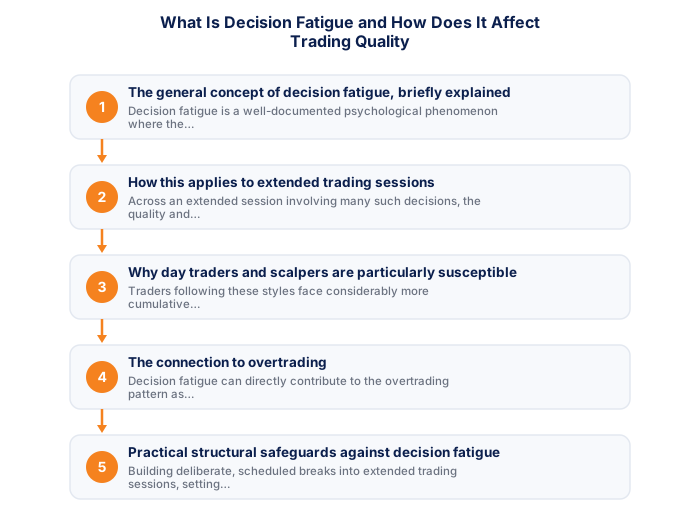
- The general concept of decision fatigue, briefly explained
- How this applies to extended trading sessions
- Why day traders and scalpers are particularly susceptible
- The connection to overtrading
- Practical structural safeguards against decision fatigue
- Recognising decision fatigue in yourself during a session
1. The general concept of decision fatigue, briefly explained
Decision fatigue is a well-documented psychological phenomenon where the quality of decisions deteriorates after a long session of decision-making, as the cognitive resources required for careful, deliberate judgement become progressively depleted. This isn't unique to trading, but applies broadly across any activity requiring sustained, repeated decision-making.
It's worth understanding this as a genuine, well-documented psychological phenomenon studied extensively beyond trading specifically, judges, doctors, and other decision-heavy professionals show measurably declining decision quality across their working day, the same underlying mechanism applies directly to trading.
2. How this applies specifically to extended trading sessions
Each individual trading decision, whether to enter, how to size a position, when to exit, draws on the same limited cognitive resources decision fatigue research describes generally. Across an extended session involving many such decisions, the quality and discipline of later decisions can genuinely deteriorate compared to earlier ones, even without the trader necessarily noticing this decline themselves.
See also: What Is the Gambler's Fallacy in Trading?
It's worth noticing your own decision quality honestly across a longer session, comparing your first hour's trades against your final hour's trades in your own trading journal often reveals a genuine, measurable decline worth taking seriously rather than dismissing.
- FSCA-regulated broker verified at fsca.co.za
- Demo account tested for minimum 60 days
- Trading plan written: entry, exits, position sizing
- Risk per trade defined (1-2% of account)
- Backup internet connection tested for load shedding
- Tax implications understood
3. Why day traders and scalpers are particularly susceptible
Traders following these styles face considerably more cumulative decision-making within a single session than swing or position traders, making decision fatigue a particularly relevant, practical concern specifically for these higher-frequency trading styles.
It's worth appreciating why this specific vulnerability connects directly to trading style choice, discussed elsewhere on this site regarding matching style to your schedule, the sheer decision volume inherent to faster-paced styles makes decision fatigue a genuinely relevant consideration when choosing your approach.
4. The connection to overtrading
Decision fatigue can directly contribute to the overtrading pattern, as cognitive resources deplete later in a session, the discipline required to maintain strict criteria adherence and resist marginal, criteria-violating setups can weaken, making fatigue-driven overtrading a genuine, distinct contributing factor alongside the more commonly discussed emotional triggers like boredom or impatience.
It's worth recognising this connection explicitly, since it reframes some overtrading instances as a fatigue problem rather than purely a discipline problem, worth addressing through session length limits specifically, discussed elsewhere on this site, rather than only through willpower alone.
| Item | Detail |
|---|---|
| Regulator | FSCA, fsca.co.za |
| Exchange control | SARB, resbank.co.za |
| Tax authority | SARS, sars.gov.za |
| JSE hours | 09:00-17:00 SAST Mon-Fri |
| Best forex session | 15:00-17:00 SAST |
| CGT annual exclusion | R50,000 (individuals) |
5. Practical structural safeguards against decision fatigue
As, building deliberate, scheduled breaks into extended trading sessions, setting a predetermined maximum daily trade count, and considering ending your active trading session at a predetermined time regardless of how the session has unfolded, all provide structural protection against the decline in decision quality fatigue produces.
It's worth building these safeguards into your routine proactively, before fatigue actually sets in, rather than trying to recognise and respond to fatigue reactively once it's already affecting your decisions, structural limits protect you regardless of whether you notice the fatigue developing in real time.
6. Recognising decision fatigue in yourself during a session
Signs of decision fatigue during a session include noticing yourself becoming less careful about checking your full entry criteria, feeling a vague sense of mental tiredness or reduced focus, or finding yourself making faster, less deliberate decisions later in a session compared to how carefully you analysed earlier setups, recognising these signs explicitly supports taking a deliberate break before fatigue-driven errors compound.
This is loss aversion at work. Losing an amount is felt more sharply than gaining the same amount, and that asymmetry shapes behaviour more than logic does.
Decision quality degrades as a session extends. A smaller watchlist, predetermined entry criteria, and a firm session length limit reduce the number of in-moment decisions that consume cognitive resources.
★ Why It Matters
Worth testing specifically: compare your rule-adherence rate on your first three trades of a session against your trades after the tenth, many traders discover a measurable decline well before they'd have described themselves as tired, decision fatigue often arrives before its subjective feeling does.
✕ Common mistakes
- Trading the same number of setups regardless of session length. Rule-adherence often declines measurably before fatigue is consciously felt.
- Not comparing your own early-session and late-session decision quality. This comparison frequently reveals fatigue effects earlier than expected.
- Assuming fatigue only matters during unusually long sessions. Even moderate sessions can show measurable decline in decision quality.
- Ignoring structured breaks as a countermeasure during longer sessions. Built-in pauses can help reset focus before fatigue compounds.
Key Takeaways
- Decision fatigue degrades judgement quality after extended periods of decision-making, making structured routines and limited trade counts genuinely important.
- Decision fatigue degrades judgement quality after extended periods of sustained decision-making.
- This makes structured routines and limiting your total daily trading decisions genuinely important.
- The general concept of decision fatigue, briefly explained.
- How this applies specifically to extended trading sessions.
See also: What Is a Typical Day Trading Routine? and How Do I Avoid Overtrading as a Day Trader Specifically? and What Is Outcome Bias and How Does It Distort Self-Assessment?.
Frequently asked follow-up questions
How long before decision fatigue typically becomes a concern?
This varies by individual and the specific intensity of decision-making involved, though many traders notice this becoming relevant after several continuous hours of active, high-frequency trading.
Does decision fatigue affect swing traders as much as day traders?
Less significantly given their much lower decision frequency, though the underlying principle still applies to any extended period of concentrated decision-making.
Can good sleep and rest reduce susceptibility to decision fatigue?
General physical and mental wellbeing likely supports better baseline cognitive resilience, complementing the structural safeguards above.
