i Short answer
A structured post-session review, deliberate physical separation from trading, and waiting until the next scheduled session before resuming supports genuine psychological recovery.
📋 ON THIS PAGE
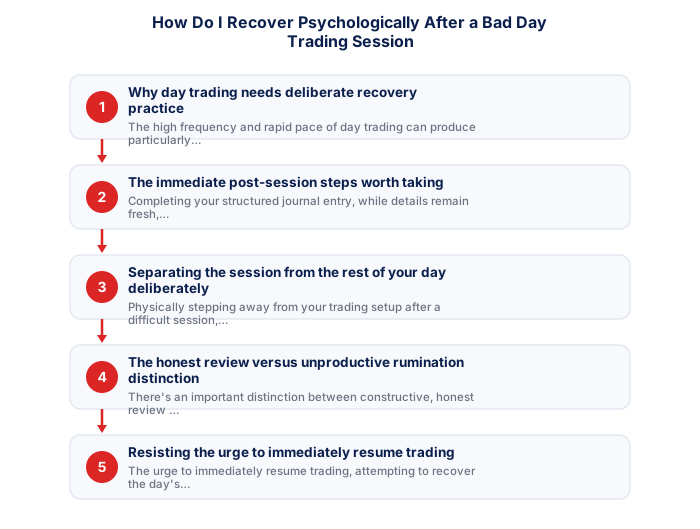
- Why day trading needs deliberate recovery practice
- The immediate post-session steps worth taking
- Separating the session from the rest of your day deliberately
- The honest review versus unproductive rumination distinction
- Resisting the urge to immediately resume trading
- Preparing mentally for your next scheduled session
1. Why day trading specifically needs deliberate recovery practice
The high frequency and rapid pace of day trading can produce particularly intense psychological impact following a genuinely difficult session, making deliberate, structured recovery practice especially important for this specific trading style, compared to the more naturally spaced-out emotional processing lower-frequency styles might allow.
It's worth building this recovery practice into your routine deliberately, in the same way you'd build in pre-session preparation, rather than treating it as something to figure out only once you're already in the midst of a genuinely difficult session's aftermath.
2. The immediate post-session steps worth taking
Completing your structured journal entry, while details remain fresh, provides constructive, immediate engagement with what happened, channeling your post-session energy into useful reflection rather than either suppressing the difficult experience entirely or dwelling on it unproductively.
It's worth completing this journal entry even when, especially when, it feels like the last thing you want to do after a difficult session, the discomfort of documenting a hard session honestly is precisely what makes the entry genuinely valuable for later, honest review.
- Emotional state is neutral
- Yesterday's results not influencing today
- Trading plan is open and reviewed
- Loss limit for today defined and accepted
- Phone notifications silenced
- Backup connectivity confirmed
- Written rules eliminate in-the-moment decisions
- Journalling creates a feedback loop for improvement
- Pre-session checks reduce emotionally-driven entries
- Regular breaks prevent compounding mistakes
- Building discipline requires active daily effort
- Losses immediately test emotional stability
- No external accountability in retail trading
- Social pressure to perform can override rules
Write your trading plan
Entry rules, risk rules, and conditions to NOT trade, all in writing.
Pre-session check
Check your emotional state before opening your platform. Skip if not neutral.
Execute only plan setups
Take only positions that fully match your written criteria.
Journal after each trade
Record rationale, emotion at entry, and outcome immediately after closing.
Weekly rules review
Assess rule adherence weekly. Adjust strategy based on evidence, not emotion.
3. Separating the session from the rest of your day deliberately
Physically stepping away from your trading setup after a difficult session, rather than continuing to sit with the platform open while ruminating, helps create the kind of clear boundary between your trading activity and the rest of your day.
It's worth having a specific, physical transition ritual for this separation, closing your laptop, leaving your dedicated trading space, changing into different clothes, something concrete that marks the boundary tends to work better than simply intending to 'stop thinking about it' without any physical accompanying action.
4. The honest review versus unproductive rumination distinction
There's an important distinction between constructive, honest review, identifying specific, addressable patterns, and unproductive rumination, which involves repeatedly revisiting the difficult experience emotionally without genuinely processing or learning from it constructively.
It's worth setting a specific time limit for this review process, deciding in advance that you'll spend a defined period, perhaps fifteen or twenty minutes, on honest analysis and then deliberately move on, prevents the review from drifting into the kind of open-ended, unproductive rumination this section is distinguishing it from.
5. Resisting the urge to immediately resume trading
As, the urge to immediately resume trading, attempting to recover the day's losses before the session has genuinely ended, represents precisely the dangerous pattern the daily loss limits and structural safeguards are specifically designed to prevent, waiting until your next scheduled session, rather than reopening trading later the same difficult day, supports better recovery.
It's worth having a concrete, predetermined rule for this specific moment, something like 'no further trading today once my daily loss limit is reached, regardless of how I feel,' removes the need to make this genuinely difficult decision while still emotionally affected by the difficult session itself.
6. Preparing mentally for your next scheduled session
Before your next scheduled trading session begins, briefly reviewing your journal entry from the difficult previous session, and consciously affirming your commitment to the same disciplined criteria and process regardless of the previous session's difficult outcome, supports approaching the new session with a genuinely fresh, calm mindset rather than carrying forward unresolved emotional residue.
The afternoon overlap is where a South African trader finds the most activity. liquidity
Completing a structured journal entry while details remain fresh, combined with physically stepping away from your trading setup, supports constructive recovery after a difficult session.
★ Why It Matters
Something worth resisting specifically: the urge to immediately analyse what went wrong while still emotionally affected, a structured review works better the next day with some distance, same-day post-mortems after a bad session tend to produce distorted, overly harsh conclusions.
✕ Common mistakes
- Immediately trying to make back the day's losses. This is one of the more direct paths into revenge trading.
- Skipping a review entirely to avoid reliving a difficult session. Avoidance prevents the very learning that would help most.
- Not separating a bad outcome from a bad process. A sound process can still produce a losing day without anything having gone wrong.
Key Takeaways
- A structured post-session review, physical separation from trading, and waiting until the next session before resuming supports genuine psychological recovery.
- A structured post-session review, deliberate physical separation from trading, and waiting until the next scheduled session before resuming supports genuine psychological recovery.
- Why day trading specifically needs deliberate recovery practice.
- The immediate post-session steps worth taking.
- Separating the session from the rest of your day deliberately.
See also: How Do I Stop Revenge Trading After a Loss?.
Frequently asked follow-up questions
How long should I wait before trading again after a very difficult session?
Many traders wait until their next regularly scheduled session, rather than resuming later the same day, giving genuine time for emotional processing.
Is it normal to still feel affected by a bad session the next day?
Yes, this is a common, understandable experience. Gradual, honest review and resilience-building support processing this over time rather than expecting immediate resolution.
Should I discuss a particularly difficult session with anyone?
Sharing with a trusted person or a genuinely supportive trading community can provide helpful perspective, provided this support remains constructive.
