i Short answer
Frequent authentication prompts can tempt traders toward weaker security shortcuts out of sheer frustration.
Using trusted-device settings where available can reduce this friction without sacrificing protection.
📋 ON THIS PAGE
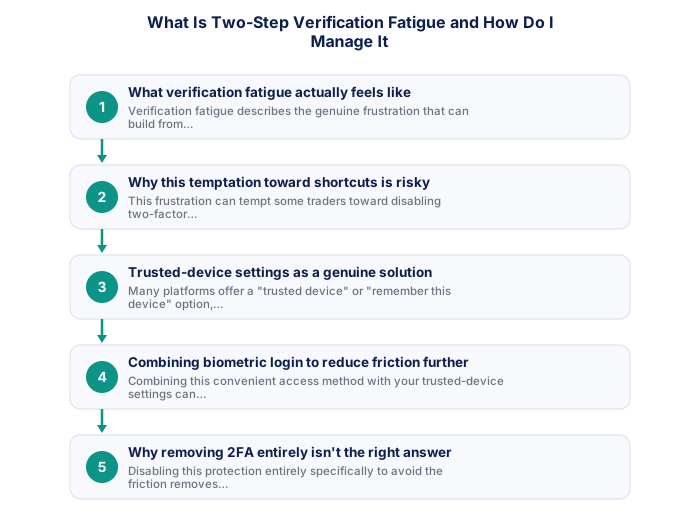
1. What verification fatigue actually feels like
Verification fatigue describes the genuine frustration that can build from repeatedly entering two-factor authentication codes, particularly for traders checking their account frequently throughout a session, where this repeated friction can start to feel like a meaningful obstacle to normal, routine account access.
It's worth recognising this as a genuinely common, well-understood usability challenge, not unique to trading platforms specifically, this same friction fatigue shows up across any service requiring frequent, repeated authentication, worth normalising the feeling rather than treating it as a personal impatience problem.
See also: The JSE All Share Index vs the Top 40
See also: How Do Sovereign Credit Rating Reviews Affect the Rand?
See also: What Is a Broker's Best Execution Obligation?
See also: How Do EFT Deposits Work for South African Trading Accoun
See also: What Is the FAIS Act and How Does It Relate to Trading?
2. Why this temptation toward shortcuts is genuinely risky
This frustration can tempt some traders toward disabling two-factor authentication entirely, or choosing weaker, less secure verification methods specifically to reduce friction, undermining exactly the protection as important for safeguarding trading account trading accounts from unauthorised access.
It's worth connecting this directly to the broader account security discussion elsewhere on this site, the entire protective value of two-factor authentication, discussed in more detail regarding 2FA specifically, depends on genuinely maintaining it consistently, not disabling it whenever it becomes inconvenient.
- Search FSP name or number at fsca.co.za
- Confirm licence is current and not suspended
- Check scope covers forex and CFD activity
- Confirm client funds in segregated accounts
- Read FSCA enforcement actions history
- Test customer support before depositing
- Client funds legally segregated
- FSCA complaints process available
- SA consumer protections apply
- ZAR account, no FX conversion costs
- Some offshore brokers offer wider instruments
- Regulatory overhead passed on in spreads
- Stricter position limits for retail clients
- FICA verification required before trading
- Client funds segregated
- Formal FSCA complaints process
- SA consumer protections apply
- ZAR account available
- Fund safety not guaranteed
- Overseas disputes only
- SA law does not apply
- Currency conversion costs
3. Trusted-device settings as a genuine solution
Many platforms offer a "trusted device" or "remember this device" option, allowing you to mark your own personal phone or computer as trusted after one initial verification, reducing how frequently you need to re-verify on that specific device going forward, while still requiring full verification on any new, unrecognised device, this provides a genuine, sensible balance between security and convenience.
It's worth understanding why this specific setting addresses the fatigue problem without compromising genuine security, trusted device settings maintain full protection for any new or unrecognised device while reducing friction specifically on the devices you already know are genuinely yours.
4. Combining biometric login to reduce friction further
Combining this convenient access method with your trusted-device settings can further reduce the friction of routine access, since biometric verification itself, offers a favourable combination of both genuine security and convenience.
It's worth combining this with trusted device settings for maximum genuine convenience, discussed elsewhere on this site regarding biometric login specifically, together these features can reduce your daily authentication friction considerably while maintaining meaningful protection.
| Protection | FSCA Regulated | Offshore Unregulated |
|---|---|---|
| Client fund segregation | ✓ Required | Varies by broker |
| SA complaints process | ✓ Available | ✗ Not available |
| SA consumer law applies | ✓ Yes | ✗ No |
| ZAR account available | ✓ Typically | Often USD/EUR only |
5. Why removing 2FA entirely isn't the right answer
Disabling this protection entirely specifically to avoid the friction removes an important safeguard against unauthorised access, particularly relevant given the genuine financial stakes involved in trading account security.
It's worth treating this option as genuinely off the table regardless of how persistent the fatigue feels, the protective value 2FA provides, discussed elsewhere on this site regarding account security generally, remains worth the modest friction it introduces, worth solving the friction through the specific alternatives discussed here rather than eliminating the protection.
6. A balanced approach to security and convenience
Using trusted-device settings and biometric login on your own personal, secured devices, while maintaining full two-factor authentication for any new or unfamiliar device access attempt, provides a genuinely balanced approach, reducing routine friction without meaningfully compromising the underlying protection this verification system is designed to provide.
South Africa's financial services regulatory framework is more complete than many retail traders realise, with specific protections and obligations that go beyond simply choosing an FSCA-licensed broker. FICA requirements protect against money laundering and require brokers to verify your identity. FAIS governs the provision of financial advice and intermediary services, ensuring those who provide paid financial guidance are appropriately licensed and accountable. POPIA protects your personal data in the hands of financial services providers. Understanding which framework applies to a specific situation helps you exercise your rights effectively when something goes wrong.
Two-step verification fatigue occurs when too many authentication prompts cause users to click through without thinking. Using a trusted device setting and an authenticator app reduces friction while maintaining security.
★ Why It Matters
Worth checking specifically: most platforms let you mark a personal device as 'trusted' for a defined period after the first successful verification, using this feature deliberately on your own devices (never on a shared or public computer) reduces friction without meaningfully compromising security.
✕ Common mistakes
- Disabling two-factor authentication entirely out of frustration with frequent prompts. This removes meaningful protection rather than addressing the underlying friction.
- Not using available trusted-device settings to reduce unnecessary friction. This reduces prompt frequency on your own devices without sacrificing protection.
- Marking a shared or public device as trusted for convenience. This should be reserved strictly for your own personal devices.
- Treating verification fatigue as something to simply tolerate rather than address. Practical settings exist specifically to reduce this friction safely.
South Africa's financial services regulatory framework for retail traders is complete but managing it requires awareness of which specific regulations apply to which activities. FAIS governs the provision of financial services and advice by licensed entities. FICA governs anti-money-laundering and client identity verification requirements. POPIA governs how your personal data is handled by financial services providers. Understanding which regulatory framework applies to a specific interaction with your broker or financial services provider helps you exercise your rights effectively and identify the appropriate channel for any regulatory complaint or query.
Key Takeaways
- Frequent authentication prompts can tempt traders toward weaker security shortcuts, though trusted-device settings can reduce friction without sacrificing protection.
- Frequent authentication prompts can tempt traders toward weaker security shortcuts out of sheer frustration.
- Using trusted-device settings where available can reduce this friction without sacrificing protection.
- What verification fatigue actually feels like.
- Why this temptation toward shortcuts is genuinely risky.
See also: What Are Trading Alerts and How Do I Set Them Up?.
Frequently asked follow-up questions
Are trusted-device settings available on all trading platforms?
Availability varies by platform; checking your specific broker's security settings clarifies whether this option exists for your particular account.
Is marking a device as trusted ever risky?
This is generally safe for your own personal, secured devices, though it shouldn't be used on shared or public computers where others might gain access.
Does using trusted-device settings still protect me if my phone is stolen?
Your device's own lock screen and biometric protection remain an important additional layer; trusted-device settings work best combined with genuine device-level security.
