Home โ€บ Mobile, Laptop & App โ€บ Should I Use a Dedicated Trading Laptop or Tablet?

Should I Use a Dedicated Trading Laptop or Tablet?

i Short answer

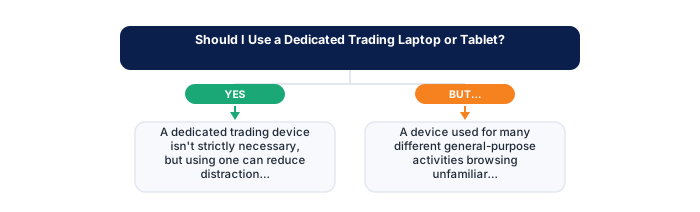
A dedicated trading device isn't strictly necessary, but using one can reduce distraction and certain security risks compared to a heavily shared, general-purpose device.

1. The genuine security argument for a dedicated device

A device used for many different general-purpose activities, browsing unfamiliar websites, downloading various applications, general email use, carries somewhat elevated exposure to malware or phishing risk compared to a device used more narrowly and carefully, specifically for trading-related activity alone.

It's worth weighing this genuine security benefit against your own actual browsing habits honestly, a device already used carefully and consistently for limited, trusted activity carries considerably less of this risk than one regularly used for a wide range of general browsing and downloads.

!
Apply any framework to your specific circumstances

Generic rules in trading guides are starting points, not universal mandates. Your account size, risk tolerance, and SA context all require calibration to your situation.

โœ“
Practical tip: Apply each concept in this guide to your specific account size, risk tolerance, and instruments. Generic rules always need calibration to your individual trading setup.

2. The distraction reduction argument worth considering

Disciplined trading sessions, a device specifically associated with trading, free from social media apps, games, or other unrelated distractions readily accessible during your analysis time, can support the kind of focused attention as important for sound trading decisions, similar in spirit to the dedicated trading space.

It's worth testing this benefit for yourself directly, spending a session on a genuinely distraction-free device compared to your usual, general-purpose one often reveals a noticeable difference in focus quality that's easy to underestimate until experienced firsthand.

General Trading Readiness Checklist
  • FSCA-regulated broker verified at fsca.co.za
  • Demo account tested for minimum 60 days
  • Trading plan written: entry, exits, position sizing
  • Risk per trade defined (1-2% of account)
  • Backup internet connection tested for load shedding
  • Tax implications understood
DODON'T
Apply each concept to your specific account size and instruments
Use generic rules without calibrating to your own setup
Test any new approach on demo before live application
Skip demo when trying new methods
Keep written records of every decision and its rationale
Rely on memory to evaluate your trading performance
Review performance against your rules, not just P&L
Judge trading quality solely by whether money was made

3. Laptop versus tablet for this specific dedicated purpose

A laptop generally offers more complete functionality for detailed chart analysis and full platform access, while a tablet can offer a reasonable middle ground between full laptop capability and the more limited phone-based mobile trading, depending on your specific analytical needs and portability preference.

It's worth matching this choice to your specific trading style and analytical needs, discussed elsewhere on this site regarding tablet trading generally, rather than choosing based on cost alone, since the right device genuinely depends on how much detailed, multi-window analysis your particular approach requires.

79%retail CFD accounts lose money
1-2%recommended max risk per trade
100+demo trades before going live
5 yearsSARS minimum record keeping
South African Trading Quick Reference
Regulator
FSCA, fsca.co.za
Tax authority
SARS, sars.gov.za
Exchange control
SARB, resbank.co.za
JSE trading hours
09:00-17:00 SAST Mon-Fri
Best forex window
15:00-17:00 SAST (overlap)
CGT exclusion
R40,000 per year (individual)

4. The practical cost consideration involved

Purchasing an entirely separate, dedicated device represents a genuine additional cost beyond your trading capital itself, weighing this cost against the genuine, but modest, security and focus benefits helps determine whether this specific investment makes sense for your particular situation and budget.

It's worth being honest with yourself about whether this cost is genuinely justified by your current trading stage, a beginner still building foundational skill and confidence may find this expense less urgent than a more established trader managing meaningfully larger positions and capital.

SA Trading Quick Reference
ItemDetail
RegulatorFSCA, fsca.co.za
Exchange controlSARB, resbank.co.za
Tax authoritySARS, sars.gov.za
JSE hours09:00-17:00 SAST Mon-Fri
Best forex session15:00-17:00 SAST
CGT annual exclusionR40,000 (individuals)

5. A middle ground: using separate browser profiles or accounts

For traders not wanting the full cost of an entirely separate device, creating a dedicated browser profile or separate user account specifically for trading activity on your existing device provides some of the focus and minor security separation benefit, without the additional expense of purchasing genuinely separate hardware.

South African traders should approach this aspect of trading with the same systematic discipline they apply to their entry and exit rules. Maintaining written records, reviewing outcomes periodically, and adjusting approach based on evidence rather than gut feeling produces better long-term results than relying on informal methods. The structured approach that separates consistently profitable traders from the majority is not about exceptional market insight but about consistently applying a sound framework to every decision.

6. Who genuinely benefits most from this specific setup
Traders managing significant capital, those particularly concerned about security given the broader risks, or those who find general-purpose device distractions genuinely undermine their trading discipline are most likely to find a dedicated device's cost genuinely justified, compared to traders for whom these specific concerns are less significant in their own particular situation.

South African traders who approach their trading activity with the same rigour they would apply to any skilled professional discipline typically develop more durable results than those who treat trading as primarily intuitive. This means maintaining written records of every trade and its rationale, reviewing performance at regular intervals with specific metrics, and updating trading rules based on accumulated evidence rather than gut feeling. The structured approach separates traders who improve continuously from those who repeat the same errors across extended periods without identifying the underlying cause.

South African traders operate in a market environment that combines global exposure with unique domestic factors that most international trading frameworks do not address. The combination of FSCA regulatory oversight, SARB exchange control considerations, SARS tax treatment, load shedding operational risk, and rand-specific dynamics creates a trading environment that is both distinctive and analytically rich. Traders who develop expertise across both global trading fundamentals and SA-specific market dimensions build a more sound foundation than those who apply international frameworks without local adaptation. This local knowledge compounds over time, producing analytical advantages that persist across market cycles and that cannot be replicated by simply following international trading content produced without South Africa in mind.

South African traders operate in a market environment that combines global exposure with unique domestic factors that most international trading frameworks do not address. The combination of FSCA regulatory oversight, SARB exchange control considerations, SARS tax treatment, load shedding operational risk, and rand-specific dynamics creates a trading environment that is both distinctive and analytically rich. Traders who develop expertise across both global trading fundamentals and SA-specific market dimensions build a more sound foundation than those who apply international frameworks without local adaptation. This local knowledge compounds over time, producing analytical advantages that persist across market cycles and that cannot be replicated by simply following international trading content produced without South Africa in mind.

โ˜… Why It Matters

Worth weighing specifically: a dedicated device removes one meaningful attack surface (malware from unrelated browsing or downloads), but the actual security gain depends heavily on how carefully you'd use a shared device anyway, this is a genuine but secondary security layer, not a primary one.

Dedicated device
No interruptions
Separated work, personal, trading
Shared device
Convenience
But distractions and security mixing
What a dedicated device prevents
Notifications
silenced during sessions
Security
trading stays separate
Browser history
accounts not logged into elsewhere
Focus
single-purpose device

A dedicated trading device prevents interruptions, separates security environments, and maintains focus during sessions. A shared household device mixes trading with distractions and security risks.

โœ• Common mistakes

  • Overestimating the security gain relative to its practical cost and inconvenience. This is a genuine but secondary security layer, not a primary one.
  • Using the 'dedicated' device for unrelated browsing anyway. This undermines the isolation benefit the dedicated device was meant to provide.
  • Not weighing this decision against more impactful security steps first. Two-factor authentication and password hygiene typically matter more.
How do I know if my broker is trustworthy?

Check that the broker holds a current FSCA FSP licence at fsca.co.za, keeps client funds segregated, is transparent about spreads and fees, and has accessible support. Independent reviews on platforms the broker does not control provide additional verification.

What should I do if I have a dispute with my broker?

Raise the issue through the broker's formal complaints process first. If unresolved, escalate to the FSCA for FSCA-regulated brokers or to the relevant overseas regulator for offshore brokers. Document all communications in writing.

South African traders who approach their trading activity with the same rigour they would apply to any skilled professional discipline typically develop more durable results than those who treat trading as primarily intuitive. This means maintaining written records of every trade and its rationale, reviewing performance at regular intervals with specific metrics rather than general impressions, and updating trading rules based on evidence from actual performance rather than from theory alone. The structured approach separates traders who improve continuously from those who repeat the same errors across extended periods without identifying the underlying cause.

The technical requirements for trading effectively from South Africa include considerations that international trading guides do not address. Backup power for your router and a mobile data connection as secondary internet are operational necessities rather than optional upgrades given South Africa's load shedding reality. For serious traders, a dedicated device used only for trading, not shared with general browsing, gaming, or other applications, reduces the risk of browser clutter, malware exposure, and the context-switching that degrades trading focus during active sessions.

Understanding how South African market conditions differ from the global trading environment covered in most textbooks gives local traders a genuine analytical edge. The JSE's resources weighting, the rand's dual sensitivity to global EM flows and domestic fundamentals, and the specific calendar of SA market events, SARB MPC dates, budget speeches, credit rating reviews, create a richer analytical environment than pure technical analysis alone captures. Building awareness of these SA-specific layers alongside standard trading principles produces more sound analysis for ZAR instruments and JSE-listed products.

Key Takeaways

  1. A dedicated device isn't strictly necessary, but reduces distraction and security risk compared to using a heavily shared, general-purpose device.
  2. A dedicated trading device isn't strictly necessary, but using one can reduce distraction and certain security risks compared to a heavily shared, general-purpose device.
  3. The genuine security argument for a dedicated device.
  4. The distraction reduction argument worth considering.
  5. Laptop versus tablet for this specific dedicated purpose.

Frequently asked follow-up questions

Is a dedicated device essential for security?

Not essential, but it does reduce certain risks. Maintaining good general security practices matters regardless of which specific device approach you choose.

Can I use an older, repurposed device for this dedicated purpose?

Yes, this can be a cost-effective way to get some of the benefits above without purchasing entirely new hardware specifically for this purpose.

Does this apply equally to mobile trading apps?

The same general security and focus principles apply, though mobile devices are often inherently more shared and general-purpose by nature than a dedicated desktop or laptop setup.

๐Ÿ“š Sources & further reading

This article draws on general information published by the South African regulators and established financial education resources listed below. Always check each source directly for the most current detail.

Explore more South African trading guides on TradeAnswers.

๐Ÿ›ก๏ธ
Practice without risk

Try It Out On the Go

Download the app and practise trading from your phone on a free, FSCA-regulated demo account.

Get the Free Demo
  • FSCA RegulatedTrade with confidence
  • Practice Risk FreeReal market conditions
  • Beginner FriendlyPerfect for learning

79% of retail CFD accounts lose money. Demo accounts do not guarantee future profits.