i Short answer
Regulatory recourse through the FSCA complaints process addresses a broker's broader compliance and licensing standing.
Civil recourse through the ordinary courts addresses your own specific financial loss and potential compensation directly.
📋 ON THIS PAGE
1. What regulatory recourse actually achieves
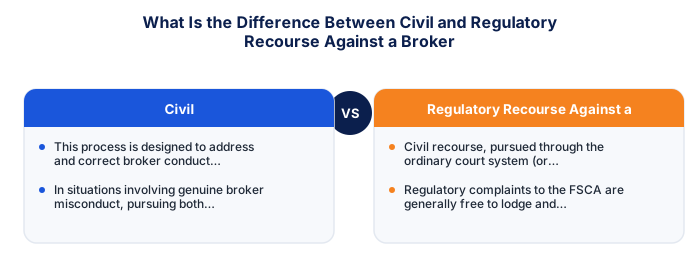
Regulatory recourse through the FSCA complaints process primarily results in the FSCA reviewing a broker's conduct against its regulatory obligations, potentially leading to enforcement action ranging from warnings through to licence suspension or revocation. This process is designed to address and correct broker conduct broadly, rather than specifically to compensate you personally for a financial loss you've experienced.
It's worth understanding this route's genuine purpose clearly, discussed elsewhere on this site regarding FSCA complaints and the FAIS Ombud specifically, regulatory recourse addresses broader conduct and compliance concerns, it isn't primarily designed to secure you personal financial compensation.
| Feature | Regulatory Recourse | Civil Recourse |
|---|---|---|
| Primary goal | Address conduct and compliance | Recover your financial loss |
| Who it benefits directly | The broader market/public | You, the affected trader |
| Typical outcome | Fines, licence action, directives | Court-ordered compensation |
| Typical cost | Free (FSCA/FAIS Ombud) | Legal fees, unless successful |
| Typical speed | Faster | Slower |
| Can be pursued together | Yes | Yes |
2. What civil recourse actually achieves
Civil recourse, pursued through the ordinary court system (or sometimes through arbitration if your broker agreement includes such a clause), is specifically designed to seek compensation for your own particular financial loss, based on a legal claim such as breach of contract or negligence. This is the more direct path toward potentially recovering money you believe you've lost due to a broker's wrongdoing.
It's worth understanding this as the genuinely appropriate path specifically when your primary goal is recovering your own financial loss, unlike regulatory recourse, civil action can directly result in a court ordering compensation payable to you.
- Search FSP name or number at fsca.co.za
- Confirm licence is current and not suspended
- Check scope covers forex and CFD activity
- Confirm client funds in segregated accounts
- Read FSCA enforcement actions history
- Test customer support before depositing
- Client funds legally segregated
- FSCA complaints process available
- SA consumer protections apply
- ZAR account, no FX conversion costs
- Some offshore brokers offer wider instruments
- Regulatory overhead passed on in spreads
- Stricter position limits for retail clients
- FICA verification required before trading
- Client funds segregated
- Formal FSCA complaints process
- SA consumer protections apply
- ZAR account available
- Fund safety not guaranteed
- Overseas disputes only
- SA law does not apply
- Currency conversion costs
3. Why you might genuinely need both avenues together
In situations involving genuine broker misconduct, pursuing both avenues simultaneously can be sensible, the regulatory complaint helps ensure the broader issue is investigated and potentially prevents similar harm to other clients, while a separate civil claim pursues your own specific compensation, since the FSCA's regulatory process itself doesn't typically result in direct payment to you personally.
It's worth considering pursuing both routes in parallel where genuinely appropriate, rather than assuming you must choose one exclusively, a regulatory complaint and civil action can often proceed simultaneously, each addressing a different aspect of the same underlying dispute.
4. The practical cost and time difference between these paths
Regulatory complaints to the FSCA are generally free to lodge and don't require legal representation, making this a genuinely accessible first step for any concern. Civil litigation, by contrast, typically involves legal costs and a considerably longer timeline, making it a more significant undertaking generally reserved for situations involving meaningful financial loss where pursuing formal compensation genuinely justifies this additional cost and effort.
It's worth weighing this cost and time difference honestly against your specific situation, discussed elsewhere on this site regarding the FAIS Ombud's cost advantage, before assuming civil litigation is automatically the right path for a given dispute.
| Protection | FSCA Regulated | Offshore Unregulated |
|---|---|---|
| Client fund segregation | ✓ Required | Varies by broker |
| SA complaints process | ✓ Available | ✗ Not available |
| SA consumer law applies | ✓ Yes | ✗ No |
| ZAR account available | ✓ Typically | Often USD/EUR only |
5. When alternative dispute resolution might help instead
Some broker agreements include arbitration or other alternative dispute resolution clauses, which can sometimes offer a faster, less costly path toward resolving a financial dispute than full civil litigation, while still potentially resulting in a binding, enforceable outcome. Checking your specific broker agreement's dispute resolution terms clarifies whether this kind of alternative path is available to you.
It's worth exploring this option specifically before committing to a more formal, expensive path, some disputes genuinely resolve efficiently through structured, less adversarial processes without requiring the full weight of civil litigation.
6. Getting appropriate legal advice before proceeding
Given the genuine complexity and cost involved in civil litigation specifically, consulting with a qualified attorney before proceeding down this path helps you realistically assess the strength of your specific claim, the likely cost and timeline involved, and whether your particular situation genuinely warrants this more significant undertaking compared to pursuing regulatory recourse alone.
Regulatory recourse uses the FSCA complaints process to enforce compliance.
Civil recourse involves taking legal action through the courts to recover money, which is costly and slow. Regulatory recourse through the FSCA complaints process is free, faster, and focused on compliance enforcement.
★ Why It Matters
Something worth knowing : pursuing the FSCA complaints route doesn't preclude also pursuing civil recourse afterward if needed, these aren't mutually exclusive options, and starting with the free regulatory process first is generally the lower-cost, lower-risk sequence to follow.
✕ Common mistakes
- Choosing civil litigation first without trying the FSCA complaints process. The regulatory route is typically faster, free, and doesn't require legal representation.
- Not understanding which avenue actually addresses your specific concern. Regulatory recourse addresses broker conduct broadly; civil recourse addresses your specific financial loss.
- Assuming either avenue guarantees a favourable outcome. Both processes involve genuine uncertainty regardless of which is pursued.
Key Takeaways
- Regulatory recourse through the FSCA addresses compliance and licensing, while civil recourse through the courts addresses recovering your specific financial loss.
- Regulatory recourse through the FSCA complaints process addresses a broker's broader compliance and licensing standing.
- Civil recourse through the ordinary courts addresses your own specific financial loss and potential compensation directly.
- What regulatory recourse actually achieves.
- What civil recourse actually achieves.
See also: What Happens Legally If My Broker Goes Bankrupt? and Why Did the FSCA Impose Record R2.89bn in Fines, and What It Means for You.
Frequently asked follow-up questions
Can the FSCA order a broker to compensate me directly?
The FSCA's primary focus is regulatory compliance rather than direct compensation orders; civil recourse remains the more direct path for pursuing personal financial compensation.
Do I need a lawyer to lodge an FSCA complaint?
No, the FSCA complaints process is designed to be accessible without requiring legal representation, unlike civil litigation.
Is arbitration faster than going to court?
Often yes, though this depends on the specific arbitration process and complexity of your particular dispute; checking your broker agreement's specific terms clarifies what applies to your situation.
Can I pursue both regulatory and civil recourse for the same issue?
Yes, these are independent processes that can run alongside each other, since a regulatory complaint addresses the broker's compliance standing while civil recourse addresses your own specific financial claim.
Does filing an FSCA complaint affect my ability to later pursue civil action?
Generally no, pursuing a regulatory complaint doesn't typically prevent you from also pursuing civil recourse, though specific time limits applicable to civil claims are worth checking independently regardless.
