i Short answer
The FAIS Ombud resolves disputes specifically about financial advice or intermediary conduct, offering a free, accessible alternative to civil litigation.
📋 ON THIS PAGE
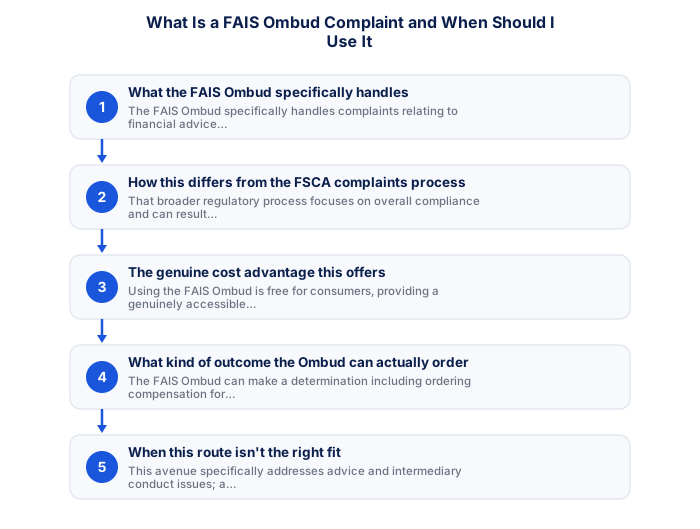
1. What the FAIS Ombud specifically handles
The FAIS Ombud specifically handles complaints relating to financial advice or intermediary services rendered under the FAIS Act, covering situations like unsuitable advice, misrepresentation by an advisor, or a financial services provider's failure to meet its specific conduct obligations toward a client.
| Feature | FAIS Ombud | FSCA Complaints |
|---|---|---|
| Primary focus | Financial redress for you | Broader conduct and compliance |
| Cost | Free | Free |
| Can order compensation | Yes | Not directly |
2. How this differs from the FSCA complaints process
The broader FSCA complaints process focuses on overall compliance and can result in enforcement action against a provider, while the FAIS Ombud specifically focuses on resolving your individual dispute and can order direct compensation, functioning more like an accessible adjudication process for your specific complaint.
- Search FSP name or number at fsca.co.za
- Confirm licence is current and not suspended
- Check scope covers forex and CFD activity
- Confirm client funds in segregated accounts
- Read FSCA enforcement actions history
- Test customer support before depositing
- Client funds legally segregated
- FSCA complaints process available
- SA consumer protections apply
- ZAR account, no FX conversion costs
- Some offshore brokers offer wider instruments
- Regulatory overhead passed on in spreads
- Stricter position limits for retail clients
- FICA verification required before trading
- Client funds segregated
- Formal FSCA complaints process
- SA consumer protections apply
- ZAR account available
- Fund safety not guaranteed
- Overseas disputes only
- SA law does not apply
- Currency conversion costs
3. The genuine cost advantage this offers
Using the FAIS Ombud is free for consumers, giving a genuinely accessible alternative to the legal costs of civil litigation, making it a particularly valuable option for complaints involving smaller amounts that wouldn't justify the expense of formal legal proceedings.
4. What kind of outcome the Ombud can actually order
The FAIS Ombud can make a determination including ordering compensation for genuine financial loss resulting from improper advice or conduct, within its specific jurisdiction and monetary limits, providing a binding resolution without requiring the parties to pursue separate civil court proceedings.
| Protection | FSCA Regulated | Offshore Unregulated |
|---|---|---|
| Client fund segregation | ✓ Required | Varies by broker |
| SA complaints process | ✓ Available | ✗ Not available |
| SA consumer law applies | ✓ Yes | ✗ No |
| ZAR account available | ✓ Typically | Often USD/EUR only |
5. When this route isn't the right fit
This avenue specifically addresses advice and intermediary conduct issues; a dispute purely about execution quality, platform technical issues, or other broker-related matters unrelated to advice may not fall within this specific jurisdiction, making the broader FSCA complaints process or civil recourse more appropriate instead.
6. The practical process for lodging a complaint
You typically need to first raise the matter directly with the financial services provider, and only escalate to the FAIS Ombud if this internal process doesn't resolve your concern satisfactorily within a reasonable period.
South Africa's financial services regulatory framework is more complete than many retail traders realise, with specific protections and obligations that go beyond simply choosing an FSCA-licensed broker. FICA requirements protect against money laundering and require brokers to verify your identity. FAIS governs the provision of financial advice and intermediary services, ensuring those who provide paid financial guidance are appropriately licensed and accountable. POPIA protects your personal data in the hands of financial services providers. Understanding which framework applies to a specific situation helps you exercise your rights effectively when something goes wrong.
Every South African trader who approaches the market with a structured plan, clear risk parameters, and disciplined execution starts each session from a position of strength that the majority of retail participants, who operate reactively and without documented rules, do not have. Building and maintaining this structural advantage requires consistent effort rather than exceptional talent, which means it is accessible to any trader willing to invest the time in proper preparation and honest self-assessment.
The FSCA handles complaints about broker conduct and regulatory matters. The FAIS Ombud specifically handles financial advice disputes, such as mis-selling or unsuitable advice given for reward.
When evaluating whether a broker is appropriate for South African retail trading, the FSCA public register provides the starting point, but the quality of regulatory compliance goes beyond simply holding a licence. Checking how long the broker has been licensed, whether there are any enforcement actions in their history, and what the FSCA inspection record shows, if available, provides a more complete picture than the licence alone. South African financial consumer bodies periodically publish guidance on broker evaluation that supplements the FSCA register as a due diligence resource.
South Africa's financial services regulatory framework for retail traders is complete but managing it requires awareness of which specific regulations apply to which activities. FAIS governs the provision of financial services and advice by licensed entities. FICA governs anti-money-laundering and client identity verification requirements. POPIA governs how your personal data is handled by financial services providers. Understanding which regulatory framework applies to a specific interaction with your broker or financial services provider helps you exercise your rights effectively and identify the appropriate channel for any regulatory complaint or query.
★ Why It Matters
Worth knowing: the FAIS Ombud process is free and doesn't require legal representation, which makes it a meaningfully lower-barrier option than civil litigation. Many traders assume any formal dispute resolution requires hiring a lawyer, which isn't the case here.
✕ Common mistakes
- Assuming legal representation is required to use this process. It's specifically designed to be free and accessible without a lawyer.
- Not keeping a clear, dated record of your interactions before filing. Documentation strengthens a complaint considerably.
- Confusing this process with the broader FSCA complaints channel. The FAIS Ombud specifically addresses financial advice or intermediary conduct disputes.
- Assuming this process and civil litigation are mutually exclusive. Pursuing the free regulatory route first doesn't preclude civil recourse later.
Key Takeaways
- The FAIS Ombud resolves disputes specifically about financial advice, offering a free, accessible alternative to civil litigation for qualifying complaints.
- The FAIS Ombud resolves disputes specifically about financial advice or intermediary conduct, offering a free, accessible alternative to civil litigation.
- What the FAIS Ombud specifically handles.
- How this differs from the FSCA complaints process.
- The genuine cost advantage this offers.
Frequently asked follow-up questions
Is there a cost to lodge a complaint with the FAIS Ombud?
No, this service is free for consumers, making it a genuinely accessible option compared to formal legal proceedings.
Can I use the FAIS Ombud for a complaint about trade execution quality?
Generally not directly, since this falls outside advice-related conduct. The FSCA complaints process or civil recourse may be more appropriate for this kind of issue.
How long does a FAIS Ombud determination typically take?
This varies by case complexity, though it's generally designed to be a more streamlined process than formal civil litigation.
Is the FAIS Ombud's determination final?
Determinations are generally binding, though specific legal avenues for further recourse may exist depending on the circumstances; consulting a legal professional clarifies this for your specific situation.
Does using the FAIS Ombud prevent me from later pursuing civil action?
This depends on the specific circumstances and outcome; understanding the implications before proceeding, potentially with professional guidance, is advisable given the genuine consequences involved.
