i Short answer
FSCA-regulated brokers are required to segregate client funds from their own operating capital, so your funds should remain protected from the broker's general creditors even in insolvency.
This is designed to prevent client money becoming entangled with a failed broker's collapse, though recovery can still take meaningful time.
📋 ON THIS PAGE
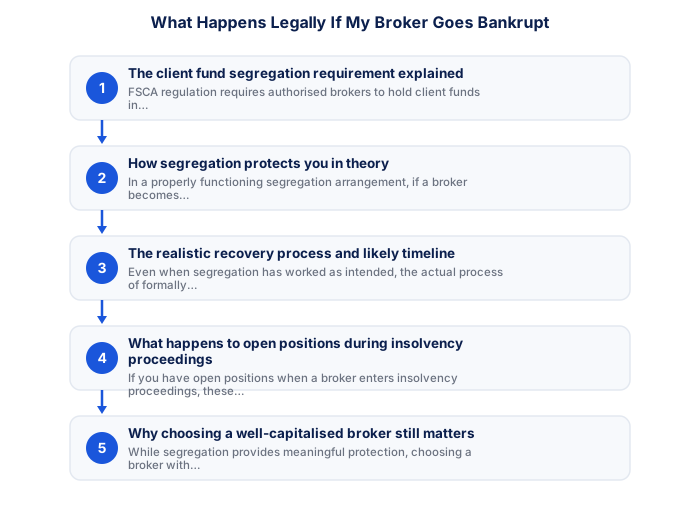
- The client fund segregation requirement explained
- How segregation protects you in theory
- The realistic recovery process and likely timeline
- What happens to open positions during insolvency proceedings
- Why choosing a well-capitalised broker still matters
- Practical steps if your broker shows warning signs
1. The client fund segregation requirement explained
FSCA regulation requires authorised brokers to hold client funds in segregated accounts, separate from the broker's own operational or corporate funds. This means client money isn't supposed to be used for the broker's own business expenses, trading activities, or other operational purposes, existing specifically as a protective mechanism should the broker face financial difficulty.
It's worth understanding why bankruptcy specifically tests this requirement more than almost any other scenario, segregation exists precisely to protect client funds during exactly this kind of financial collapse, meaning a broker's genuine, properly-implemented segregation practice becomes most consequential in exactly this worst-case circumstance.
2. How segregation protects you in theory
In a properly functioning segregation arrangement, if a broker becomes insolvent, the segregated client funds should not form part of the broker's general estate available to its creditors, meaning clients should be able to recover their funds rather than competing with the broker's other creditors for repayment from a depleted asset pool.
This protective mechanism is precisely why verifying a broker's genuine FSCA licensing status matters so significantly, this segregation requirement specifically applies to properly licensed, compliant brokers, not to unregulated entities operating outside this oversight.
- Search FSP name or number at fsca.co.za
- Confirm licence is current and not suspended
- Check scope covers forex and CFD activity
- Confirm client funds in segregated accounts
- Read FSCA enforcement actions history
- Test customer support before depositing
- Client funds legally segregated
- FSCA complaints process available
- SA consumer protections apply
- ZAR account, no FX conversion costs
- Some offshore brokers offer wider instruments
- Regulatory overhead passed on in spreads
- Stricter position limits for retail clients
- FICA verification required before trading
- Client funds segregated
- Formal FSCA complaints process
- SA consumer protections apply
- ZAR account available
- Fund safety not guaranteed
- Overseas disputes only
- SA law does not apply
- Currency conversion costs
3. The realistic recovery process and likely timeline
Even when segregation has worked as intended, the actual process of formally recovering your funds during an insolvency proceeding typically involves administrative and legal processes that can take considerable time, sometimes months, as appointed insolvency practitioners or liquidators work through identifying and returning segregated client funds appropriately.
It's worth mentally preparing for genuine patience here, insolvency proceedings involving financial institutions typically move through formal legal and administrative processes that take considerably longer than most people initially expect, worth setting realistic expectations rather than anticipating a quick resolution.
4. What happens to open positions during insolvency proceedings
If you have open positions when a broker enters insolvency proceedings, these positions are typically closed out as part of the insolvency process, since continued active trading isn't usually feasible once a broker has ceased normal operations. The specific timing and process for this varies by situation, making prompt attention to any signs of broker distress, discussed later in this piece, genuinely important.
It's worth understanding that this specific complication, beyond simply recovering your cash balance, is one of the less commonly discussed aspects of broker insolvency, open positions add a genuine layer of complexity that a straightforward cash deposit alone wouldn't create.
| Protection | FSCA Regulated | Offshore Unregulated |
|---|---|---|
| Client fund segregation | ✓ Required | Varies by broker |
| SA complaints process | ✓ Available | ✗ Not available |
| SA consumer law applies | ✓ Yes | ✗ No |
| ZAR account available | ✓ Typically | Often USD/EUR only |
5. Why choosing a well-capitalised broker still matters
While segregation provides meaningful protection, choosing a broker with genuine financial stability and a strong operating history remains worthwhile, avoiding insolvency proceedings entirely, with their associated delays and uncertainty, is preferable to relying solely on segregation protections functioning correctly during an actual crisis.
It's worth researching a broker's general financial standing and market reputation as part of your initial due diligence, discussed throughout this site's broker selection content, favouring an established, well-regarded provider over a newer, less proven one is a reasonable, precautionary preference even without any specific warning signs present.
6. Practical steps if your broker shows warning signs
If you notice warning signs suggesting your broker may be in financial distress, unusual withdrawal delays beyond normal processing times discussed elsewhere, unexplained platform issues, or credible negative news coverage, withdrawing available funds promptly and documenting your account status thoroughly represents a reasonable, proactive precaution rather than waiting to see how the situation develops further.
It's also worth knowing that any FSCA-regulated broker operating in South Africa is bound by POPIA (the Protection of Personal Information Act), which governs how your personal and financial data must be collected, stored, and protected.
It's worth treating any genuine warning sign seriously and promptly, rather than waiting for more certainty, withdrawing available funds and reducing exposure at the first credible sign of trouble, even if it later proves to have been unnecessary caution, is considerably preferable to discovering the concern was genuine only after it's too late to act.
Non-segregated funds can be lost to creditors in a bankruptcy scenario.
Segregated client funds should not form part of a broker's estate in liquidation. This is why verifying that a broker genuinely maintains segregated client accounts is an important due diligence step.
★ Why It Matters
Worth verifying specifically in advance, not after the fact: ask your broker directly which bank holds your segregated funds and whether that's confirmable independently, a broker that can't answer this clearly is giving you useful information about how seriously they take this obligation.
✕ Common mistakes
- Assuming segregated funds are automatically, fully protected with zero risk. Recovery can still take meaningful time even with proper segregation.
- Treating broker insolvency as an unlikely scenario not worth understanding in advance. Understanding the protections beforehand is more useful than learning during a crisis.
- Concentrating excessive capital with a single broker regardless of segregation practices. Diversifying across brokers remains a reasonable additional safeguard.
Key Takeaways
- FSCA-regulated brokers must segregate client funds, which should remain protected from creditors even in insolvency, though recovery processes can take time.
- FSCA-regulated brokers are required to segregate client funds from their own operating capital, so your funds should remain protected from the broker's general creditors even in insolvency.
- This is designed to prevent client money becoming entangled with a failed broker's collapse, though recovery can still take meaningful time.
- The client fund segregation requirement explained.
- How segregation protects you in theory.
See also: Is Forex Trading a Pyramid Scheme in South Africa?.
Frequently asked follow-up questions
Does fund segregation guarantee I'll get all my money back?
Segregation significantly improves the likelihood of recovery, but isn't an absolute guarantee, particularly if segregation wasn't properly maintained or if shortfalls exist for other reasons.
Should I worry about this with every broker I use?
This is primarily relevant if you notice genuine warning signs of financial distress; choosing a properly FSCA-regulated, established broker substantially reduces this risk from the outset.
Does this protection apply to unregulated or offshore brokers?
No, this specific protection is tied to FSCA regulatory requirements, reinforcing why broker regulatory verification matters significantly.
Who actually handles distributing remaining funds if a broker becomes insolvent?
This typically involves a formally appointed liquidator or curator working through the insolvency process, distributing recoverable client funds according to the applicable legal priority and segregation status.
How long does it typically take to recover funds after a broker insolvency?
This varies considerably by the complexity of the specific case and how cleanly segregated the funds were; recovery can range from a relatively short administrative process to a considerably longer, more involved legal proceeding.
