i Short answer
Inactivity periods describe the elapsed time without trading activity, while dormancy is a specific status a broker formally applies once that period exceeds a defined threshold.
📋 ON THIS PAGE
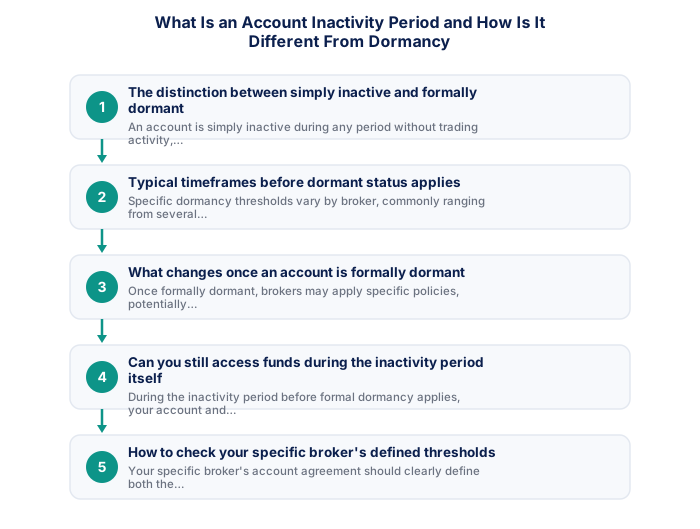
- The distinction between simply inactive and formally dormant
- Typical timeframes before dormant status applies
- What changes once an account is formally dormant
- Can you still access funds during the inactivity period itself
- How to check your specific broker's defined thresholds
- Avoiding unintended dormancy with simple habits
1. The distinction between simply inactive and formally dormant
An account is simply inactive during any period without trading activity, regardless of duration, while dormancy represents a specific, formally defined status a broker applies once this inactivity exceeds a particular threshold set in their terms and conditions.
It's worth understanding this as a genuine, staged progression rather than a single, sudden switch, an account typically moves through this inactivity period gradually before reaching the more formal, consequential dormant status, giving you a genuine window to intervene before more significant changes take effect.
| Feature | Inactive | Dormant |
|---|---|---|
| Typical trigger | No trades for a shorter period | Extended inactivity, often 90+ days |
| Fund access | Usually normal | May require reactivation steps |
| Fees | Sometimes begins here | More likely to apply |
2. Typical timeframes before dormant status applies
Specific dormancy thresholds vary by broker, commonly ranging from several months to a year or more of continuous inactivity before this formal status and any associated treatment actually applies to your account.
It's worth confirming your specific broker's exact defined periods directly, rather than assuming a generic timeframe, since these thresholds genuinely vary between providers, worth checking your specific terms and conditions rather than relying on general industry assumptions.
- South African ID or valid passport
- Proof of residential address dated within 3 months
- Proof of bank account ownership
- Selfie or photo for biometric verification (some brokers)
- Source of funds declaration if depositing above threshold
Choose FSCA-regulated broker
Verify the FSP number is current at fsca.co.za.
Submit FICA documents
SA ID, proof of address within 3 months, bank account proof.
Fund via EFT
Make the initial deposit from your SA bank account in ZAR.
Open demo account first
Practice on demo before activating your live account.
Start with minimum capital
Begin with an amount you can afford to lose while learning.
3. What changes once an account is formally dormant
Once formally dormant, brokers may apply specific policies, potentially including dormancy fees, automatic closure of open positions, or requiring renewed verification before resuming normal activity. These specific consequences vary considerably by broker and are worth understanding directly from your terms and conditions.
It's worth reading your specific broker's dormant account policy carefully before this status is ever reached, understanding exactly what changes, fee structures, access limitations, reactivation requirements, helps you decide whether to prevent dormancy or simply accept it if you genuinely don't plan to trade again soon.
4. Can you still access funds during the inactivity period itself
During the inactivity period before formal dormancy applies, your account and funds typically remain fully accessible, with withdrawals and deposits generally processing normally. It's specifically the later, formally dormant status that may introduce restrictions or fees.
It's worth confirming this specifically for your own account status, rather than assuming access remains identical throughout, checking directly with your broker removes any uncertainty about whether a withdrawal request during this period would proceed as normal.
| Rejection reason | Fix |
|---|---|
| Address proof older than 3 months | Get a recent utility bill or bank statement |
| Name mismatch between documents | Use documents with exactly matching full name |
| Poor quality scan | Retake with good lighting, all corners visible |
| PO Box address | Brokers require physical residential address only |
5. How to check your specific broker's defined thresholds
Your specific broker's account agreement should clearly define both the specific inactivity period required before dormant status applies and the precise consequences this status carries, making this document worth reviewing directly.
It's worth locating this specific information proactively, before you actually need it, rather than searching for it reactively once you're already concerned about your account's status, having this reference readily available saves time and uncertainty later.
6. Avoiding unintended dormancy with simple habits
Simply logging into your account periodically, even without necessarily placing trades, sometimes satisfies a broker's specific activity requirement, though checking whether your particular broker specifically requires genuine trading activity rather than just login access clarifies what genuinely prevents dormancy in your case.
Full dormancy is a longer state that can bring additional restrictions.
An inactivity period triggers a monthly fee after typically 3-12 months with no trading activity. Full dormancy is a deeper state some brokers apply after longer inactivity, which can bring additional reactivation steps.
The difference between traders who improve systematically and those who plateau for extended periods is typically not natural talent or market insight but the quality of their record-keeping and review process. Traders who maintain a detailed journal, review every trade against their original rationale, and update their trading plan based on accumulated evidence rather than gut feeling develop a feedback loop that continuously improves their decision quality. This structured approach is available to every trader regardless of experience level and costs nothing except the discipline to apply it consistently.
★ Why It Matters
Something worth checking : the exact action that resets your inactivity clock, with some brokers simply logging in counts, with others only an actual trade resets it, this distinction determines whether casually checking your account periodically is actually preventing the fee you're trying to avoid.
✕ Common mistakes
- Not checking the specific threshold that triggers dormancy with your own broker. This figure varies and is worth confirming directly.
- Treating inactivity and dormancy as interchangeable terms. They describe related but distinct stages with potentially different consequences.
- Leaving an account dormant without checking the associated fee policy first. A quick check avoids an unwelcome surprise.
Key Takeaways
- Inactivity periods describe the time elapsed without trading activity, with dormancy representing a specific status a broker applies once this period is exceeded.
- Inactivity periods describe the elapsed time without trading activity, while dormancy is a specific status a broker formally applies once that period exceeds a defined threshold.
- The distinction between simply inactive and formally dormant.
- Typical timeframes before dormant status applies.
- What changes once an account is formally dormant.
See also: What Happens to My Account If I Stop Trading for a While?.
Frequently asked follow-up questions
Will I be notified before my account becomes formally dormant?
Many brokers do provide advance notification, though this isn't universal; checking your specific broker's communication practices and terms directly confirms what to expect.
Does dormancy affect previously deposited funds' safety?
Properly segregated funds should generally remain protected during dormancy, though specific fees or treatment may still apply depending on your broker's policy.
Can I reactivate a dormant account easily?
This is often possible, though the exact process varies by broker and how long the account has remained dormant.
Does opening a position count as activity even without closing it?
Generally yes, opening a position typically resets any inactivity clock, though confirming this directly with your specific broker avoids any ambiguity for your particular situation.
Is there a difference between dormancy policy for demo versus live accounts?
Yes, dormancy policies and thresholds can differ between demo and live account types depending on your specific broker.
