i Short answer
An introducing broker refers clients to a regulated broker in exchange for commission based on the referred client's trading activity.
This sometimes includes added support or local-language assistance, but it adds a layer worth understanding, including how it might affect your costs.
📋 ON THIS PAGE
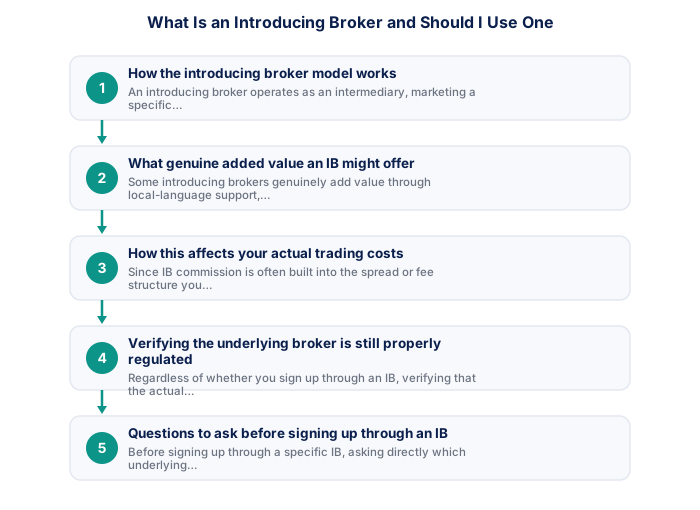
1. How the introducing broker model works
An introducing broker operates as an intermediary, marketing a specific regulated broker's services and referring clients to open accounts directly with that broker. The IB typically earns ongoing commission based on the referred client's subsequent trading volume or activity, creating a revenue model similar in structure to the affiliate or referral arrangements discussed elsewhere regarding broker incentive structures generally.
It's worth understanding your actual contractual and regulatory relationship in this arrangement precisely: you're opening an account with, and depositing funds directly to, the underlying regulated broker, not the introducing broker itself. The IB's role sits alongside this relationship as a marketing and referral layer, rather than being the entity actually holding or managing your money.
2. What genuine added value an IB might offer
Some introducing brokers genuinely add value through local-language support, region-specific educational content, or additional account management assistance beyond what the underlying broker itself might offer directly. Evaluating whether a specific IB's offered value genuinely matches what they claim, rather than assuming this added value automatically exists, is worth doing before choosing this route over signing up directly.
A reasonable way to test this in practice: ask what specifically you'd be unable to access if you signed up directly with the underlying broker instead. If the honest answer is 'nothing meaningfully different,' the IB relationship may be adding less genuine value than its marketing suggests, regardless of how the referral itself is framed.
- Search FSP name or number at fsca.co.za
- Confirm licence is current and not suspended
- Check scope covers forex and CFD activity
- Confirm client funds in segregated accounts
- Read FSCA enforcement actions history
- Test customer support before depositing
- Client funds legally segregated
- FSCA complaints process available
- SA consumer protections apply
- ZAR account, no FX conversion costs
- Some offshore brokers offer wider instruments
- Regulatory overhead passed on in spreads
- Stricter position limits for retail clients
- FICA verification required before trading
- Client funds segregated
- Formal FSCA complaints process
- SA consumer protections apply
- ZAR account available
- Fund safety not guaranteed
- Overseas disputes only
- SA law does not apply
- Currency conversion costs
3. How this affects your actual trading costs
Since IB commission is often built into the spread or fee structure you experience as a client, signing up through an IB doesn't necessarily mean you pay anything additional beyond what direct registration would cost, though in some structures, spreads or fees can be marginally less favourable through an IB compared to direct registration, making a careful cost comparison worthwhile before assuming the IB route is cost-neutral.
This is worth checking concretely rather than assuming either outcome by default. Comparing the specific spread or fee schedule offered through the IB against the same broker's directly published, standard terms takes only a few minutes and removes any doubt about whether the IB route genuinely costs you nothing extra.
4. Verifying the underlying broker is still properly regulated
Regardless of whether you sign up through an IB, verifying that the actual underlying broker holding your funds and executing your trades is genuinely FSCA-regulated remains essential, the IB itself typically isn't the regulated entity holding your money, making this underlying broker verification the important regulatory check rather than scrutinising the IB's own credentials in isolation.
This is worth treating as the single most important check in this entire relationship, since an IB's own marketing polish or apparent professionalism tells you very little about the regulatory standing of the broker actually holding your deposited funds. The FSCA register check applies to the underlying broker's name and FSP number specifically, not the IB's branding.
| Protection | FSCA Regulated | Offshore Unregulated |
|---|---|---|
| Client fund segregation | ✓ Required | Varies by broker |
| SA complaints process | ✓ Available | ✗ Not available |
| SA consumer law applies | ✓ Yes | ✗ No |
| ZAR account available | ✓ Typically | Often USD/EUR only |
5. Questions to ask before signing up through an IB
Before signing up through a specific IB, asking directly which underlying broker you'd actually be opening an account with, whether spreads or fees differ from direct registration, and what specific additional support or value the IB genuinely provides beyond simply facilitating the referral, helps you make an informed comparison against signing up directly with the broker yourself.
Getting clear, written answers to these questions before signing up, rather than assuming favourable answers by default, protects you from the specific scenario where an IB's promotional framing implies benefits that don't actually materialise once your account is genuinely open and active.
6. Signing up directly versus through an IB: weighing the choice
Signing up directly with a broker, without an IB intermediary, is generally the simpler default option, while signing up through an IB makes sense specifically if that IB genuinely offers meaningful additional value, local support, educational resources, or account management, that you'd benefit from and that isn't otherwise readily available to you through direct registration alone.
An introducing broker earns a referral rebate, which can affect your costs.
An introducing broker earns a referral rebate, which can translate to a higher spread for you. Verifying whether an IB holds their own FSCA FSP or is registered as a representative is important due diligence.
★ Why It Matters
Something worth asking directly: whether the introducing broker's compensation is a flat referral fee or tied to your ongoing trading volume , the second structure creates a subtler, longer-running incentive for them to encourage more frequent trading than the first.
✕ Common mistakes
- Assuming all introducing broker compensation structures are identical. Flat referral fees and ongoing volume-based compensation create different incentive dynamics.
- Choosing an introducing broker purely for added local support without checking cost neutrality. Confirm this doesn't subtly affect your own spread or commission.
- Treating the introducing broker as your actual regulated counterparty. The underlying broker typically holds that direct regulatory relationship with you.
Key Takeaways
- An introducing broker refers clients to a regulated broker for commission, sometimes offering added support, though it adds a layer worth understanding clearly.
- An introducing broker refers clients to a regulated broker in exchange for commission based on the referred client's trading activity.
- This sometimes includes added support or local-language assistance, but it adds a layer worth understanding, including how it might affect your costs.
- How the introducing broker model works.
- What genuine added value an IB might offer.
See also: What Is a Broker Bonus and Should I Accept One?.
Frequently asked follow-up questions
Is using an introducing broker riskier than signing up directly?
Not inherently, provided the underlying broker is genuinely regulated; the IB itself is generally an additional marketing layer rather than holding your funds directly.
Can I switch from an IB-referred account to direct registration later?
This depends on the specific broker's policies; checking directly with the broker clarifies whether this kind of account restructuring is possible.
Do all brokers work with introducing brokers?
No, this varies by broker; some operate exclusively through direct client registration without any IB network.
