i Short answer
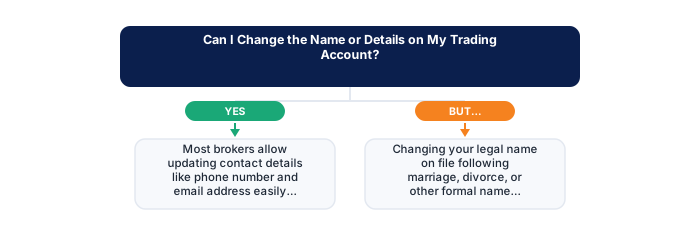
Most brokers allow updating contact details like phone number and email easily through account settings or support. Changing your legal name typically requires submitting supporting documentation for verification.
📋 ON THIS PAGE
- Updating routine contact details like email or phone
- The more involved process for legal name changes
- Why name changes require this extra verification step
- Updating your residential address specifically
- What happens if you don't update changed details promptly
- The general process for requesting any account detail change
1. Updating routine contact details like email or phone
Routine details like your email address or phone number are usually a quick self-service update through your client portal, often with a confirmation step, a verification code sent to the new address or number, to confirm the change. The process is typically completed within a few minutes and takes effect immediately.
It's worth completing this kind of update as soon as a change happens rather than letting it slide because it feels minor. An outdated email address means your broker's communications, trade confirmations, margin alerts, statements, and account notices, are going to the wrong place. An outdated phone number means two-factor authentication and security alerts become unreachable. Neither scenario is benign if something important happens with your account.
Keeping your contact details current is also part of the ongoing KYC (Know Your Customer) obligation that FSCA-regulated brokers maintain throughout the client relationship, not just at account opening. A broker who cannot reach you on the contact details they hold is less able to fulfil their obligations around margin calls, suspicious account activity, and regulatory notifications.
If you've recently moved or changed banking details as well as contact information, updating everything simultaneously while you're in the portal reduces the chance of a partial update that leaves some records stale. A few minutes of complete updating is worth more than a quick fix of only the most immediately pressing change.
| Change Type | Typical Documentation | Verification Level |
|---|---|---|
| Email or phone | None, usually self-service | Low |
| Residential address | Recent proof of address | Moderate |
| Legal name | Marriage certificate or deed poll, updated ID | High |
| Banking details | Bank confirmation letter | High |
2. The more involved process for legal name changes
A legal name change, after marriage, divorce, deed poll, or any other formal process, requires more than a settings update. Expect to submit official supporting documentation, typically a marriage certificate, divorce certificate, or court order confirming the name change, alongside fresh identification documents in your new name such as an updated passport or South African ID.
It's worth gathering the specific documentation your broker requires before initiating this process, rather than starting the request and then scrambling to find documents you should have located first. Most brokers publish their documentation requirements in their FAQ or terms, and calling this up before you begin saves the back-and-forth of submitting incomplete requests.
- South African ID or valid passport
- Proof of residential address dated within 3 months
- Proof of bank account ownership
- Selfie or photo for biometric verification (some brokers)
- Source of funds declaration if depositing above threshold
Choose an FSCA-regulated broker
Verify the FSP number is current at fsca.co.za.
Submit FICA documents
SA ID or passport, recent proof of address, and bank account proof.
Fund via EFT
Make the initial deposit from your South African bank account in ZAR.
Open demo first
Practice on demo until you are confident in the platform and strategy.
Start with minimum capital
Begin with an amount you can afford to lose while building experience.
The timeline for processing a name change is longer than for a contact detail update, typically days rather than minutes, because it involves identity verification by a compliance team rather than automated self-service. Some brokers may temporarily restrict certain account functions, such as withdrawals, while the verification is in progress.
South African traders should ensure their updated details across their trading account, banking records, and SARS registration are consistent. A name that appears differently across these records can create friction at the point of withdrawal, tax filing, or any formal identity check, having all records updated to the same legal name simultaneously is the most efficient approach.
3. Why name changes require this extra verification step
This extra verification step exists for the same reason FICA (Financial Intelligence Centre Act) verification was required when you opened the account: your broker needs ongoing confidence that the account belongs to the person they originally verified. A name change without documentation could mask an account transfer to a different person, which brokers are legally required to prevent.
It's worth appreciating this friction as a genuine protective measure rather than unnecessary bureaucracy. The same rigour that makes it harder for you to change your account details is what makes it harder for someone else to fraudulently take over your account or transfer control of it. The verification process serves your security as much as the broker's compliance obligations.
The FICA framework in South Africa requires financial institutions to maintain accurate and current customer records throughout the relationship, not just at initial onboarding. This means your broker has an affirmative obligation to update and re-verify identity details when they change, not just a procedural preference for doing so.
Understanding this regulatory basis also clarifies why the process can't be shortcut. A broker that processed name changes on the basis of a simple request without documentary evidence would be creating FICA compliance risk for itself. The documentation requirement reflects the standard the regulator expects to be maintained.
4. Updating your residential address specifically
Updating your residential address follows the same general process as a name change: you'll need fresh proof of address that meets your broker's verification standards, typically a bank statement, utility bill, or government-issued document dated within the past three months showing your name and new address. The standard is consistent with the proof of address requirements at initial account opening.
It's worth treating this update with the same seriousness as your original account verification. A current and accurate residential address is part of FICA compliance, relevant to withholding tax considerations, and necessary for any physical correspondence your broker might send. It also matters if you've moved from one country to another, brokers operating under FSCA oversight may have different product and service terms for clients based in different jurisdictions.
| Rejection reason | Fix |
|---|---|
| Address proof older than 3 months | Get a recent utility bill or bank statement |
| Name mismatch between documents | Use documents with exactly matching full name |
| Poor quality scan | Retake with good lighting, all corners visible |
| PO Box address | Brokers require physical residential address only |
If your move has taken you across provincial or international boundaries in a way that affects your tax residency status, the address update is the start of a broader conversation with both your broker and SARS. Changes in residency can affect your tax obligations on trading income and your exchange control position, and it's worth getting clarity on both before they create complications.
Keep a copy of the updated proof of address and any confirmation your broker provides once the change is processed. Having documentation of your address history is useful for any future verification or tax purposes.
5. What happens if you don't update changed details promptly
Letting your details go stale creates friction that tends to surface at the worst possible times. A mismatch between your bank records and your broker's records can hold up a withdrawal while the broker requests fresh verification. An outdated email address means you miss margin alerts or platform notices that could affect live positions. An expired ID on file can trigger an account restriction when the broker runs a periodic KYC refresh.
This is worth thinking about proactively rather than reactively, building the habit of updating your broker whenever you update any other important account, your bank, SARS, or government records. The incremental effort of updating in real time is much lower than the effort of correcting a backlog of stale records when they start causing problems.
The stakes are somewhat higher for traders who maintain significant balances or trade actively, since a temporary account restriction triggered by outdated verification can affect live positions or prevent urgent withdrawals at exactly the moment you need to act. Building a reliable maintenance habit around your account details is a form of operational risk management.
FSCA-regulated brokers are required to conduct periodic client due diligence reviews, not just initial onboarding checks. If your details are already current when one of these reviews occurs, the process is typically smooth. If they aren't, the review may trigger requests for updated documentation that interrupt normal account functioning until completed.
6. The general process for requesting any account detail change
For anything beyond a simple contact update, your best move is contacting your broker's support team directly with a clear explanation of what's changed and what documentation you have available. Most regulated brokers have a dedicated account management or compliance team for this kind of request, and contacting the right channel reduces delays.
A common friction point: a legal name change that doesn't match exactly across your ID, proof of address, and bank account can stall a withdrawal or verification process even after the broker has updated your records. Ensuring all three align before the first withdrawal after a name change prevents a frustrating hold-up.
Keep a record of all communications with your broker around detail changes, timestamps, reference numbers, and any documentation submitted. If a dispute arises about your account status or a delayed request, having that audit trail available significantly strengthens your position in any complaint or escalation.
For any updates that involve identity documents, be aware that your broker's compliance team may request originals or certified copies rather than scans, particularly for name changes where the stakes of the verification are higher. Clarifying the documentation standard before you submit prevents having to repeat the process with different document formats.
✕ Common mistakes
- Letting ID, address, and bank details fall out of sync. Mismatches are a common cause of delayed withdrawals.
- Assuming a verbal or email request is sufficient. Most brokers require supporting documentation for legal name changes.
- Not updating details promptly after a major life event. Marriage, relocation, or a legal name change should trigger an immediate update.
- Ignoring how outdated details could affect FICA compliance. See what FICA requires for why accuracy matters.
Key Takeaways
- Most brokers allow updating contact details easily, but changing your legal name typically requires submitting supporting documentation for verification.
- Most brokers allow updating contact details like phone number and email easily through account settings or support.
- Changing your legal name typically requires submitting supporting documentation for verification.
- Updating routine contact details like email or phone.
- The more involved process for legal name changes.
Frequently asked follow-up questions
How long does a legal name change request typically take to process?
This varies by broker, but generally takes longer than routine contact detail updates given the additional documentation and verification involved.
Can I trade normally while a name change request is being processed?
Generally yes, though checking with your specific broker confirms whether any temporary restrictions apply during this specific verification window.
Do I need to update my details with multiple brokers if I have several accounts?
Yes, each broker maintains independent records, requiring separate update requests with each one.
