i Short answer
Brokers often offer tiered account types differing primarily in minimum deposit, spread or commission structure, and sometimes added features.
Higher tiers generally require larger deposits in exchange for more favourable terms.
📋 ON THIS PAGE
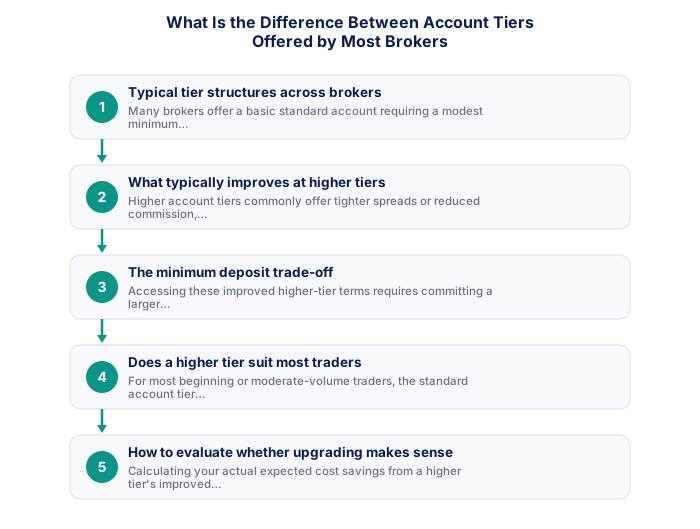
1. Typical tier structures across brokers
Many brokers offer a basic standard account requiring a modest minimum deposit, alongside one or more premium tiers (sometimes called gold, VIP, or professional accounts) requiring progressively larger minimum deposits in exchange for correspondingly improved terms across various account features.
2. What typically improves at higher tiers
Higher account tiers commonly offer tighter spreads or reduced commission, sometimes dedicated account management or priority support access, and occasionally additional features like more advanced analytical tools, though specific tier benefits vary considerably between different brokers.
- Search FSP name or number at fsca.co.za
- Confirm licence is current and not suspended
- Check scope covers forex and CFD activity
- Confirm client funds in segregated accounts
- Read FSCA enforcement actions history
- Test customer support before depositing
- Client funds legally segregated
- FSCA complaints process available
- SA consumer protections apply
- ZAR account, no FX conversion costs
- Some offshore brokers offer wider instruments
- Regulatory overhead passed on in spreads
- Stricter position limits for retail clients
- FICA verification required before trading
- Client funds segregated
- Formal FSCA complaints process
- SA consumer protections apply
- ZAR account available
- Fund safety not guaranteed
- Overseas disputes only
- SA law does not apply
- Currency conversion costs
3. The minimum deposit trade-off
Accessing these improved higher-tier terms requires committing a larger minimum deposit, meaning the genuine cost-benefit calculation depends on weighing this larger required capital commitment against the actual value the improved terms provide for your specific trading volume and style.
4. Does a higher tier genuinely suit most traders
For most beginning or moderate-volume traders, the standard account tier often provides perfectly adequate terms, with the marginal improvement higher tiers offer not necessarily justifying the considerably larger capital commitment required, particularly before a strategy's genuine edge has been thoroughly validated.
| Protection | FSCA Regulated | Offshore Unregulated |
|---|---|---|
| Client fund segregation | ✓ Required | Varies by broker |
| SA complaints process | ✓ Available | ✗ Not available |
| SA consumer law applies | ✓ Yes | ✗ No |
| ZAR account available | ✓ Typically | Often USD/EUR only |
5. How to evaluate whether upgrading makes sense
Calculating your actual expected cost savings from a higher tier's improved spread, based on your genuine anticipated trading volume, and comparing this against the additional capital commitment required, supports a more informed, quantified decision than upgrading simply based on general appeal or perceived status.
6. Checking your specific broker's tier structure
Specific tier names, minimum deposits, and exact feature differences vary considerably by broker, making it worthwhile to check your specific broker's account comparison documentation directly, rather than assuming a universal, standardised tier structure applies identically across the industry.
The FSCA regulatory framework provides South African retail traders with meaningful protection that includes segregated client funds, mandatory disclosure requirements, and a formal complaints process backed by regulatory enforcement. Traders considering offshore brokers outside the FSCA framework should evaluate whether the incremental instrument access or other benefits justify the loss of these domestic regulatory protections, particularly for higher deposit amounts where the downside of unregulated broker failure would be material.
South African traders who maintain a weekly review routine, checking the SARB economic calendar for the coming week, reviewing the Eskom load shedding schedule, assessing the current GNU coalition stability backdrop, and marking key support and resistance levels on the instruments they trade, consistently outperform traders who approach each session without any structured preparation. This weekly routine takes 30 to 45 minutes and produces a clearer analytical framework that reduces impulsive decisions and improves the quality of trade selection throughout the week.
Every South African trader who approaches the market with a structured plan, clear risk parameters, and disciplined execution starts each session from a position of strength that the majority of retail participants, who operate reactively and without documented rules, do not have. Building and maintaining this structural advantage requires consistent effort rather than exceptional talent, which means it is accessible to any trader willing to invest the time in proper preparation and honest self-assessment.
A swing-free account offers an extended grace period before financing applies.
A swing-free account offers an extended grace period before overnight financing charges begin, designed for traders who hold positions for several days rather than just overnight.
★ Why It Matters
Worth comparing directly rather than assuming higher tiers are automatically better value: calculate your own actual annual cost difference between tiers given your real trading volume, the higher tier's improved spread sometimes doesn't offset its larger minimum deposit's opportunity cost for moderate-volume traders.
✕ Common mistakes
- Not calculating your actual annual cost difference given your real trading volume. A theoretical comparison can mislead without your genuine activity level factored in.
- Choosing a tier based on its name or prestige rather than the actual numbers. The underlying terms matter more than how a tier is branded.
- Assuming all brokers structure their tiers identically. Minimum deposits and benefits vary meaningfully between providers.
When evaluating whether a broker is appropriate for South African retail trading, the FSCA public register provides the starting point, but the quality of regulatory compliance goes beyond simply holding a licence. Checking how long the broker has been licensed, whether there are any enforcement actions in their history, and what the FSCA inspection record shows, if available, provides a more complete picture than the licence alone. South African financial consumer bodies periodically publish guidance on broker evaluation that supplements the FSCA register as a due diligence resource.
South African traders choosing between locally-based and internationally-based brokers should weigh FSCA regulatory protection, rand deposit convenience, and ZAR account access against the potentially broader instrument range of some offshore providers. Most South African retail traders' needs are well served by FSCA-regulated brokers who maintain segregated client funds and provide ZAR accounts with EFT deposit and withdrawal support. For traders who specifically need instruments not available through FSCA-regulated providers, verifying the offshore broker's regulation through its home regulator's public register is the essential due diligence step before depositing.
Key Takeaways
- Brokers often offer tiered account types differing in minimum deposit, spread, and added features, with higher tiers generally requiring larger deposits.
- Brokers often offer tiered account types differing primarily in minimum deposit, spread or commission structure, and sometimes added features.
- Higher tiers generally require larger deposits in exchange for more favourable terms.
- Typical tier structures across brokers.
- What typically improves at higher tiers.
Frequently asked follow-up questions
Can I downgrade from a higher tier if it doesn't suit me?
This depends on your specific broker's policy; checking directly with support clarifies whether and how this kind of tier change can be made.
Do higher tiers ever come with additional risks?
Not inherently more risky structurally, though the larger capital commitment required means more money is exposed to the same underlying trading risks.
Is a VIP account always better value than a standard one?
Not necessarily; value depends entirely on whether your specific trading volume and style genuinely benefit enough from the improved terms to justify the larger required deposit.
