i Short answer
Brand consolidation following a merger typically migrates your account onto unified systems and branding, requiring you to review updated terms and platform changes.
📋 ON THIS PAGE
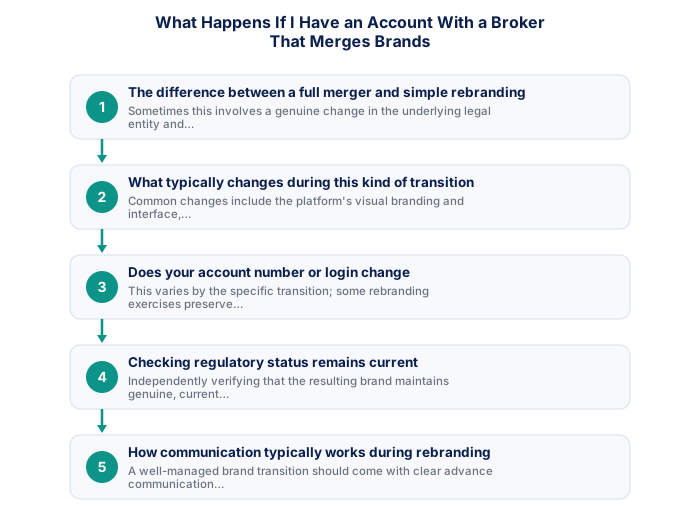
1. The difference between a full merger and simple rebranding
Sometimes this involves a genuine change in the underlying legal entity and ownership, while other times it's simply a brand name change with the same underlying entity and licensing continuing unchanged, understanding which scenario applies to your specific situation matters for assessing what genuinely changes.
It's worth reading any official announcement carefully for which specific scenario actually applies, since the practical implications for your account differ meaningfully depending on whether you're dealing with a genuine change of underlying legal entity or simply a new name and visual identity applied to the same, continuing entity.
2. What typically changes during this kind of transition
Common changes include the platform's visual branding and interface, potentially the specific terms and conditions, and sometimes the underlying trading platform technology itself, depending on the scope of the broader consolidation.
It's worth keeping a personal record of what specifically changed and when, particularly if you're maintaining detailed tax or trading records, discussed elsewhere on this site, having your own documentation of the transition timeline helps if any confusion arises later about which entity held your account during a specific period.
- Search FSP name or number at fsca.co.za
- Confirm licence is current and not suspended
- Check scope covers forex and CFD activity
- Confirm client funds in segregated accounts
- Read FSCA enforcement actions history
- Test customer support before depositing
- Client funds legally segregated
- FSCA complaints process available
- SA consumer protections apply
- ZAR account, no FX conversion costs
- Some offshore brokers offer wider instruments
- Regulatory overhead passed on in spreads
- Stricter position limits for retail clients
- FICA verification required before trading
- Client funds segregated
- Formal FSCA complaints process
- SA consumer protections apply
- ZAR account available
- Fund safety not guaranteed
- Overseas disputes only
- SA law does not apply
- Currency conversion costs
3. Does your account number or login change
This varies by the specific transition; some rebranding exercises preserve your existing account number and login credentials entirely, while others may require you to set up new credentials or migrate to a new account number as part of the broader systems consolidation.
It's worth testing your login credentials promptly once any transition is announced as complete, rather than assuming continuity, confirming access works as expected removes any uncertainty during what can otherwise feel like an unsettling period of change.
4. Checking regulatory status remains genuinely current
Independently verifying that the resulting brand maintains genuine, current FSCA licensing remains an important step regardless of whether this represents a full entity merger or simply a rebranding exercise.
It's worth treating this verification as mandatory rather than optional during any broker transition, a rebrand is precisely the kind of moment worth double-checking the FSCA register directly, discussed throughout this site's legal content, rather than simply assuming continuity based on the broker's own communication alone.
| Protection | FSCA Regulated | Offshore Unregulated |
|---|---|---|
| Client fund segregation | ✓ Required | Varies by broker |
| SA complaints process | ✓ Available | ✗ Not available |
| SA consumer law applies | ✓ Yes | ✗ No |
| ZAR account available | ✓ Typically | Often USD/EUR only |
5. How communication typically works during rebranding
A well-managed brand transition should come with clear advance communication explaining what's changing, any action required from you specifically, and updated terms, similar to the broader communication standard expected whenever brokers update their terms and conditions generally.
It's worth reading any transition-related emails carefully rather than dismissing them as routine marketing, genuine account-relevant information, changes to terms, new required actions, updated banking details, can sometimes arrive embedded within broader rebranding announcements.
6. Practical steps during this kind of transition
Reviewing any communication carefully, confirming your login credentials and account access continue working as expected, and independently verifying the resulting brand's regulatory status represents a sensible, proactive approach to this kind of transition.
The FSCA regulatory framework provides South African retail traders with meaningful protection that includes segregated client funds, mandatory disclosure requirements, and a formal complaints process backed by regulatory enforcement. Traders considering offshore brokers outside the FSCA framework should evaluate whether the incremental instrument access or other benefits justify the loss of these domestic regulatory protections, particularly for higher deposit amounts where the downside of unregulated broker failure would be material.
The FSCA regulatory framework provides South African retail traders with meaningful protection that extends beyond simply verifying a broker's licence number. The requirement for FSCA-regulated brokers to maintain segregated client accounts means your deposited funds are legally separated from the broker's operating funds. In the event of broker insolvency, this segregation protects client money from creditor claims against the company. FSCA-regulated brokers must also maintain adequate financial resources, submit to regulatory oversight, and adhere to disclosure requirements covering fees, risks, and conflicts of interest. For traders considering offshore brokers outside FSCA supervision, the loss of these domestic protections is a material risk consideration, particularly for larger account balances where the downside of unregulated broker failure would be financially significant.
When a broker merges brands, your account should migrate automatically, but the terms and conditions may change. Reviewing the new terms and verifying the merged entity's FSCA licence status are worth doing.
When evaluating whether a broker is appropriate for South African retail trading, the FSCA public register provides the starting point, but the quality of regulatory compliance goes beyond simply holding a licence. Checking how long the broker has been licensed, whether there are any enforcement actions in their history, and what the FSCA inspection record shows, if available, provides a more complete picture than the licence alone. South African financial consumer bodies periodically publish guidance on broker evaluation that supplements the FSCA register as a due diligence resource.
South African traders choosing between locally-based and internationally-based brokers should weigh FSCA regulatory protection, rand deposit convenience, and ZAR account access against the potentially broader instrument range of some offshore providers. Most South African retail traders' needs are well served by FSCA-regulated brokers who maintain segregated client funds and provide ZAR accounts with EFT deposit and withdrawal support. For traders who specifically need instruments not available through FSCA-regulated providers, verifying the offshore broker's regulation through its home regulator's public register is the essential due diligence step before depositing.
★ Why It Matters
Something worth checking specifically post-merger: whether your account number, login credentials, or API keys (if you use any automation) change as part of the migration, these details are easy to overlook amid broader announcements and can quietly break an automated strategy if missed.
✕ Common mistakes
- Assuming automated systems, like API keys, transfer smoothly. Automation can quietly break if integration details change without notice.
- Ignoring updated terms and conditions following a brand consolidation. These can differ meaningfully from what you originally agreed to.
- Not confirming continued FSCA licensing under the new combined brand. Regulatory status should be reconfirmed, not simply assumed to carry over.
Key Takeaways
- Brand consolidation following a merger typically migrates your account onto unified systems, requiring you to review updated terms and platform changes.
- Brand consolidation following a merger typically migrates your account onto unified systems and branding, requiring you to review updated terms and platform changes.
- The difference between a full merger and simple rebranding.
- What typically changes during this kind of transition.
- Does your account number or login change.
Frequently asked follow-up questions
Will my trading history transfer to the rebranded platform?
This generally depends on whether the underlying systems are also being consolidated; checking directly with your broker clarifies what happens to your specific historical record.
Should I be concerned if a broker rebrands without much explanation?
A lack of clear communication is worth noting, though independently verifying regulatory status directly addresses the core safety concern regardless of communication quality.
Does rebranding ever indicate financial trouble at the broker?
Not necessarily. Many rebrandings reflect normal business strategy decisions rather than financial distress, though the verification steps above remain a sound practice regardless.
Can I request to keep using the old branded platform temporarily?
This depends on your specific broker's transition timeline and policy; checking directly with support clarifies what flexibility, if any, exists during the transition period.
Does my deposited fund protection change during a rebranding transition?
Properly segregated client funds should remain protected throughout this kind of transition, since this protection relates to regulatory compliance rather than branding specifically.
