i Short answer
Existing accounts and funds typically continue operating under updated terms following a broker merger or acquisition.
It's worth proactively confirming continued FSCA licensing and reviewing any updated terms with the resulting entity.
📋 ON THIS PAGE
- What typically happens to existing accounts during this process
- Why FSCA licensing status needs rechecking specifically
- How brand and platform changes might follow this kind of transition
- Your funds during this transition period
- Communication you should expect from your broker
- Practical steps to take when this happens to your broker
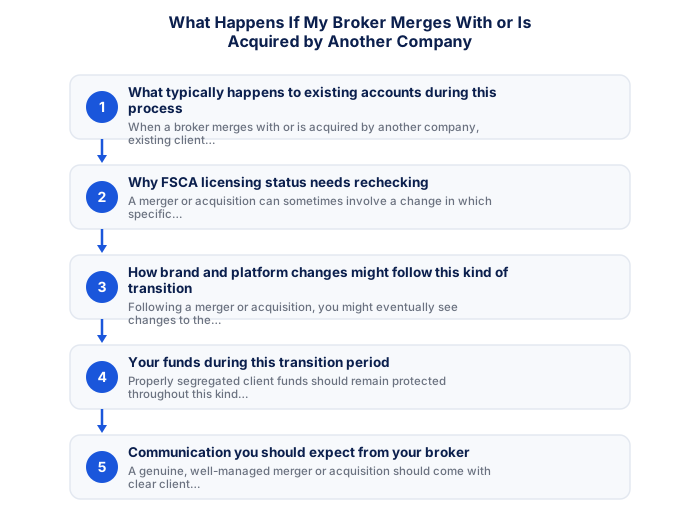
1. What typically happens to existing accounts during this process
When a broker merges with or is acquired by another company, existing client accounts typically continue operating, often migrating onto the acquiring or merged entity's systems and platform over time, rather than being closed or disrupted immediately, though the specific transition process and timeline varies by the particular corporate transaction involved.
It's worth understanding why continuity tends to be the norm here, acquiring companies generally want to retain the client base they've paid to acquire, disrupting existing accounts unnecessarily works against that commercial interest, worth keeping this practical incentive in mind if the news itself feels unsettling.
2. Why FSCA licensing status needs rechecking specifically
A merger or acquisition can sometimes involve a change in which specific legal entity actually holds your account and its corresponding FSCA licence, making it worthwhile to directly verify, through the official register, that the resulting entity maintains genuine, current, valid licensing following this kind of corporate change.
It's worth treating any acquisition announcement as a specific, deliberate trigger for this check, rather than assuming licensing simply carries over automatically, an acquiring company may operate under its own separate FSP licence, or may need to complete its own separate regulatory process, worth confirming directly.
- Search FSP name or number at fsca.co.za
- Confirm licence is current and not suspended
- Check scope covers forex and CFD activity
- Confirm client funds in segregated accounts
- Read FSCA enforcement actions history
- Test customer support before depositing
- Client funds legally segregated
- FSCA complaints process available
- SA consumer protections apply
- ZAR account, no FX conversion costs
- Some offshore brokers offer wider instruments
- Regulatory overhead passed on in spreads
- Stricter position limits for retail clients
- FICA verification required before trading
- Client funds segregated
- Formal FSCA complaints process
- SA consumer protections apply
- ZAR account available
- Fund safety not guaranteed
- Overseas disputes only
- SA law does not apply
- Currency conversion costs
3. How brand and platform changes might follow this kind of transition
Following a merger or acquisition, you might eventually see changes to the trading platform interface, brand name, or specific account features, as the combined entity works toward operational integration, these changes typically come with advance notice rather than occurring without warning.
It's worth backing up your own trading records and exported statements proactively ahead of any platform migration, discussed elsewhere on this site regarding switching brokers generally, having your own independent copies protects you regardless of how smoothly the technical transition itself goes.
4. Your funds during this transition period specifically
Properly segregated client funds should remain protected throughout this kind of corporate transition, since this protection relates to regulatory compliance requirements rather than depending on the broker's specific corporate ownership structure remaining unchanged.
It's worth confirming this segregation status explicitly during the transition specifically, rather than assuming it automatically persists, a quick, direct question to your broker's support about how client funds are being handled through the acquisition process is a reasonable, worthwhile check.
| Protection | FSCA Regulated | Offshore Unregulated |
|---|---|---|
| Client fund segregation | ✓ Required | Varies by broker |
| SA complaints process | ✓ Available | ✗ Not available |
| SA consumer law applies | ✓ Yes | ✗ No |
| ZAR account available | ✓ Typically | Often USD/EUR only |
5. Communication you should expect from your broker
A genuine, well-managed merger or acquisition should come with clear client communication explaining what's changing, any action required from you, and updated terms, similar to the broader terms-change communication, just specifically prompted by this corporate transition.
It's worth reading every communication from your broker carefully during this period, rather than skimming past what might look like routine updates, genuinely important, actionable information can sometimes be embedded within what otherwise reads as general corporate announcement material.
6. Practical steps to take when this happens to your broker
If your broker undergoes this kind of corporate change, reviewing any communication carefully, independently verifying the resulting entity's FSCA licensing status, and reading any updated terms and conditions, before continuing to use the account under its new structure, represents a sensible, proactive response.
Before funding an account, find out whether the broker absorbs a negative balance. negative balance protection should be in writing.
Terms, platforms, and the FSCA licence holder may change after the deal.
Segregated client funds should remain protected through a broker acquisition. However, terms of service, trading platforms, and the FSCA licence holder may all change once the deal completes.
★ Why It Matters
Something worth doing immediately when you hear merger news: export a complete, dated copy of your account statement and trading history before any systems migration begins, this protects you if any data discrepancy emerges during the transition.
✕ Common mistakes
- Assuming nothing about your account changes during a merger. Branding, systems, and sometimes terms can shift meaningfully.
- Ignoring official merger announcements in favour of rumours. Verified, official communication is more reliable than secondhand information.
- Not confirming regulatory continuity under the resulting combined entity. This is worth checking directly rather than assuming.
Key Takeaways
- Existing accounts and funds typically continue under new terms following a merger or acquisition, though it's worth confirming continued FSCA licensing directly.
- Existing accounts and funds typically continue operating under updated terms following a broker merger or acquisition.
- It's worth proactively confirming continued FSCA licensing and reviewing any updated terms with the resulting entity.
- What typically happens to existing accounts during this process.
- Why FSCA licensing status needs rechecking specifically.
Frequently asked follow-up questions
Can I withdraw my funds before a merger completes if I'm uncomfortable?
Generally yes, standard withdrawal processes typically remain available unless the broker specifically communicates otherwise during this transition.
Does a merger always mean the new entity is less trustworthy?
Not necessarily. Many mergers and acquisitions reflect normal business consolidation rather than indicating any specific concern, though independent verification remains a sound practice regardless.
Will my account number or login details change after a merger?
This varies by the specific transition; your broker's communication should clarify any such changes and what action, if any, you need to take.
