i Short answer
Providing knowingly false information during FICA verification carries genuine legal risk under anti-money-laundering legislation.
This is distinct from honest, unintentional errors, which can typically be corrected through your broker's standard verification process.
📋 ON THIS PAGE
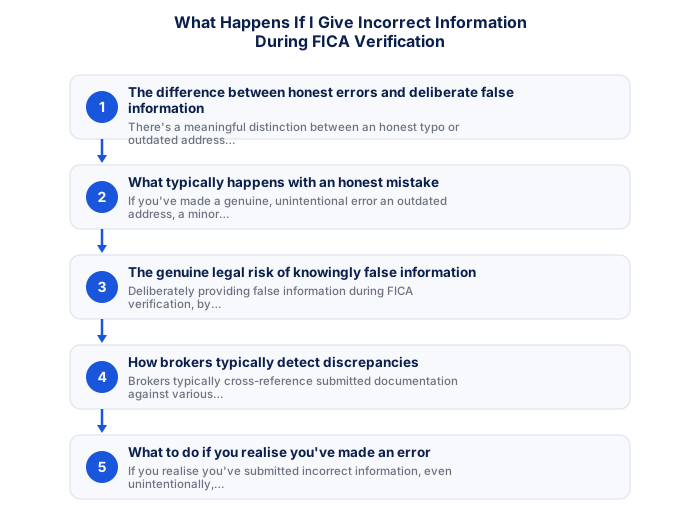
- The difference between honest errors and deliberate false information
- What typically happens with an honest mistake
- The genuine legal risk of knowingly false information
- How brokers typically detect discrepancies
- What to do if you realise you've made an error
- Why accurate verification protects you too
1. The difference between honest errors and deliberate false information
There's a meaningful distinction between an honest typo or outdated address provided unintentionally, and deliberately providing false identity or financial information specifically to circumvent verification requirements, these carry genuinely different implications.
It's worth appreciating why this distinction matters so much in practice, brokers and regulators alike are generally far more concerned with catching deliberate fraud than penalising a genuinely honest typo, this framing should ease any excessive anxiety about a simple, innocent mistake.
2. What typically happens with an honest mistake
If you've made a genuine, unintentional error, an outdated address, a minor typo, most brokers simply request updated or corrected documentation, without this representing a serious compliance issue once corrected.
It's worth responding to any such request promptly and without defensiveness, a quick, cooperative correction resolves the situation efficiently, while delay or evasiveness, even over a genuinely innocent error, can inadvertently make the situation look more concerning than it actually is.
- Search FSP name or number at fsca.co.za
- Confirm licence is current and not suspended
- Check scope covers forex and CFD activity
- Confirm client funds in segregated accounts
- Read FSCA enforcement actions history
- Test customer support before depositing
- Client funds legally segregated
- FSCA complaints process available
- SA consumer protections apply
- ZAR account, no FX conversion costs
- Some offshore brokers offer wider instruments
- Regulatory overhead passed on in spreads
- Stricter position limits for retail clients
- FICA verification required before trading
- Client funds segregated
- Formal FSCA complaints process
- SA consumer protections apply
- ZAR account available
- Fund safety not guaranteed
- Overseas disputes only
- SA law does not apply
- Currency conversion costs
3. The genuine legal risk of knowingly false information
Deliberately providing false information during FICA verification, by contrast, can constitute a genuine offence under South African anti-money-laundering legislation, carrying potential legal consequences beyond simply having your account application affected.
It's worth understanding why this distinction carries real legal weight, FICA verification exists specifically to support South Africa's broader anti-money-laundering framework, discussed elsewhere on this site, deliberately circumventing it isn't treated as a minor administrative matter.
4. How brokers typically detect discrepancies
Brokers typically cross-reference submitted documentation against various verification checks, meaning genuine discrepancies between provided information and official records are often identified during the standard verification process.
It's worth ensuring your own submitted documents are genuinely clear and consistent before submission, taking a moment to double-check that names, dates, and addresses match precisely across every document reduces the chance of a legitimate discrepancy triggering unnecessary scrutiny.
| Protection | FSCA Regulated | Offshore Unregulated |
|---|---|---|
| Client fund segregation | ✓ Required | Varies by broker |
| SA complaints process | ✓ Available | ✗ Not available |
| SA consumer law applies | ✓ Yes | ✗ No |
| ZAR account available | ✓ Typically | Often USD/EUR only |
5. What to do if you realise you've made an error
If you realise you've submitted incorrect information, even unintentionally, proactively contacting your broker to correct this directly, rather than hoping it goes unnoticed, generally represents the more sensible, lower-risk approach, similar to proactively correcting tax matters.
It's worth reaching out proactively the moment you notice any error, rather than waiting to see if the broker catches it independently, self-reporting a genuine mistake tends to be received considerably more favourably than having it discovered through the broker's own verification checks.
6. Why accurate verification protects you too
Beyond the compliance dimension, accurate verification also protects your own interests, ensuring your account is correctly linked to your genuine identity and banking details supports the smooth processing of withdrawals, and reduces the risk of account access or fund-transfer complications down the line.
It's also worth knowing that any FSCA-regulated broker operating in South Africa is bound by POPIA (the Protection of Personal Information Act), which governs how your personal and financial data must be collected, stored, and protected.
South Africa's financial services regulatory framework is more complete than many retail traders realise, with specific protections and obligations that go beyond simply choosing an FSCA-licensed broker. FICA requirements protect against money laundering and require brokers to verify your identity. FAIS governs the provision of financial advice and intermediary services, ensuring those who provide paid financial guidance are appropriately licensed and accountable. POPIA protects your personal data in the hands of financial services providers. Understanding which framework applies to a specific situation helps you exercise your rights effectively when something goes wrong.
Deliberate misrepresentation during FICA carries serious consequences.
A minor honest error during FICA verification can typically be corrected by supplying the right documentation. Deliberate misrepresentation carries serious consequences and may be reported.
South Africa's financial services regulatory framework for retail traders is complete but managing it requires awareness of which specific regulations apply to which activities. FAIS governs the provision of financial services and advice by licensed entities. FICA governs anti-money-laundering and client identity verification requirements. POPIA governs how your personal data is handled by financial services providers. Understanding which regulatory framework applies to a specific interaction with your broker or financial services provider helps you exercise your rights effectively and identify the appropriate channel for any regulatory complaint or query.
★ Why It Matters
Worth doing proactively if you realise a genuine, honest error after submission: contact your broker's compliance team directly to correct it yourself, rather than waiting for them to flag a mismatch, proactively-corrected honest mistakes are treated very differently from discrepancies the broker catches independently.
✕ Common mistakes
- Waiting for the broker to catch a known, honest mistake. Proactively correcting it yourself is treated very differently from a broker-discovered discrepancy.
- Assuming all errors are treated identically regardless of intent. Honest mistakes and deliberate misrepresentation carry very different consequences.
- Not double-checking submitted details against your actual documents before submission. A careful initial check prevents most of these situations.
- Ignoring how this could affect future verification requests. A pattern of errors can trigger more frequent compliance scrutiny.
Key Takeaways
- Providing knowingly false information during FICA verification carries genuine legal risk, distinct from honest errors that can typically be corrected.
- Providing knowingly false information during FICA verification carries genuine legal risk under anti-money-laundering legislation.
- This is distinct from honest, unintentional errors, which can typically be corrected through your broker's standard verification process.
- The difference between honest errors and deliberate false information.
- What typically happens with an honest mistake.
Frequently asked follow-up questions
Will my account be immediately closed if I make a verification mistake?
Not typically for genuine, honest errors; most brokers simply request correction or updated documentation rather than immediately closing an account over an unintentional mistake.
Can I update my FICA information if my circumstances change later?
Yes, updating your information is a normal part of maintaining accurate, current account records.
Does providing an old address count as false information?
This is generally treated as requiring an update rather than deliberate falsification, provided you address it honestly once identified or requested.
What if someone else filled in my verification details incorrectly?
Regardless of who completed the documentation, ensuring the final submitted information is accurate remains important, and correcting any errors promptly once identified is the sensible approach.
Can incorrect information affect a withdrawal that's already been processed?
This could potentially create complications, making accurate information important both at verification and for any subsequent transactions.
