i Short answer
The National Credit Act regulates credit agreements generally in South Africa, with limited direct relevance to standard, cash-funded trading accounts.
It becomes relevant if you borrow money specifically to fund trading activity.
📋 ON THIS PAGE
- What the National Credit Act generally covers
- Why standard trading accounts aren't directly affected
- When this act becomes relevant to a trader specifically
- Reckless lending protections this act provides
- The connection to using credit for trading capital
- Practical implications for South African traders
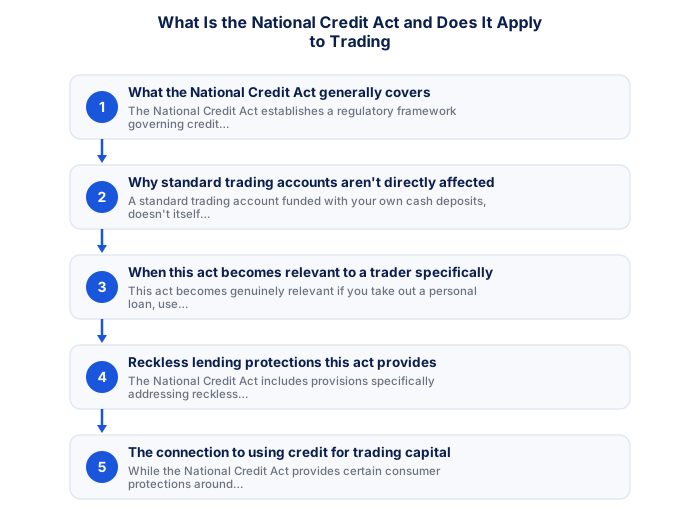
1. What the National Credit Act generally covers
The National Credit Act establishes a regulatory framework governing credit agreements in South Africa, including requirements around responsible lending, credit provider registration, and consumer protection provisions designed to prevent reckless extension of credit to consumers.
It's worth understanding this as broad, general-purpose consumer credit legislation, entirely separate from the FSCA and FAIS framework discussed throughout this site's legal content, this Act addresses credit agreements generally, across all sectors, not specifically financial trading services.
See also: What Is a Multi-Broker Monitoring Tool?
See also: What Is a Broker's Best Execution Obligation?
See also: How Does Trading the VIX or Volatility Index Products Wor
2. Why standard trading accounts aren't directly affected
A standard trading account funded with your own cash deposits, doesn't itself constitute a credit agreement, meaning the National Credit Act generally has limited direct application to the typical trading relationship between you and your broker.
It's worth appreciating why this exclusion makes structural sense, a standard trading account itself doesn't constitute a credit agreement in the sense this Act addresses, you're depositing and trading your own funds, not borrowing from your broker in the way this legislation contemplates.
- Two-factor authentication enabled
- Unique password not shared with other sites
- Broker mobile app installed and tested
- Mobile data backup connection tested
- Price alerts set for active instruments
- Broker emergency number saved in phone
- Know how to close all positions in under 30 seconds
- Desktop: full charting, multi-monitor, all order types
- Mobile: real-time monitoring and load shedding backup
- Mobile: price alerts when away from desk
- Desktop: useless during load shedding without UPS
- Mobile: limited charting for detailed analysis
- Mobile: higher risk of fat-finger errors
- Full charting and analysis
- Best for trade entry
- Multi-monitor support
- More order types available
- Monitor and manage on the go
- Load shedding backup use
- Push price alerts
- Limited charting tools
3. When this act becomes relevant to a trader specifically
This act becomes genuinely relevant if you take out a personal loan, use credit card debt, or enter another formal credit agreement specifically to fund trading capital, since that separate credit agreement itself falls under this regulatory framework.
It's worth understanding this connection clearly, discussed elsewhere on this site regarding borrowing money to fund trading capital specifically, if you take out a personal loan or use a credit facility to fund your trading, that borrowing itself falls under this Act's protections, even though your trading account doesn't.
| Feature | MT4 | MT5 |
|---|---|---|
| Broker availability | Very wide | Growing |
| EA library | Largest available | Smaller but growing |
| Timeframes | 9 built-in | 21 built-in |
| Asset classes | Forex and CFDs | Forex, CFDs, stocks |
| Mobile app | Good | More modern UI |
4. Reckless lending protections this act provides
The National Credit Act includes provisions specifically addressing reckless lending, requiring registered credit providers to assess a consumer's ability to repay before extending credit, this protection applies to the lending relationship itself, rather than to how you subsequently choose to use the funds once received.
It's worth understanding these protections as relevant specifically to the borrowing decision itself, if you're genuinely considering this route despite the strong caution discussed elsewhere on this site, these protections exist to guard against a lender extending credit you clearly couldn't reasonably afford to service.
5. The connection to using credit for trading capital
While the National Credit Act provides certain consumer protections around the lending relationship itself, it doesn't address or mitigate the underlying financial risk of using borrowed funds for speculative trading, which remains a separate, important consideration.
It's worth reading this alongside the broader discussion elsewhere on this site regarding why borrowing for trading capital is generally discouraged, this Act's protections address the lending relationship's fairness, they don't address or mitigate the separate, underlying financial risk of trading with borrowed money at all.
6. Practical implications for South African traders
For most traders using genuinely discretionary cash savings, this act carries limited practical relevance; its relevance increases specifically if credit becomes involved in funding your trading activity, making the broader risk discussion elsewhere regarding this practice more directly important than this specific regulatory framework.
Platform reliability during high-volatility events is a more important consideration than the breadth of analytical features for most retail traders. South African traders have an additional reliability concern that traders in stable electricity markets do not face: load shedding requires a tested mobile platform backup for managing open positions during power outages. Testing the mobile backup specifically, the ability to view positions, modify stops, and close trades, before going live with real capital is a practical step that traders outside South Africa simply do not need to consider. The best platform is ultimately the one you can use confidently under adverse conditions, not the one with the most features under ideal conditions. Confirming that your broker's mobile app functions correctly on your specific mobile device and 4G connection takes five minutes and could prevent a significant connectivity-related loss.
CFD trading accounts and margin are outside its scope.
The National Credit Act covers consumer credit products like home loans and credit cards. CFD trading accounts and margin facilities are not classified as consumer credit under the NCA and fall outside its direct scope.
★ Why It Matters
Something worth knowing specifically: using a personal loan or credit card to fund a trading account doesn't trigger any special trading-specific protection under the NCA, the Act regulates the credit agreement itself, not what you subsequently do with the borrowed funds.
✕ Common mistakes
- Treating borrowed trading capital as covered by special consumer protections. No such trading-specific protection exists under this Act.
- Not understanding that loan obligations remain fixed regardless of trading outcomes. This is true whether borrowing through a personal loan or credit card.
- Assuming credit regulation reduces the risk of using borrowed capital for trading. The regulation addresses the loan terms, not the inherent risk of the trading activity itself.
Key Takeaways
- The National Credit Act regulates credit agreements generally, with limited direct relevance to standard cash-funded trading accounts in most circumstances.
- The National Credit Act regulates credit agreements generally in South Africa, with limited direct relevance to standard, cash-funded trading accounts.
- It becomes relevant if you borrow money specifically to fund trading activity.
- What the National Credit Act generally covers.
- Why standard trading accounts aren't directly affected.
See also: How Much Money Do I Need to Start Trading in South Africa? and What Is Margin in Forex Trading? and Is Forex Trading a Pyramid Scheme in South Africa?.
Frequently asked follow-up questions
Does my broker need to comply with the National Credit Act?
Generally not for standard cash-funded trading accounts, since these don't constitute credit agreements; this act applies to registered credit providers specifically.
Can I get protection under this act if I borrow to trade and lose money?
This act addresses the lending relationship's responsible-lending requirements, not trading losses themselves, which remain a separate financial risk entirely.
Does using a credit card to fund a deposit trigger this act's protections?
Credit card agreements themselves fall under this regulatory framework, though this addresses the credit relationship rather than your subsequent trading activity or outcomes.
Is margin lending the same as credit under this act?
Margin operates differently from a formal credit agreement in the National Credit Act sense, though specific structures can vary by broker and warrant individual consideration.
Should I consult a professional before using credit for trading capital?
Yes, given the genuine financial risk involved, professional financial guidance is generally advisable before combining borrowed funds with speculative trading activity.
