i Short answer
Unexpected additional verification requests are typically routine compliance reviews, often triggered by larger transactions or automated risk-flagging systems.
This doesn't usually indicate any specific problem with your account.
📋 ON THIS PAGE
- Why brokers sometimes request additional verification
- Common triggers for this kind of request
- How this connects to the broader anti-money-laundering framework
- Is this a sign something is wrong with my account
- How to respond to this kind of request appropriately
- What happens if you don't respond to the request
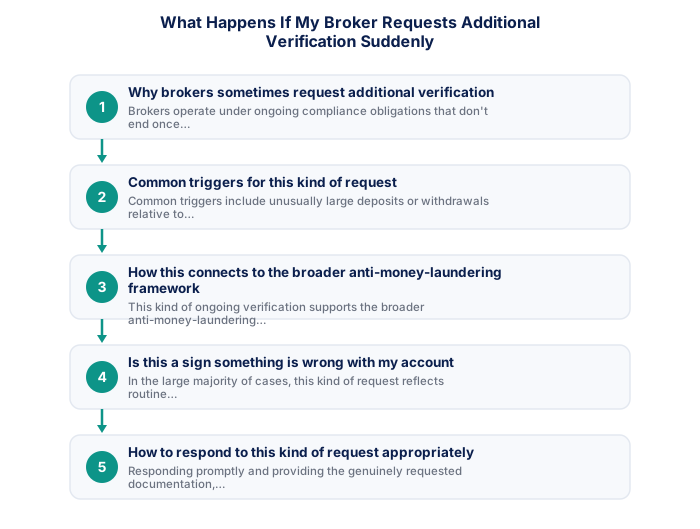
1. Why brokers sometimes request additional verification
Under FICA and Financial Intelligence Centre requirements, brokers operate under ongoing compliance obligations that don't end once initial account verification is complete, periodic review and, in some cases, additional verification specifically tied to particular account activity, represent a normal, expected part of this continuing regulatory relationship.
It's worth treating this as a genuinely ongoing relationship rather than a one-time hurdle cleared at account opening and then forgotten. Regulatory expectations around client verification apply continuously for as long as your account remains active, which is precisely why even long-standing, established clients can still receive this kind of request periodically.
2. Common triggers for this kind of request
Common triggers include unusually large deposits or withdrawals relative to your typical account activity, expired identity documents needing renewal, changes to your personal details like address, or simply a periodic, scheduled review that some brokers conduct as standard compliance practice regardless of any specific triggering event.
It's worth being proactive about the more predictable of these triggers specifically, checking your ID document's expiry date periodically and updating your details promptly whenever your address or personal circumstances change, rather than waiting for your broker to notice and prompt you first.
- Search FSP name or number at fsca.co.za
- Confirm licence is current and not suspended
- Check scope covers forex and CFD activity
- Confirm client funds in segregated accounts
- Read FSCA enforcement actions history
- Test customer support before depositing
- Client funds legally segregated
- FSCA complaints process available
- SA consumer protections apply
- ZAR account, no FX conversion costs
- Some offshore brokers offer wider instruments
- Regulatory overhead passed on in spreads
- Stricter position limits for retail clients
- FICA verification required before trading
- Client funds segregated
- Formal FSCA complaints process
- SA consumer protections apply
- ZAR account available
- Fund safety not guaranteed
- Overseas disputes only
- SA law does not apply
- Currency conversion costs
3. How this connects to the broader anti-money-laundering framework
This kind of ongoing verification supports the broader anti-money-laundering framework the Financial Intelligence Centre oversees, with brokers required to maintain current, accurate client information rather than relying solely on potentially outdated information from initial account opening.
Understanding this broader framework helps contextualise why the request can feel impersonal or automated, it genuinely is, in most cases, a systematic process applied consistently across many accounts rather than something specifically targeted at you individually based on any particular concern.
4. Is this a sign something is wrong with my account
In the large majority of cases, this kind of request reflects routine compliance practice rather than indicating any specific suspicion or problem with your account, automated systems flagging certain transaction patterns for standard review is a normal part of how regulated financial institutions operate, rather than a personal accusation.
It's worth resisting the instinct to interpret this request emotionally, as an accusation or a sign of distrust, since that reaction, while understandable, can lead to unhelpful defensiveness or delay in responding, when a calm, prompt, straightforward response is genuinely the more effective way through it.
| Protection | FSCA Regulated | Offshore Unregulated |
|---|---|---|
| Client fund segregation | ✓ Required | Varies by broker |
| SA complaints process | ✓ Available | ✗ Not available |
| SA consumer law applies | ✓ Yes | ✗ No |
| ZAR account available | ✓ Typically | Often USD/EUR only |
5. How to respond to this kind of request appropriately
Responding promptly and providing the genuinely requested documentation, similar to the original account-opening verification, generally resolves this kind of request efficiently. Delaying or ignoring the request, by contrast, can result in account restrictions until the verification is genuinely completed.
It's worth keeping the same document-quality standards in mind here that mattered during your original FICA verification, clear, current, correctly matching your account details, since the same avoidable issues, blurry images, mismatched names, expired documents, are just as likely to delay this follow-up request as they were the first time around.
6. What happens if you don't respond to the request
Brokers typically restrict certain account functions, particularly withdrawals, until requested verification is genuinely completed, reflecting the broker's own regulatory obligation to maintain current compliance information rather than an arbitrary or punitive restriction.
Unexpected emails requesting passwords or card details are phishing attempts.
Legitimate additional verification requests come through your official account portal and ask for standard FICA documents. Unexpected emails with urgent requests for passwords or card numbers are phishing.
★ Why It Matters
Worth knowing specifically: an unexpected request for source-of-funds documentation often gets triggered automatically by a transaction crossing a specific Rand threshold, it's frequently the transaction size itself, not anything about your account history, that triggered the review.
✕ Common mistakes
- Assuming a verification request signals something is wrong with your account. It's often a routine, transaction-triggered compliance review.
- Delaying response to verification requests unnecessarily. Prompt responses tend to resolve these requests faster.
- Not understanding which specific transaction triggered the request. This context can clarify whether the request is genuinely routine.
- Treating every additional request as unusual or suspicious. Automated risk-flagging systems generate many of these as standard practice.
Key Takeaways
- Unexpected additional verification requests are typically routine compliance reviews, often triggered by larger transactions or periodic regulatory refresh requirements.
- Unexpected additional verification requests are typically routine compliance reviews, often triggered by larger transactions or automated risk-flagging systems.
- This doesn't usually indicate any specific problem with your account.
- Why brokers sometimes request additional verification.
- Common triggers for this kind of request.
Frequently asked follow-up questions
Can I refuse to provide additional verification?
This would generally result in continued account restrictions, since brokers are legally required to maintain this kind of compliance information for their regulated operations.
How quickly should I respond to this kind of request?
Responding promptly helps minimise any account function restrictions that typically apply until verification is genuinely completed.
Does this happen more often to accounts with larger balances?
Larger or unusual transaction patterns relative to your typical activity can sometimes trigger this kind of review more readily, though this isn't a fixed, universal rule.
