i Short answer
Palladium and rhodium are additional tradeable platinum group metals beyond platinum itself.
These are available through some FSCA-regulated brokers, with their own distinct industrial demand drivers and supply dynamics.
📋 ON THIS PAGE
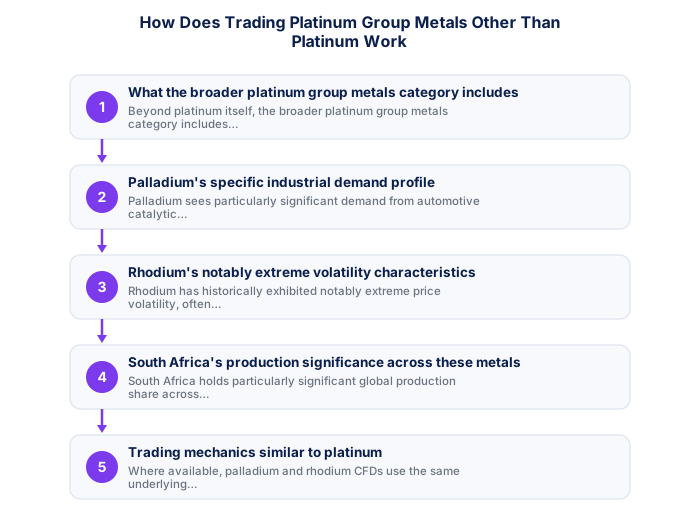
- What the broader platinum group metals category includes
- Palladium's specific industrial demand profile
- Rhodium's notably extreme volatility characteristics
- South Africa's production significance across these metals
- Trading mechanics similar to platinum
- Risk management considerations specific to these metals
1. What the broader platinum group metals category includes
Beyond platinum itself, the broader platinum group metals category includes palladium and rhodium, both of which see significant production from South African mining operations and offer their own distinct, sometimes available trading opportunities through certain brokers' CFD offerings.
It's worth checking your specific broker's coverage of these less commonly traded metals directly, since palladium and especially rhodium CFDs are considerably less universally available than platinum or gold, worth confirming before assuming access to the full category.
| Metal | Primary Demand Driver | Typical Volatility |
|---|---|---|
| Platinum | Autocatalysts, jewellery | Moderate to high |
| Palladium | Autocatalysts, especially petrol engines | High |
| Rhodium | Autocatalysts, very limited supply | Extreme |
2. Palladium's specific industrial demand profile
Palladium sees particularly significant demand from automotive catalytic converter manufacturing, similar in broad category to platinum's own industrial use, though with its own specific demand dynamics tied to particular vehicle technology trends and emissions regulation changes across major automotive markets globally.
It's worth following automotive industry and emissions regulation developments specifically when trading palladium, since shifts in vehicle manufacturing trends, including the pace of transition toward electric vehicles, can meaningfully affect long-term demand for this particular metal's primary industrial application.
- FSCA-regulated broker verified at fsca.co.za
- Demo account tested for minimum 60 days
- Trading plan written: entry, exits, position sizing
- Risk per trade defined (1-2% of account)
- Backup internet connection tested for load shedding
- Tax implications understood
3. Rhodium's notably extreme volatility characteristics
Rhodium has historically shown notably extreme price volatility, often considerably exceeding even other precious metals' elevated volatility, reflecting its relatively small market size and concentrated production, meaning any specific supply or demand shift can produce outsized price movement compared to more liquid, widely-traded metals.
It's worth checking rhodium's actual historical price chart directly if you're considering trading it, seeing the genuine scale of past price swings firsthand tends to be a more effective way of appreciating this metal's extreme volatility than a written description alone can convey.
4. South Africa's production significance across these metals
South Africa holds particularly significant global production share across the platinum group metals broadly, including palladium and rhodium, connecting these metals' price trends to the broader Rand commodity-currency dynamics.
It's worth understanding this concentrated production significance as a genuine double-edged consideration, South Africa's dominant position gives these metals meaningful relevance to Rand fundamentals, but it also means South African-specific operational disruptions can meaningfully affect global supply and pricing for these particular metals.
| Item | Detail |
|---|---|
| Regulator | FSCA, fsca.co.za |
| Exchange control | SARB, resbank.co.za |
| Tax authority | SARS, sars.gov.za |
| JSE hours | 09:00-17:00 SAST Mon-Fri |
| Best forex session | 15:00-17:00 SAST |
| CGT annual exclusion | R50,000 (individuals) |
5. Trading mechanics similar to platinum
Where available, palladium and rhodium CFDs use the same underlying mechanics as other precious metals, tracking live price without physical delivery, using margin and leverage, with the ability to go long or short, though availability for these specific metals is generally less widespread than for gold, silver, or platinum across typical retail broker platforms.
It's worth double-checking the specific contract size and margin requirements for each individual metal separately, rather than assuming identical terms simply because the underlying mechanics follow the same general CFD structure, since specific terms can still vary between these related but distinct instruments.
6. Risk management considerations specific to these metals
Given rhodium's particularly extreme volatility, applying especially conservative, volatility-aware position sizing, calibrated using current volatility readings through tools like ATR, matters particularly for this instrument given its potential for outsized price movement.
Different engine technology trends can move these metals independently, palladium tied more to petrol engine catalysts and platinum to diesel and hydrogen fuel cell catalysts.
★ Why It Matters
Worth tracking: palladium and platinum prices have historically moved somewhat independently despite both serving the automotive catalyst market. Since they're used in different engine types (petrol versus diesel), shifts in vehicle technology trends can move one without the other.
✕ Common mistakes
- Ignoring automotive catalyst demand as the key driver for these metals. This is more directly relevant than general precious-metal sentiment.
- Treating platinum group metals as interchangeable with gold or silver. Their industrial demand profile makes them meaningfully different.
- Not checking liquidity before trading the less commonly traded metals in this group. Rhodium and palladium CFDs often have thinner liquidity than platinum.
Key Takeaways
- Palladium and rhodium are tradeable platinum group metals beyond platinum itself, available through some brokers with their own distinct supply and demand dynamics.
- Palladium and rhodium are additional tradeable platinum group metals beyond platinum itself.
- These are available through some FSCA-regulated brokers, with their own distinct industrial demand drivers and supply dynamics.
- What the broader platinum group metals category includes.
- Palladium's specific industrial demand profile.
See also: How Does Platinum Trading Work in South Africa? and What Is a Basket Trade and Can I Trade Multiple Instruments Together? and Which ETF Should a South African Beginner Actually Buy?.
Frequently asked follow-up questions
Are palladium and rhodium CFDs widely available through South African brokers?
Availability is generally less widespread than for gold, silver, or platinum. Checking your broker's instrument list will confirm what's genuinely available to you.
Why is rhodium so much more volatile than other precious metals?
This largely reflects its considerably smaller market size and more concentrated production base compared to more widely traded metals.
Does palladium correlate closely with platinum prices?
There can be some loose correlation given shared industrial use categories and South African production overlap, though each metal also has distinct demand drivers affecting its own price behaviour.
