i Short answer
Political stability affects investor confidence and capital flows broadly. Both domestic and foreign political developments meaningfully influence how a given currency pair moves.
📋 ON THIS PAGE
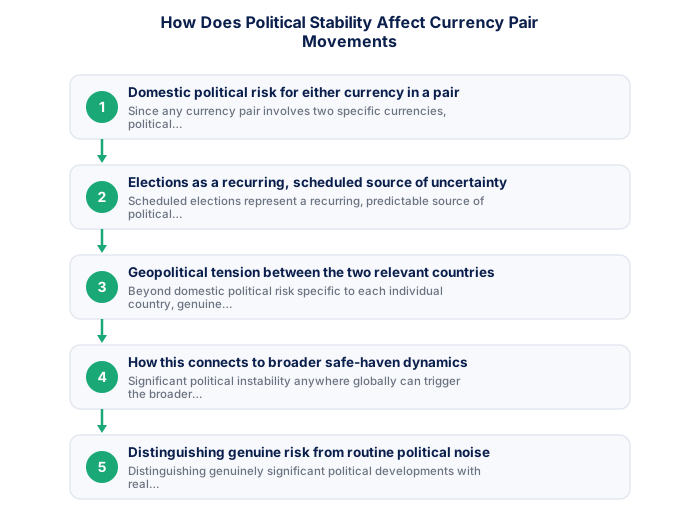
- Domestic political risk for either currency in a pair
- Elections as a recurring, scheduled source of uncertainty
- Geopolitical tension between the two relevant countries
- How this connects to broader safe-haven dynamics
- Distinguishing genuine risk from routine political noise
- Practical monitoring approaches for traders specifically
1. Domestic political risk for either currency in a pair
Since any currency pair involves two specific currencies, political developments in either country's domestic context can affect that respective currency's value, and by extension, the pair's overall movement, this means analysing any specific pair requires awareness of political context in both relevant countries, not just one.
It's worth checking both sides of any pair you trade, not just the one you happen to follow more closely, a trader focused primarily on South African news might overlook a genuinely significant political development affecting the other currency in a pair like USD/ZAR, worth building awareness of both relevant countries deliberately.
2. Elections as a recurring, scheduled source of uncertainty
Scheduled elections represent a recurring, predictable source of political uncertainty across virtually any country, often producing elevated currency volatility in the period surrounding the election, particularly if the outcome carries genuine uncertainty about future policy direction for that specific currency's home economy.
It's worth marking known election dates for relevant countries on your broader economic calendar, discussed elsewhere on this site, since these dates are genuinely predictable well in advance, giving you the opportunity to plan your risk exposure around this known source of elevated uncertainty rather than being caught unprepared.
| Lot type | Size | USD/ZAR pip value | Min recommended account |
|---|---|---|---|
| Standard | 100,000 units | ~R1.00 | R100,000+ |
| Mini | 10,000 units | ~R0.10 | R10,000+ |
| Micro | 1,000 units | ~R0.01 | R1,000+ |
| Nano | 100 units | ~R0.001 | R100+ |
- V = Pip value in account currency
- E = Current exchange rate of quote vs account currency
- L = Lot size (100,000 standard / 10,000 mini / 1,000 micro)
- USD/ZAR example = 1 pip = R1 per standard lot
- Leveraged instrument
- Long and short available
- Overnight financing applies
- No ownership of asset
- Typically unleveraged
- Physical currency received
- No daily financing
- Currency ownership
3. Geopolitical tension between the two relevant countries
Beyond domestic political risk specific to each individual country, genuine geopolitical tension or conflict between the two countries whose currencies form a specific pair can introduce additional, pair-specific volatility beyond what either country's purely domestic political situation alone might suggest, reflecting the bilateral relationship dynamics this kind of tension specifically affects.
It's worth following diplomatic and trade relationship developments between two specific countries whose currency pair you actively trade, since tension specific to that particular bilateral relationship can move the pair in ways that broader, general political news about either country individually wouldn't fully capture.
4. How this connects to broader safe-haven dynamics
Significant political instability anywhere globally can trigger the broader risk-aversion dynamic, with capital flowing toward perceived-safer currencies and away from currencies perceived as carrying elevated political risk, regardless of whether that specific instability directly involves either currency in your particular traded pair.
It's worth understanding this as a genuinely separate mechanism from the country-specific political risk discussed above, a currency can weaken due to global risk-aversion flowing toward safe havens even when that specific currency's own domestic political situation hasn't changed at all, worth distinguishing between these two related but distinct dynamics.
5. Distinguishing genuine risk from routine political noise
Distinguishing genuinely significant political developments with real potential to affect economic policy or governance from routine political commentary or noise requires judgement, ideally informed by how seriously reputable financial analysis sources are treating any specific development.
It's worth developing this discernment deliberately over time by tracking which specific political stories actually preceded meaningful currency moves versus which generated considerable news coverage but little genuine market reaction, building this personal, evidence-based sense of what genuinely matters takes time but becomes a genuinely useful analytical skill.
6. Practical monitoring approaches for traders specifically
Maintaining general awareness of significant political developments in both countries relevant to your traded pairs, through reputable news and financial analysis sources, and incorporating genuinely significant developments into your broader fundamental analysis alongside the other factors, supports more complete, informed currency pair analysis.
A genuine surprise relative to expectations moves currencies more.
A widely anticipated political event is often already priced in, producing a muted reaction. A genuine surprise relative to expectations tends to move currency pairs more sharply.
★ Why It Matters
Worth watching around major political events: it's often the surprise relative to market expectations, not the event itself, that produces the sharpest currency move, a widely expected political outcome tends to be largely priced in well before it's confirmed.
✕ Common mistakes
- Reacting to political news without checking if it was already expected. Markets often price in widely anticipated outcomes well in advance.
- Ignoring how international, not just domestic, politics affects a currency pair. Both sides of a pair carry their own political risk factors.
- Trading immediately on political headlines without confirming market reaction. Initial reactions sometimes reverse once full implications are assessed.
Key Takeaways
- Political stability affects investor confidence and capital flows, with both domestic and foreign political developments meaningfully influencing currency pairs.
- Political stability affects investor confidence and capital flows broadly.
- Both domestic and foreign political developments meaningfully influence how a given currency pair moves.
- Domestic political risk for either currency in a pair.
- Elections as a recurring, scheduled source of uncertainty.
Frequently asked follow-up questions
Does political risk affect major pairs as much as exotic pairs?
Major pairs generally show somewhat more contained reaction given their deeper liquidity, though significant political developments can still meaningfully affect even these more liquid pairs.
Should I avoid trading entirely during election periods?
This is a personal risk management choice, similar to the broader caution warranted when trading around major uncertain events generally.
Can political stability improve a currency's value over time?
Yes, sustained political stability and predictable governance generally support more favourable investor confidence and currency stability over the longer term.
