i Short answer
Pausing or significantly reducing trading activity during intensive exam or study periods protects both your academic focus and your trading decision quality.
📋 ON THIS PAGE
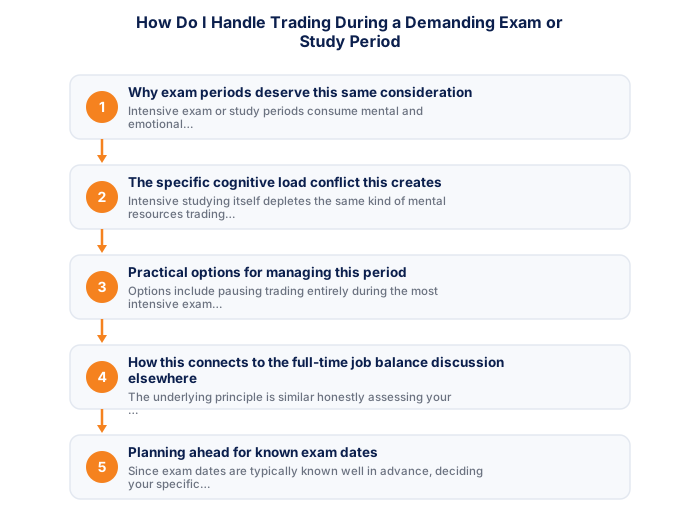
1. Why exam periods genuinely deserve this same consideration
Intensive exam or study periods consume mental and emotional resources that would otherwise support the disciplined, focused decision-making sound trading requires, making this a legitimate period to apply similar caution.
It's worth giving yourself explicit permission to treat this period this way, rather than feeling you should somehow power through both commitments at full intensity, recognising a demanding exam period as a legitimate reason to scale back trading temporarily reflects sound judgement, not a lack of commitment to trading.
See also: How Do I Handle Trading While Traveling or on Holiday?
2. The specific cognitive load conflict this creates
As, intensive studying itself depletes the same kind of mental resources trading decisions also draw upon, meaning attempting both simultaneously at full intensity risks degraded performance in either area, or both, compared to focusing fully on one at a time.
It's worth noticing this conflict concretely in your own experience if you attempt both simultaneously, difficulty concentrating fully on either your studying or your trading analysis, or feeling generally more mentally depleted than either activity alone would typically produce, are worth treating as genuine signals this conflict is actively affecting you.
- FSCA-regulated broker verified at fsca.co.za
- Demo account tested for minimum 60 days
- Trading plan written: entry, exits, position sizing
- Risk per trade defined (1-2% of account)
- Backup internet connection tested for load shedding
- Tax implications understood
3. Practical options for managing this period
Options include pausing trading entirely during the most intensive exam period specifically, or significantly reducing position size and trading frequency while maintaining minimal, lower-pressure engagement.
It's worth choosing between these options based on how genuinely demanding your specific exam period actually is, rather than defaulting to whichever feels less disruptive to your trading routine, an honest assessment of your actual available mental capacity should drive this choice more than attachment to maintaining trading continuity.
4. How this connects to the full-time job balance discussion elsewhere
The underlying principle is similar, honestly assessing your genuinely available time and mental capacity during this specific period, rather than assuming you can maintain full trading intensity alongside another demanding commitment without any adjustment.
| Item | Detail |
|---|---|
| Regulator | FSCA, fsca.co.za |
| Exchange control | SARB, resbank.co.za |
| Tax authority | SARS, sars.gov.za |
| JSE hours | 09:00-17:00 SAST Mon-Fri |
| Best forex session | 15:00-17:00 SAST |
| CGT annual exclusion | R50,000 (individuals) |
5. Planning ahead for known exam dates
Since exam dates are typically known well in advance, deciding your specific approach before the demanding period begins, rather than reactively deciding once already overwhelmed, supports a more deliberate, considered response.
It's worth marking these dates on the same calendar or planning system you use for your broader trading schedule, treating an upcoming demanding exam period with the same advance planning you'd apply to any other known, significant disruption to your normal routine.
6. Returning to trading once exams conclude
Gradually resuming your normal trading routine once exams genuinely conclude, rather than immediately resuming full intensity while still mentally recovering from the demanding period, supports a smoother, more deliberate transition.
It's worth giving yourself a brief, deliberate transition period rather than expecting to snap back to full trading intensity immediately, a short stretch of smaller positions or reduced frequency while your mental energy genuinely recovers tends to produce better decisions than resuming at full pace while still mentally fatigued from the exam period itself.
Building consistent trading psychology in South Africa requires confronting the full range of emotional pressures that leveraged trading produces. The combination of rand volatility around political events, load shedding operational stress, and the standard emotional challenges of trading losses and gains creates a uniquely demanding psychological environment for South African retail traders. Developing a pre-session checklist that includes both an operational check (connectivity, stops) and a brief psychological check (emotional state, recent performance, current stress level) is a practical structure that many experienced SA traders have found effective.
Reduced trading can work for lighter study loads, decided in advance.
Pausing trading entirely during the most intensive exam period removes the risk, while reduced trading can work for lighter study loads, with the approach decided well in advance.
Trading psychology research consistently shows that the management of positive emotions, overconfidence after winning streaks, euphoria after large gains, is as important as managing negative emotions like fear and frustration. South African traders who maintain a consistent daily routine, fixed position sizing rules, and a written trading plan regardless of recent performance are better protected against both the positive and negative emotional extremes that undermine decision quality. Treating exceptional results with the same analytical discipline as disappointing ones is one of the most reliable markers of a developing trader's maturity.
★ Why It Matters
Something worth deciding explicitly in advance rather than in the moment: a hard rule to close all positions and pause entirely during the exam period itself, traders who try to 'keep half an eye on the market' during intensive study tend to do both tasks worse than committing fully to one.
✕ Common mistakes
- Trying to 'keep half an eye' on the market while studying intensively. This tends to harm both tasks rather than helping either.
- Underestimating how much mental bandwidth studying actually consumes. Reduced capacity affects trading decisions even when not obviously distracted.
- Not deciding on a trading pause in advance of the exam period. A decision made in advance is easier to follow than one made under pressure.
- Resuming full trading intensity immediately after exams end. A gradual return helps re-establish focus and routine.
Key Takeaways
- Pausing or significantly reducing trading activity during intensive study periods protects both your academic focus and your trading decision quality.
- Pausing or significantly reducing trading activity during intensive exam or study periods protects both your academic focus and your trading decision quality.
- Why exam periods genuinely deserve this same consideration.
- The specific cognitive load conflict this creates.
- Practical options for managing this period.
Frequently asked follow-up questions
Should students avoid trading entirely until after they finish their studies?
This is a personal choice. Many students do trade successfully alongside studies generally, with particular caution warranted during the most intensive exam periods specifically.
Does trading ever help with study-related stress as a distraction?
This varies by individual; some find trading adds unhelpful additional pressure during stressful periods, rather than providing genuine relief, making honest self-assessment important.
Can reduced position sizing alone address this concern without pausing entirely?
This can work for some traders, though the cognitive load conflict discussed in this piece may still apply even with smaller positions if trading itself still demands significant attention.
Should I tell my trading accountability partner about my exam schedule?
This can be useful context helping them understand and support your planned adjustment during this specific period.
Is it normal to feel behind on trading progress after a study-focused pause?
This is a common, understandable feeling; recognising that a deliberate, planned pause, doesn't meaningfully harm long-term progress can help ease this concern.
