i Short answer
Reducing position size position sizes or pausing trading entirely during major life events, like a wedding, new baby, or job change, protects both your discipline and your ability to focus on these priorities.
📋 ON THIS PAGE
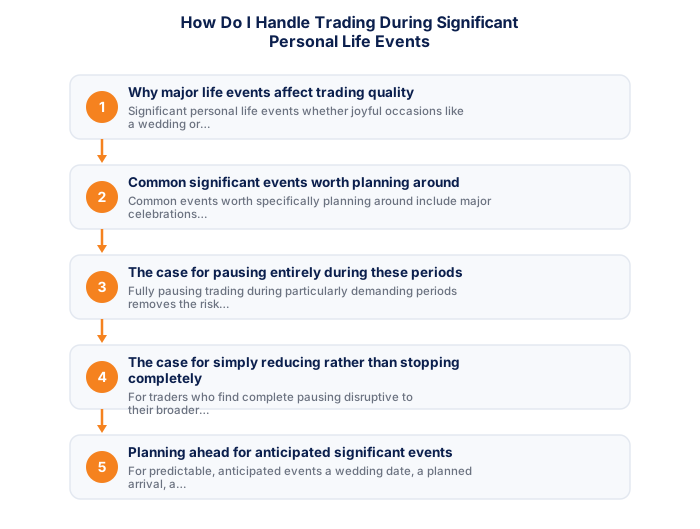
- Why major life events affect trading quality
- Common significant events worth planning around
- The case for pausing entirely during these periods
- The case for simply reducing rather than stopping completely
- Planning ahead for anticipated significant events
- Returning to normal trading after the event passes
1. Why major life events genuinely affect trading quality
Significant personal life events, whether joyful occasions like a wedding or new baby, or stressful ones like a job change or family illness, consume mental and emotional resources that would otherwise support the disciplined, focused decision-making sound trading requires.
It's worth recognising that even positive, joyful events carry this same effect, not just stressful or difficult ones, a wedding or the arrival of a new baby consumes genuine mental and emotional bandwidth just as much as a stressful event does, worth planning around regardless of whether the event itself feels like something to celebrate.
2. Common significant events worth planning around
Common events worth specifically planning around include major celebrations and their associated preparation periods, the arrival of a new child and the genuinely demanding early period this involves, significant health events affecting you or close family, and major work transitions like starting a new job or significant role change.
It's worth being honest with yourself about events that feel too minor to plan around but genuinely aren't, moving house, a significant work deadline, or a close friend's crisis you're supporting them through can all consume similar mental bandwidth to more obviously major life events, worth applying the same consideration even when the event doesn't feel dramatic enough to warrant it.
- FSCA-regulated broker verified at fsca.co.za
- Demo account tested for minimum 60 days
- Trading plan written: entry, exits, position sizing
- Risk per trade defined (1-2% of account)
- Backup internet connection tested for load shedding
- Tax implications understood
3. The case for pausing entirely during these periods
Fully pausing trading during particularly demanding periods removes the risk of distracted, lower-quality decision-making during a time when your attention and energy are genuinely, appropriately focused elsewhere, protecting your trading account from this specific, predictable risk period.
It's worth giving yourself explicit permission to choose this option without guilt, a complete pause isn't a sign of insufficient dedication to trading, it reflects the same sound judgement discussed elsewhere on this site regarding recognising when conditions genuinely don't support good decision-making.
4. The case for simply reducing rather than stopping completely
For traders who find complete pausing genuinely disruptive to their broader routine and skill maintenance, significantly reducing position sizes during these periods, provides a middle-ground approach maintaining some continued engagement while limiting the financial consequence of any distraction-related decision lapses.
It's worth being honest with yourself about whether this middle-ground approach is genuinely appropriate for your specific situation, or whether it's actually a compromise driven by reluctance to fully step away, if your attention is genuinely as compromised as a full pause would suggest, a reduced-size approach may not provide as much protection as it initially seems to.
| Item | Detail |
|---|---|
| Regulator | FSCA, fsca.co.za |
| Exchange control | SARB, resbank.co.za |
| Tax authority | SARS, sars.gov.za |
| JSE hours | 09:00-17:00 SAST Mon-Fri |
| Best forex session | 15:00-17:00 SAST |
| CGT annual exclusion | R50,000 (individuals) |
5. Planning ahead for anticipated significant events
For predictable, anticipated events, a wedding date, a planned arrival, a known job transition, planning your trading approach in advance, similar to the broader predetermined planning, rather than reactively deciding once already in the midst of the demanding period itself, supports a more deliberate, considered approach to this specific challenge.
It's worth deciding your specific approach, full pause or reduced engagement, well before the event itself, in the same calm planning moment you'd use for any other significant trading decision, rather than trying to judge your own readiness reactively once already immersed in the demands of the event itself.
6. Returning to normal trading after the event passes
Gradually returning to your normal trading routine once the significant life event has genuinely passed and settled, rather than immediately resuming full intensity, supports a smoother, more deliberate transition back into disciplined, focused trading practice.
Reduced trading suits predictable events with proper planning.
Fully pausing trading during particularly demanding periods removes the risk of distracted, lower-quality decisions, while reduced trading can suit predictable, less intense events.
★ Why It Matters
A pattern worth recognising in advance: the emotional bandwidth a major life event consumes is easy to underestimate until you're already in reduced-position-size mode and realise you should have paused entirely, when in doubt before the event, the more conservative choice is usually the right one.
✕ Common mistakes
- Trying to maintain full trading intensity during a major life event. Reduced bandwidth is normal and worth planning around rather than ignoring.
- Deciding on reduced trading only once already overwhelmed. Deciding in advance produces calmer, better decisions.
- Underestimating how much a positive life event also consumes attention. Good news events demand bandwidth too, not just difficult ones.
- Resuming full activity immediately once the event has passed. A gradual return tends to work better than an abrupt one.
Key Takeaways
- Reducing position sizes or pausing entirely during major life events like a wedding, new baby, or job change protects both your trading and personal priorities.
- Reducing position sizes or pausing trading entirely during major life events, like a wedding, new baby, or job change, protects both your discipline and your ability to focus on these priorities.
- Why major life events genuinely affect trading quality.
- Common significant events worth planning around.
- The case for pausing entirely during these periods.
See also: How Do I Take a Break From Trading Without Losing Momentum? and How Do I Build a Sustainable Long-Term Trading Habit?.
Frequently asked follow-up questions
How long should I pause or reduce trading around a significant event?
This varies considerably by the specific event and your personal circumstances; honestly assessing when your attention has genuinely returned to normal capacity guides this timing better than a fixed, universal rule.
Is it overreacting to pause trading for a positive event like a wedding?
No, even joyful events consume significant attention and energy, making this a reasonable, proportionate precaution rather overreaction.
Should I tell my trading accountability partner about an upcoming life event?
This can be useful context helping them understand and support your planned adjustment during this specific period.
