i Short answer
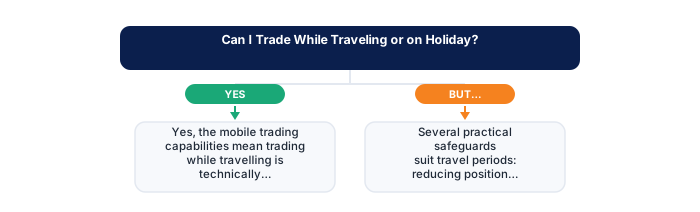
Yes, mobile trading capabilities mean trading while travelling is technically possible from almost anywhere with a reasonable internet connection.
However, connectivity reliability, time zone differences, and generally reduced attention during travel all warrant deliberate planning rather than assuming your normal routine simply continues unchanged.
📋 ON THIS PAGE
- Connectivity reliability while travelling specifically
- Time zone disruption to your usual trading routine
- Reduced attention and its effect on decision quality
- Practical safeguards for travelling traders
- When it's genuinely better to simply pause trading entirely
- International roaming and data cost considerations
1. Connectivity reliability while travelling specifically
Travel destinations are often less predictable than your usual home setup. Hotel WiFi varies wildly in quality and reliability. Roaming mobile coverage isn't universal, particularly in more remote destinations. Switching between networks as you move creates gaps and inconsistency that your normal, stable connection never produces.
That uncertainty is exactly why a predetermined stop-loss on every open position matters even more before you travel. A stop-loss executes automatically regardless of your connection status at that moment, it doesn't require you to be online and watching when price reaches that level. Pre-setting stops before departure, and verifying they're in place, is the most important pre-travel trading preparation.
It's worth researching your specific destination's typical connectivity honestly before you leave rather than assuming general availability. Travelling domestically within South Africa is a different connectivity environment from international travel; some international destinations offer excellent mobile data at reasonable cost while others have limited or expensive roaming options that make continuous monitoring impractical.
See also: How Do I Handle Trading While Traveling or on Holiday?
See also: Can I Trade Forex as a South African Living Abroad?
If you're concerned about connectivity during critical moments, some brokers offer SMS alerts for margin calls and position changes as a fallback that doesn't require a data connection, checking whether your broker offers this and setting it up before departure is a practical backup layer.
2. Time zone disruption to your usual trading routine
If your trading routine is built around specific local time windows, an evening review after South African work hours, or checking the London open in the morning, crossing time zones shifts those windows in ways that may make them incompatible with your travel schedule or destination's typical day pattern.
It's worth rethinking your schedule specifically for the trip rather than forcing your normal routine into a time zone it doesn't fit. If you're travelling east, markets open earlier relative to your local time; if you're travelling west, later. A routine that worked at home may require either a revised time window or a reduced monitoring frequency during travel.
- FSCA-regulated broker verified at fsca.co.za
- Demo account tested for minimum 60 days
- Trading plan written: entry, exits, position sizing
- Risk per trade defined (1-2% of account)
- Backup internet connection tested for load shedding
- Tax implications understood
It's worth deciding this adjusted schedule before you travel while you can think it through calmly, rather than trying to work it out reactively once you're already in a different time zone and jet-lagged. Knowing in advance that your London-open review will shift to 11pm at your destination, and deciding whether that's practical, is much easier as a pre-departure planning exercise.
The simplest adjustment for most travelling traders is to reduce position frequency and increase the independence of positions from active monitoring during the travel period. Fewer, larger stops and targets; less tactical management; more reliance on pre-set orders. The positions that require the least attention are the ones best suited to a period when your attention will be intermittent.
3. Reduced attention and its effect on decision quality
Travel, especially the kind intended for rest or family time, naturally pulls focus away from trading. Deciding to open or manage a position while tired from travel, distracted by sightseeing, or emotionally oriented toward enjoying a holiday rather than managing financial risk tends to produce worse decisions than the same choices made in a dedicated, focused session at home.
Worth being honest about this rather than assuming nothing has changed just because your phone still allows you to place a trade. The availability of the tool doesn't mean the conditions for using it well are present. Most trading errors made during travel aren't platform errors, they're attention and judgement errors.
A useful honesty check while travelling: if you find yourself checking charts primarily out of habit or mild anxiety rather than because there's a genuine management requirement, that's a signal to trust your pre-set stops rather than take action. Anxious monitoring without a genuine analytical basis rarely produces better outcomes than a pre-set stop doing its job.
Fatigue compounds this problem. Disrupted sleep, unfamiliar food, long flights, and the general physical and cognitive load of travel all reduce the quality of analytical thinking. Trading decisions that feel considered in the moment may be significantly less thoughtful than they appear, a limitation worth accounting for by being more conservative about new positions during travel.
4. Practical safeguards specifically for travelling traders
A few practical adjustments help when trading during a trip: smaller positions or reduced trading frequency given the reduced attention and connectivity reliability; stop-losses set for every open position before departure rather than relying on manual monitoring; a decision made in advance about which check-ins are genuinely necessary versus which are habit or anxiety.
Deciding all this calmly before you leave, rather than improvising once you're already travelling, consistently produces better outcomes. The pre-departure review, confirming open positions, setting stops, reducing size if needed, and deciding on your monitoring schedule, takes 20-30 minutes and significantly reduces the decisions you need to make while on the road.
| Item | Detail |
|---|---|
| Regulator | FSCA, fsca.co.za |
| Exchange control | SARB, resbank.co.za |
| Tax authority | SARS, sars.gov.za |
| JSE hours | 09:00-17:00 SAST Mon-Fri |
| Best forex session | 15:00-17:00 SAST |
| CGT annual exclusion | R50,000 (individuals) |
It's worth treating this pre-travel checklist with the same seriousness as packing itself. Forgetting to set a stop-loss before a flight is potentially more costly than forgetting a charger. Building the trading review into your pre-departure routine, alongside passport, tickets, and accommodation confirmations, ensures it doesn't get overlooked in the logistical rush of departure.
If you're planning an extended trip, considering whether to close positions before departure rather than managing them remotely is worth the explicit decision. Positions held through a trip introduce a management obligation that competes with the rest of your travel experience. Sometimes the cleanest approach is arriving with a clear account and using the trip as a natural break.
5. When it's genuinely better to simply pause trading entirely
For some trips, short ones, places with known poor connectivity, or trips specifically intended for disconnecting from work and digital life, pausing trading entirely is the simplest and most sensible approach. A week without trading activity rarely has a meaningful impact on your long-term performance; making poor decisions while distracted on holiday can.
That's not a failure of commitment or discipline, it's exactly the kind of judgement that separates traders who sustain the activity over years from those who experience it as an obligation they can never escape. Choosing to step back when conditions don't support good trading is sound practice, not avoidance.
It's worth making this decision in advance rather than reactively once you're already mid-trip. The choice to pause trading entirely feels much more manageable as a pre-departure decision than as an improvisational response to struggling to find connectivity or focus while travelling. Pre-empting the problem by removing the obligation is cleaner than managing it in real time.
6. International roaming and data cost considerations
Beyond the trading-specific considerations, practical logistics matter. Roaming charges for mobile data can be significant depending on your destination and carrier, and grabbing a local SIM card or ensuring your plan includes international data is worth sorting before departure if staying connected to your trading is genuinely necessary.
Worth planning for specifically: data roaming charges and unfamiliar WiFi networks are more realistic travel risks than the dramatic market volatility that trading marketing tends to focus on. The ordinary logistical constraints of travel, slow hotel WiFi, unexpected connectivity gaps, time spent in transit, are the conditions that cause actual trading problems, not just extreme market events.
Minor as these practicalities might seem, they belong on your pre-travel checklist if maintaining trading connectivity genuinely matters for your approach. A brief 10-minute pre-departure preparation that confirms your connectivity solution, verifies your stops, and sets your monitoring schedule for the trip reduces the cognitive overhead of managing trading while travelling.
✕ Common mistakes
- Assuming your normal routine will continue unchanged. Time zones and connectivity reliably disrupt typical schedules.
- Not deciding in advance what 'reduced trading' actually means. Vague intentions rarely survive contact with an attractive-looking setup.
- Relying on unfamiliar public WiFi for trading activity. This is a bigger practical risk than most travelling traders consider.
- Forgetting to budget for data roaming costs. Unexpected charges are a minor but avoidable travel friction.
Key Takeaways
- Yes, mobile trading apps make this possible, but connectivity reliability and time zone differences require specific planning. Learn what to consider.
- Yes, mobile trading capabilities mean trading while travelling is technically possible from almost anywhere with a reasonable internet connection.
- However, connectivity reliability, time zone differences, and generally reduced attention during travel all warrant deliberate planning rather than assuming your normal routine simply continues unchanged.
- Connectivity reliability while travelling specifically.
- Time zone disruption to your usual trading routine.
Frequently asked follow-up questions
Should I tell my broker I'll be trading from a different country temporarily?
This generally isn't required for short-term travel, though if you're planning a longer-term or permanent move abroad, considerations specific to South Africans living abroad become more relevant.
Can I close all my positions remotely if I decide to pause trading during a trip?
Yes, this can typically be done through the mobile app, provided you have a working connection at the time you decide to do this.
Does trading from an unfamiliar location raise any security flags with my broker?
Some brokers' security systems may flag logins from unusual locations as part of standard fraud prevention. This might occasionally require additional verification steps while travelling.
