i Short answer
A deliberate break works best when planned rather than reactive, deciding in advance how long it will last and why.
Resuming gradually with smaller positions, rather than jumping back in at full intensity, supports a smoother return.
📋 ON THIS PAGE
- Recognising when a deliberate break is genuinely warranted
- Planning the break rather than reacting impulsively
- Staying connected through periodic journal review during the break
- Avoiding the urge to completely disengage from all learning
- Resuming gradually rather than at full intensity immediately
- Using the break to honestly reassess your broader approach
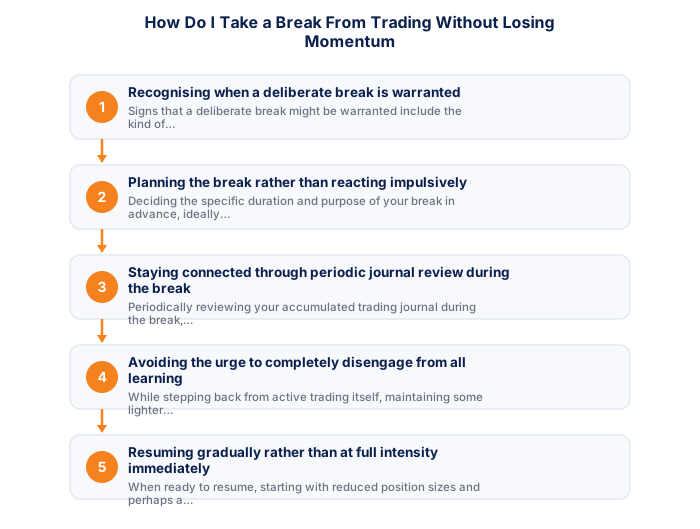
1. Recognising when a deliberate break is genuinely warranted
Signs that a deliberate break might be warranted include excessive time investment or stress, a significant, demoralising losing streak, or simply a recognised need for broader life rebalancing given other competing priorities.
It's worth checking yourself honestly against these signs periodically, rather than waiting for the need for a break to become undeniable, catching the early signals discussed elsewhere on this site regarding excessive time investment or emotional strain tends to produce a more measured, deliberate break than waiting until burnout has fully set in.
2. Planning the break rather than reacting impulsively
Deciding the specific duration and purpose of your break in advance, ideally during a calm moment rather than in the immediate aftermath of a particularly difficult trading experience, supports a more deliberate, considered pause rather than an impulsive, poorly-defined withdrawal from trading entirely.
It's worth writing this specific duration and purpose down explicitly, the same way you'd document any other trading decision, an open-ended, vaguely defined break is considerably easier to either abandon prematurely or extend indefinitely than one with a clear, predetermined scope.
- FSCA-regulated broker verified at fsca.co.za
- Demo account tested for minimum 60 days
- Trading plan written: entry, exits, position sizing
- Risk per trade defined (1-2% of account)
- Backup internet connection tested for load shedding
- Tax implications understood
3. Staying connected through periodic journal review during the break
Periodically reviewing your accumulated trading journal during the break, even without placing any new trades, helps maintain some connection to your accumulated progress and insights, making eventual resumption feel less like starting over entirely from scratch.
It's worth keeping this review genuinely light and reflective rather than letting it drift into active market analysis, the goal during a break is maintaining gentle connection to your own trading history, not continuing the same intensive engagement the break is specifically meant to pause.
4. Avoiding the urge to completely disengage from all learning
While stepping back from active trading itself, maintaining some lighter engagement with broader trading education or market awareness can help preserve momentum without the pressure and stakes of active trading specifically, striking a reasonable balance between genuine rest and complete disengagement.
It's worth choosing genuinely low-pressure learning activities for this period specifically, reading or listening to educational content without any expectation of immediate application keeps you engaged with the broader field without recreating the pressure your break is meant to relieve.
| Item | Detail |
|---|---|
| Regulator | FSCA, fsca.co.za |
| Exchange control | SARB, resbank.co.za |
| Tax authority | SARS, sars.gov.za |
| JSE hours | 09:00-17:00 SAST Mon-Fri |
| Best forex session | 15:00-17:00 SAST |
| CGT annual exclusion | R50,000 (individuals) |
5. Resuming gradually rather than at full intensity immediately
When ready to resume, starting with reduced position sizes and perhaps a brief return to demo trading, before fully returning to your previous live trading intensity, helps rebuild confidence and re-establish your routine gradually, rather than risking the kind of mistakes that jumping back in at full intensity after an extended break might otherwise produce.
It's worth resisting any urge to immediately prove you haven't lost your edge by resuming at full intensity, a gradual return genuinely serves your long-term interests better than a rushed one, even if the gradual approach feels less satisfying in the moment you return.
6. Using the break to honestly reassess your broader approach
A deliberate break also provides a valuable opportunity for honest reassessment, reviewing whether your overall trading plan, risk management approach, or even your fundamental relationship with trading itself genuinely needs adjustment, rather than simply resuming the identical approach that may have contributed to needing a break in the first place.
In South African time (SAST, which is GMT+2 year-round), the London session typically opens around 09:00-10:00 and the New York session around 15:00-16:00, so the overlap between roughly 15:00 and 17:00 SAST tends to bring the highest liquidity and volatility for major forex pairs.
Periodically reviewing your accumulated trading journal during a break, then resuming with reduced position sizes and perhaps a brief return to demo trading, helps preserve momentum.
★ Why It Matters
Something worth doing during the break itself, not just before or after: keep reviewing your existing journal entries periodically even while not actively trading, this seems to preserve pattern recognition and self-awareness better than a complete information blackout, which can make the return feel like starting over.
✕ Common mistakes
- Taking a break reactively rather than planning it in advance. A planned break tends to feel and function differently than an impulsive one.
- Returning at full intensity immediately after the break ends. A gradual return tends to work better than jumping back in abruptly.
- Not setting a defined length or reason for the break. An open-ended break is harder to return from deliberately.
Key Takeaways
- Plan your break deliberately, keep reviewing your journal periodically, and resume gradually with smaller positions rather than jumping back in at full intensity.
- A deliberate break works best when planned rather than reactive, deciding in advance how long it will last and why.
- Resuming gradually with smaller positions, rather than jumping back in at full intensity, supports a smoother return.
- Recognising when a deliberate break is genuinely warranted.
- Planning the break rather than reacting impulsively.
Frequently asked follow-up questions
How long should a typical trading break last?
This varies considerably by individual circumstances and the specific reason for the break; the key is deciding this duration deliberately rather than leaving it open-ended without any plan.
Is it normal to feel anxious about resuming after a break?
Some apprehension is common, particularly after an extended pause; the gradual resumption approach discussed in this piece specifically helps manage this transition more comfortably.
Should I close all open positions before taking a break?
Generally yes, particularly for an extended break, since maintaining open positions without active monitoring carries genuine risk.
