i Short answer
Look for genuine South African-specific market knowledge (FSCA regulation, USD/ZAR dynamics), verifiable track record evidence, and a focus on teaching independent skill rather than signal-based mentorship.
📋 ON THIS PAGE
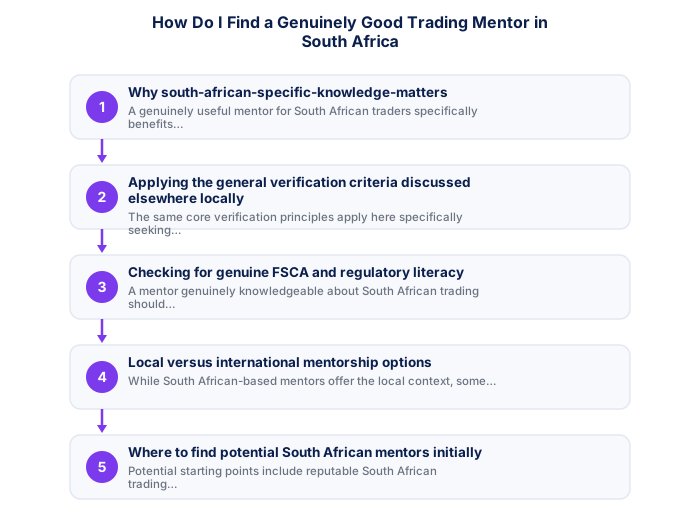
- Why South African-specific knowledge matters specifically
- Applying general verification criteria locally
- Checking for genuine FSCA and regulatory literacy
- Local versus international mentorship options
- Where to find potential South African mentors initially
- Red flags specific to the local South African market
1. Why South African-specific knowledge matters
A genuinely useful mentor for South African traders benefits from understanding the local regulatory framework, SARB exchange control considerations, and the fundamental dynamics relevant to USD/ZAR and South African instruments, rather than offering purely generic trading guidance disconnected from local context.
This local grounding matters practically, not just as a nice-to-have credential. A mentor who genuinely understands why USD/ZAR behaves differently from a major developed-market pair, or why FICA verification works the way it does for South African accounts specifically, can help you avoid a category of confusion that a purely generic, internationally-focused mentor simply won't think to address.
| Signal | Red Flag | Green Flag |
|---|---|---|
| FSCA and local regulation knowledge | Absent or generic global advice only | Genuinely fluent in local rules |
| Local vs international relevance | Ignores SA-specific context entirely | Addresses SARB, FICA, tax specifics |
| Verifiability locally | No local presence or references | Checkable local reputation |
2. Applying the general verification criteria locally
The same core verification principles apply here: look for verifiable track record evidence, watch for guaranteed-return red flags, and confirm a genuine teaching focus over pure signal-selling, just with specific attention to whether the mentor's claimed expertise actually extends to the South African market.
A simple, direct test worth trying: ask a prospective mentor a specific question about South African regulation or the Rand's typical behaviour, something with a genuinely correct, verifiable answer, and see whether their response is accurate, vague, or noticeably evasive. Genuine local expertise tends to show up clearly in how specifically and confidently someone can answer this kind of concrete question.
- SARB economic calendar checked for the week
- Next Eskom load shedding schedule reviewed
- GNU stability news reviewed
- Stats SA data releases noted
- Credit agency review dates checked
- US/global events that move EM risk noted
3. Checking for genuine FSCA and regulatory literacy
A mentor genuinely knowledgeable about South African trading should show accurate, current understanding of FSCA regulation and be able to discuss broker verification and the regulatory environment accurately. Significant errors or confusion about these basic local facts suggests limited real South African market expertise, whatever other credentials are claimed.
It's worth being specific about what 'accurate understanding' looks like here: being able to correctly explain the difference between the FSCA and SARB's respective roles, for example, or accurately describing how the single discretionary allowance works, rather than offering only vague, generally reassuring statements about regulation without any real specific substance behind them.
| Event | Frequency | ZAR impact | Source |
|---|---|---|---|
| SARB MPC | 6x per year | High | resbank.co.za |
| Budget Speech | Annual (February) | Very high | treasury.gov.za |
| Credit reviews | Annual each agency | Very high | Agency sites |
| Stats SA CPI | Monthly | Medium | statssa.gov.za |
| Eskom stage | As needed | Low-medium | eskomsepush.com |
- SA context provides genuine informational edge
- ZAR pairs accessible via FSCA brokers in ZAR accounts
- Rand volatility creates larger intraday ranges
- 6 SARB meetings/year create regular macro setups
- Higher geopolitical risk than G10 pairs
- Load shedding creates unique operational disruptions
- SA rand liquidity thinner than major G10 pairs
- SA-specific news requires constant local monitoring
4. Local versus international mentorship options
While South African-based mentors offer the local context above, some internationally-based mentors with genuine, broader trading expertise can still offer valuable general skill-building guidance on foundational technical analysis and risk management, provided you supplement it with your own independent research on South African regulation and local market dynamics.
This blended approach can work well provided you're honest with yourself about which gaps you're personally responsible for filling. Treating an internationally-focused mentor's guidance as complete, without separately verifying how it applies to South African regulation, tax treatment, or Rand-specific dynamics, risks missing exactly the local context a purely generic mentorship relationship was never positioned to provide.
5. Where to find potential South African mentors initially
Good starting points include reputable South African trading communities (evaluated carefully), established financial education platforms with a genuine South African presence, and direct recommendations from trusted contacts with their own verified, positive experience, rather than relying on social media advertising or unsolicited promotional outreach.
Personal recommendations deserve a specific caveat worth keeping in mind: a trusted contact's positive experience with a mentor doesn't automatically transfer to your own situation, particularly if their trading style, experience level, or goals differ meaningfully from yours. A recommendation is a reasonable starting point for further verification, not a substitute for doing that verification yourself.
6. Red flags specific to the local South African market
Specific local red flags: false claims of FSCA regulation or endorsement (verify this directly through the official register), marketing that exploits South African economic anxieties (Rand weakness, load shedding) to create urgency, and pitches targeting South Africans with claims about circumventing SARB exchange control rules, all of which deserve particular scepticism.
A mentor genuinely knowledgeable about South African trading demonstrates accurate, current understanding of local regulation, while false claims of FSCA endorsement are a specific local red flag.
★ Why It Matters
Worth trying: look for mentors who reference FSCA regulation, USD/ZAR mechanics, or SARB exchange control accurately and unprompted. Genuine local market familiarity tends to surface naturally in how someone talks, rather than needing to be claimed outright.
✕ Common mistakes
- Assuming local presence alone signals genuine market knowledge. Look for accurate, unprompted references to FSCA rules or USD/ZAR mechanics specifically.
- Not checking for any independent, verifiable track record. Claims should be checkable, not just stated confidently.
- Choosing a mentor based on signal performance rather than teaching ability. Profitable trading and effective teaching are genuinely different skills.
- Skipping a trial interaction before committing to ongoing paid mentorship. A short initial conversation often reveals teaching style and fit.
Key Takeaways
- Look for South African-specific market knowledge, verifiable track record, and genuine teaching focus rather than purely signal-based mentorship offerings.
- Look for genuine South African-specific market knowledge (FSCA regulation, USD/ZAR dynamics), verifiable track record evidence, and a focus on teaching independent skill rather than signal-based mentorship.
- Why South African-specific knowledge matters.
- Applying the general verification criteria locally.
- Checking for genuine FSCA and regulatory literacy.
Frequently asked follow-up questions
Are South African trading mentors generally more expensive than international ones?
Pricing varies considerably regardless of location. Cost alone isn't a reliable indicator of genuine quality or local expertise.
Can I verify a mentor's South African market claims independently?
Yes, cross-referencing their claims against the FSCA register and other official South African sources gives you independent verification.
Does a mentor need to be FSCA regulated themselves to teach trading?
Education and mentorship generally fall outside direct FSCA licensing requirements, which apply to brokers and financial advisors, not educational content providers as such.
