i Short answer
Verify a prospective mentor's actual, demonstrable track record beyond their own marketing claims, and watch for realistic rather than guaranteed language about achievable results.
Look for genuine emphasis on teaching independent process and skill, rather than simply selling signals or guaranteed outcomes.
📋 ON THIS PAGE
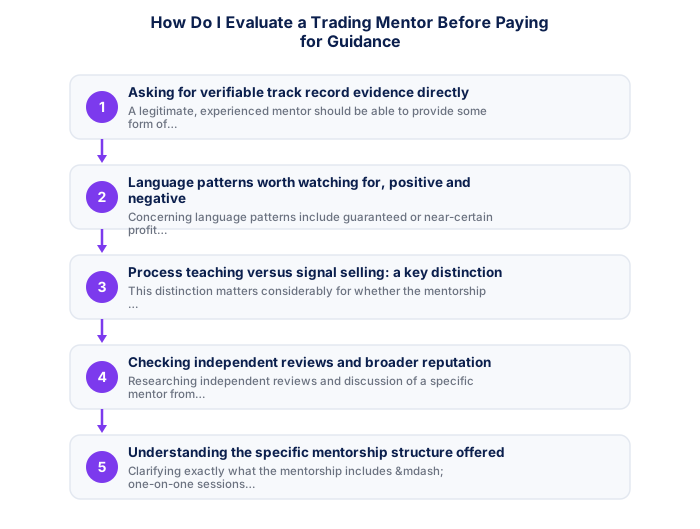
- Asking for verifiable track record evidence directly
- Language patterns worth watching for, positive and negative
- Process teaching versus signal selling: a key distinction
- Checking independent reviews and broader reputation
- Understanding the specific mentorship structure offered
- Trusting your own judgement throughout this evaluation
1. Asking for verifiable track record evidence directly
A legitimate, experienced mentor should be able to provide some form of verifiable evidence of their own trading history, whether through audited or independently verifiable account statements (with appropriate redaction of sensitive details), or at minimum a consistent, longstanding public track record that predates any mentorship business they're now offering. Reluctance or inability to provide any verification beyond simply asserting success is a meaningful, concerning red flag worth taking seriously.
It's worth noticing how a prospective mentor actually responds to this direct request, a genuine, experienced mentor typically welcomes the question and provides something concrete, while evasiveness, vague deflection, or visible irritation at being asked is itself meaningful, useful information about how transparent this specific relationship is likely to be going forward.
| Signal | Red Flag | Green Flag |
|---|---|---|
| Track record | Vague or unverifiable | Documented, checkable |
| Teaching focus | Selling signals to follow | Teaching your own process |
| Reviews | Absent or only on their own site | Independent, verifiable |
| Language | Guaranteed profits, urgency | Balanced, honest about risk |
2. Language patterns worth watching for, positive and negative
Concerning language patterns include guaranteed or near-certain profit promises, which contradicts the genuine risk and uncertainty, urgency-driven sales tactics pressuring immediate decisions, and heavy emphasis on lifestyle outcomes rather than substantive teaching content. More reassuring patterns include honest acknowledgment of risk and the genuine learning timeline, and specific, substantive discussion of teaching methodology rather than vague promises of success.
It's worth actually writing down specific phrases that raised your suspicion during any promotional material or conversation, rather than relying on a vague, general impression, having concrete examples makes it easier to explain your hesitation clearly to yourself, or to someone else you might discuss the decision with, rather than an unspecific feeling of unease.
- FSCA-regulated broker verified at fsca.co.za
- Demo account tested for minimum 60 days
- Trading plan written: entry, exits, position sizing
- Risk per trade defined (1-2% of account)
- Backup internet connection tested for load shedding
- Tax implications understood
3. Process teaching versus signal selling: a key distinction
A genuine mentor focuses on teaching you to develop independent analytical skill and disciplined process, rather than simply providing ongoing trade signals or calls for you to follow without genuine understanding. This distinction matters considerably for whether the mentorship genuinely builds your own lasting skill, or creates ongoing dependence on the mentor's continued guidance.
A useful direct question worth asking any prospective mentor: 'once this mentorship ends, will I be able to make sound trading decisions entirely independently, or will I still need your ongoing signals or guidance?' The honest answer to that question reveals a great deal about which category this specific relationship genuinely falls into.
4. Checking independent reviews and broader reputation
Researching independent reviews and discussion of a specific mentor from sources entirely unconnected to their own marketing and promotional materials, including, where possible, speaking directly with genuine past clients rather than relying solely on curated testimonials the mentor has selected and published themselves, provides more reliable insight into actual mentorship quality and outcomes.
It's worth being specifically wary of reviews that feel suspiciously uniform or overly polished, a pattern of reviews using strikingly similar language or focusing heavily on lifestyle outcomes rather than specific, substantive educational content is worth treating with some scepticism rather than accepting at face value.
| Item | Detail |
|---|---|
| Regulator | FSCA, fsca.co.za |
| Exchange control | SARB, resbank.co.za |
| Tax authority | SARS, sars.gov.za |
| JSE hours | 09:00-17:00 SAST Mon-Fri |
| Best forex session | 15:00-17:00 SAST |
| CGT annual exclusion | R50,000 (individuals) |
5. Understanding the specific mentorship structure offered
Clarifying exactly what the mentorship includes, one-on-one sessions versus group coaching, specific time commitment and duration, what happens after the formal mentorship period ends, and total cost including any ongoing or recurring fees, before committing helps ensure you understand precisely what you're paying for and can compare this clearly against the value genuinely likely to be delivered.
It's worth getting this structure confirmed in writing before any payment changes hands, rather than relying on a verbal description during a sales conversation, a written outline of exactly what's included protects both you and the mentor from any later misunderstanding about what the arrangement actually covers.
6. Trusting your own judgement throughout this evaluation
Throughout this evaluation process, trusting your own honest judgement and being willing to walk away from any opportunity that, despite surface-level appeal, raises genuine concerns based on the red flags reflects the same kind of sound, independent decision-making as valuable in trading itself, applied here specifically to evaluating educational and mentorship opportunities.
Warning signs include guaranteed profits and unverifiable claims.
A legitimate, experienced mentor can provide verifiable evidence of their track record. Guaranteed or near-certain profit promises are a clear warning sign worth taking seriously.
★ Why It Matters
A specific question worth asking any prospective mentor directly: can I see your account statement from a losing month, not just a winning one, mentors who can answer this comfortably tend to be considerably more trustworthy than those who pivot to talking about their best month instead.
✕ Common mistakes
- Trusting marketing claims without requesting verifiable evidence. Genuine mentors are generally comfortable sharing a losing month, not just winning ones.
- Not asking how they handle their own losing trades. This question reveals more about mentoring style than any sales material.
- Assuming a high price implies higher quality. Price and genuine teaching value aren't reliably correlated in this space.
- Skipping a trial period or sample content before committing fully. A small initial commitment limits downside if the fit isn't right.
Key Takeaways
- Verify a mentor's actual trading track record, check for realistic claims, and look for emphasis on teaching process over selling signals or guaranteed results.
- Verify a prospective mentor's actual, demonstrable track record beyond their own marketing claims, and watch for realistic rather than guaranteed language about achievable results.
- Look for genuine emphasis on teaching independent process and skill, rather than simply selling signals or guaranteed outcomes.
- Asking for verifiable track record evidence directly.
- Language patterns worth watching for, positive and negative.
See also: Are Paid Trading Courses Worth It? and How Do Trading Communities Actually Help or Hurt Traders?.
Frequently asked follow-up questions
Is one-on-one mentorship better than group coaching?
This depends on personal learning preference and budget; both formats can offer genuine value if the underlying content and mentor quality are genuinely sound.
Should I expect a mentor to guarantee my success?
No, any genuine mentor should acknowledge real risk and uncertainty rather than guaranteeing your individual success, which no legitimate educator can honestly promise.
How much should reasonable mentorship cost?
Pricing varies enormously. Cost alone isn't a reliable quality indicator, making the verification steps outlined above more useful than price comparison alone.
