i Short answer
Check for verifiable track record evidence, realistic rather than hype-driven claims, and substantive educational content over lifestyle marketing.
Treat this content as a useful starting point for broader learning, rather than a complete education on its own.
📋 ON THIS PAGE
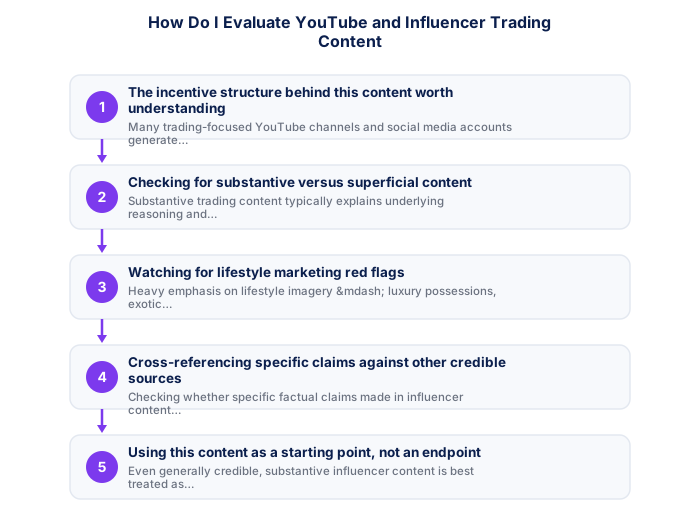
- The incentive structure behind this content worth understanding
- Checking for substantive versus superficial content
- Watching for lifestyle marketing red flags
- Cross-referencing specific claims against other credible sources
- Using this content as a starting point, not an endpoint
- A practical checklist before trusting a specific creator
1. The incentive structure behind this content worth understanding
Many trading-focused YouTube channels and social media accounts generate revenue through advertising, sponsorships, course sales, or affiliate broker referral commissions. Understanding this underlying incentive structure helps frame why certain content choices (emphasising excitement, downplaying risk, promoting specific affiliated products) might exist independent of genuine educational value, even from creators who aren't necessarily acting in deliberately bad faith.
It's worth researching a specific creator's actual monetisation methods where this is discoverable, a channel that's primarily monetised through broker referral links has a different, more direct incentive to encourage account sign-ups than one relying purely on advertising revenue, worth understanding as part of your broader evaluation.
| Signal | Red Flag | Green Flag |
|---|---|---|
| Content focus | Lifestyle, cars, income flexing | Process, risk management, education |
| Claims | Unverifiable, no sourcing | Cross-checkable against credible sources |
| Monetisation | Hidden or unclear | Transparent about incentives |
| Depth | Superficial, hype-driven | Substantive, balanced |
2. Checking for substantive versus superficial content
Substantive trading content typically explains underlying reasoning and methodology clearly, discusses risk and limitations honestly alongside potential opportunity, and remains generally consistent in its approach and message over time, rather than chasing whatever topic or strategy happens to be currently trending. Superficial content, by contrast, often emphasises results or outcomes without adequately explaining the underlying process, or frequently shifts approach to chase current attention and engagement trends.
It's worth tracking a specific creator's content over a meaningful period, several weeks or months, rather than judging based on a single impressive-seeming video, genuine consistency in approach and message over time is considerably harder to fake convincingly than any individual, well-produced piece of content.
- FSCA-regulated broker verified at fsca.co.za
- Demo account tested for minimum 60 days
- Trading plan written: entry, exits, position sizing
- Risk per trade defined (1-2% of account)
- Backup internet connection tested for load shedding
- Tax implications understood
3. Watching for lifestyle marketing red flags
Heavy emphasis on lifestyle imagery, luxury possessions, exotic travel, ostentatious displays of wealth, without correspondingly substantive educational content is a meaningful red flag, similar to the same pattern worth watching for when evaluating a trading mentor suggesting marketing and image-building may be taking priority over genuine educational value, regardless of how engaging or aspirational this kind of content might feel to watch.
It's worth asking yourself directly what specific, substantive trading knowledge you've actually gained from a particular creator's content, if the honest answer is mostly impressions of wealth and success rather than concrete, applicable understanding, that gap itself is meaningful, useful information.
4. Cross-referencing specific claims against other credible sources
Checking whether specific factual claims made in influencer content (regulatory information, specific trading statistics, broker comparisons) align with other independent, credible sources helps catch inaccurate or misleading claims before they shape your own understanding or trading decisions incorrectly.
It's worth being especially diligent about this verification for any specific regulatory or factual claim, since an influencer confidently stating something inaccurate about FSCA rules or broker regulation, whether through genuine ignorance or deliberate misrepresentation, can lead you toward genuinely costly misunderstandings if simply accepted without checking.
| Item | Detail |
|---|---|
| Regulator | FSCA, fsca.co.za |
| Exchange control | SARB, resbank.co.za |
| Tax authority | SARS, sars.gov.za |
| JSE hours | 09:00-17:00 SAST Mon-Fri |
| Best forex session | 15:00-17:00 SAST |
| CGT annual exclusion | R50,000 (individuals) |
5. Using this content as a starting point, not an endpoint
Even generally credible, substantive influencer content is best treated as one input within a broader, more complete learning approach, rather than a complete, sufficient education on its own. Combining influencer content with broader reading, your own backtesting and practice, and cross-referencing against multiple sources builds more sound, well-rounded understanding than relying on any single content creator alone.
It's worth treating even your most trusted creator's content this way, since relying entirely on any single source, however credible it initially seems, leaves you vulnerable if that specific source's quality or honesty ever changes, deliberately maintaining a genuinely diverse set of information sources protects you against this single-point-of-failure risk.
6. A practical checklist before trusting a specific creator
A practical evaluation checklist includes: does this creator show genuine, verifiable trading results beyond simply asserting success; do they discuss risk and losses honestly alongside successes; does their content explain underlying reasoning rather than just outcomes; and does their overall approach remain reasonably consistent over time rather than chasing whatever is currently trending for engagement purposes.
Promotional content often emphasises affiliate links and signal sales.
Substantive trading content typically explains underlying reasoning clearly, while promotional content often relies more heavily on affiliate links and signal sales than genuine teaching.
★ Why It Matters
Worth checking: look at the channel's videos from 12+ months ago and see whether the strategy or indicator being promoted then is the same one being promoted now. Frequent strategy-switching is a more telling signal than anything said in any single video.
✕ Common mistakes
- Trusting a channel's claimed track record without verification. Checking older videos against current claims often reveals inconsistencies.
- Following whichever strategy or indicator is currently being promoted. Frequent strategy-switching by an influencer is itself a meaningful signal.
- Assuming large subscriber counts reflect trading competence. Audience size measures content appeal, not trading skill.
- Treating influencer content as a complete education rather than a starting point. It works best alongside more structured, foundational learning.
Key Takeaways
- Check for verifiable track record, realistic claims, and substantive teaching over hype, treating influencer content as a starting point, not a complete education.
- Check for verifiable track record evidence, realistic rather than hype-driven claims, and substantive educational content over lifestyle marketing.
- Treat this content as a useful starting point for broader learning, rather than a complete education on its own.
- The incentive structure behind this content worth understanding.
- Checking for substantive versus superficial content.
See also: Are Paid Trading Courses Worth It? and What Is the Value of Paper Trading Competitions?.
Frequently asked follow-up questions
Are all trading YouTube channels untrustworthy?
No, genuinely credible, educational creators exist alongside less reliable ones. The evaluation criteria above help distinguish between them specifically.
Should I avoid creators who promote specific brokers?
Not automatically, since many legitimate educators do have broker partnerships. The key is whether this affects the honesty and balance of their broader educational content.
How many different creators should I follow for balanced learning?
There's no fixed number, though following a few varied, credible sources rather than relying exclusively on just one tends to support more well-rounded, cross-checked understanding.
