i Short answer
Trading certifications can demonstrate structured study and foundational knowledge of trading concepts.
However, no certification predicts genuine live trading success the way a verified track record does.
📋 ON THIS PAGE
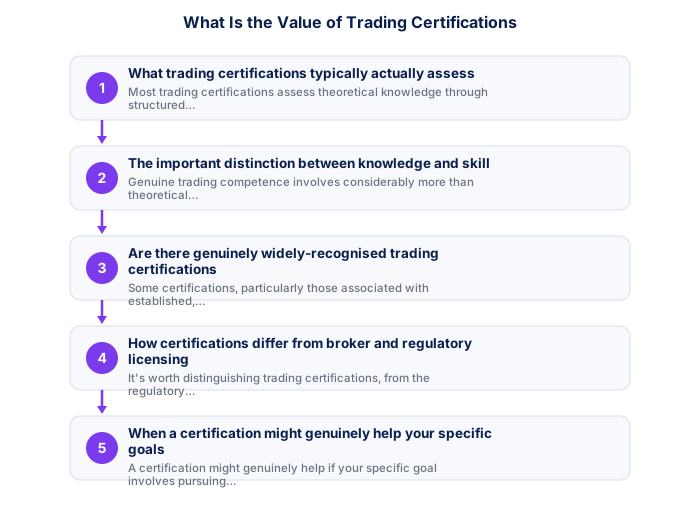
- What trading certifications typically actually assess
- The important distinction between knowledge and skill
- Are there genuinely widely-recognised trading certifications
- How certifications differ from broker and regulatory licensing
- When a certification might genuinely help your specific goals
- A realistic view of certification value for retail traders
1. What trading certifications typically actually assess
Most trading certifications assess theoretical knowledge through structured coursework and examination, understanding of technical analysis concepts, risk management principles, and general market mechanics. This kind of assessment can verify genuine theoretical understanding, but doesn't, and structurally cannot, directly assess practical, live trading decision-making skill or psychological discipline the way actual trading performance would.
It's worth checking exactly what a specific certification's assessment actually covers before assuming it demonstrates genuine trading competency, most test theoretical knowledge of concepts rather than your actual, demonstrated ability to apply that knowledge under real trading conditions.
See also: How Do I Compare FSCA-Regulated Brokers Properly?
See also: Can I Trade Forex as a South African Living Abroad?
See also: How Do Remittances Affect the Rand and Current Account?
2. The important distinction between knowledge and skill
Genuine trading competence involves considerably more than theoretical knowledge alone, it requires the practical pattern-recognition skill and psychological discipline that only develops through extended, deliberate practice and real or demo trading experience, neither of which a knowledge-based certification exam can directly verify or guarantee.
It's worth building your own, more meaningful evidence of genuine skill after earning any certification, discussed elsewhere on this site regarding course completion certificates specifically, a documented trading journal showing consistent, disciplined application matters considerably more than the certificate itself.
- Search FSP name or number at fsca.co.za
- Confirm licence is current and not suspended
- Check scope covers forex and CFD activity
- Confirm client funds in segregated accounts
- Read FSCA enforcement actions history
- Test customer support before depositing
- Client funds legally segregated
- FSCA complaints process available
- SA consumer protections apply
- ZAR account, no FX conversion costs
- Some offshore brokers offer wider instruments
- Regulatory overhead passed on in spreads
- Stricter position limits for retail clients
- FICA verification required before trading
- Client funds segregated
- Formal FSCA complaints process
- SA consumer protections apply
- ZAR account available
- Fund safety not guaranteed
- Overseas disputes only
- SA law does not apply
- Currency conversion costs
3. Are there genuinely widely-recognised trading certifications
Some certifications, particularly those associated with established, recognised financial industry bodies internationally, carry more genuine credibility and recognition within specific professional contexts (for example, qualifications relevant to working within institutional finance) than the numerous less rigorous certifications offered by some retail-focused trading education providers, where credibility and genuine rigour vary considerably, similar to the broader course quality variance seen across paid trading education generally.
It's worth researching any specific certification's actual industry recognition directly, rather than assuming impressive-sounding credentials carry weight, checking whether employers or genuinely reputable institutions actually value a specific certification tells you more than the certification's own marketing claims.
4. How certifications differ from broker and regulatory licensing
It's worth distinguishing trading certifications from regulatory licensing like FSCA broker authorisation. Certifications are voluntary, educational credentials with varying recognition, while regulatory licensing is a mandatory legal requirement governing how brokers and financial services providers may lawfully conduct business, an entirely different category of credential serving a fundamentally different purpose.
Confusing these two categories, assuming a trading certification carries the same legal weight or protective function as genuine regulatory licensing, would be a meaningful misunderstanding, since certifications offer no equivalent regulatory protection or oversight whatsoever.
| Protection | FSCA Regulated | Offshore Unregulated |
|---|---|---|
| Client fund segregation | ✓ Required | Varies by broker |
| SA complaints process | ✓ Available | ✗ Not available |
| SA consumer law applies | ✓ Yes | ✗ No |
| ZAR account available | ✓ Typically | Often USD/EUR only |
It's worth keeping this distinction genuinely clear, discussed throughout this site's legal content, an educational certification carries no regulatory weight whatsoever, unlike the FSCA licensing that actually governs whether a broker or advisor can legally operate.
5. When a certification might genuinely help your specific goals
A certification might genuinely help if your specific goal involves pursuing institutional finance career opportunities where recognised qualifications carry genuine professional weight, or if you personally find the structured, examination-based format helpful for organising and consolidating your own foundational learning, similar to the structured progression benefit that paid courses can offer generally.
It's worth being honest with yourself about whether your goal genuinely requires external validation, if you're trading purely for your own account, a certification's career-related value doesn't apply, worth pursuing one specifically if you have a genuine, concrete professional reason.
6. A realistic view of certification value for retail traders
For most retail traders focused purely on developing their own personal trading skill rather than pursuing institutional career paths, a realistic view treats certification as, at best, a modest, optional supplement to the genuine skill-building that actually matters, demo practice, backtesting, journaling, and disciplined live experience, rather than a necessary or even particularly significant credential for achieving genuine personal trading competence.
Trading certifications demonstrate structured technical knowledge, which has value in finance career contexts. They don't demonstrate actual trading performance, which markets assess only through a live verified track record.
★ Why It Matters
Worth checking before pursuing any certification: whether it's recognised by any organisation beyond the one issuing and selling it. A certification's practical value seems to correlate more with independent third-party recognition than with how official-sounding its name is.
✕ Common mistakes
- Assuming any certification implies independent, external recognition. Many are issued by the same company selling the course, with no outside accreditation.
- Treating certification completion as equivalent to demonstrated trading competence. No certification predicts live trading success the way a verified track record does.
- Not checking whether a certifying body has recognition beyond its own course offerings. This single check clarifies a certificate's real-world weight.
Key Takeaways
- Trading certifications can demonstrate structured study, but no certification predicts genuine live trading success the way demonstrated track record does.
- Trading certifications can demonstrate structured study and foundational knowledge of trading concepts.
- However, no certification predicts genuine live trading success the way a verified track record does.
- What trading certifications typically actually assess.
- The important distinction between knowledge and skill.
See also: Are Paid Trading Courses Worth It? and How Long Does It Take to Learn to Trade Properly?.
Frequently asked follow-up questions
Do I need a certification to trade forex legally in South Africa?
No, individual traders don't require any certification or licence to trade. Licensing requirements apply to brokers and financial advisors, not individual retail clients.
Can a certification help me get a job in institutional trading?
Some recognised industry certifications can support institutional career paths, though this differs considerably from retail trading, where certification matters less than demonstrated personal trading skill.
Should I prioritise getting certified over practising on demo?
Generally, demo practice and disciplined journaling give more directly relevant skill-building than certification study alone, though combining both isn't mutually exclusive.
