i Short answer
Honest, proactive communication about your discretionary trading capital and realistic risk, before losses occur, prevents the considerably harder conversation of explaining losses after the fact.
📋 ON THIS PAGE
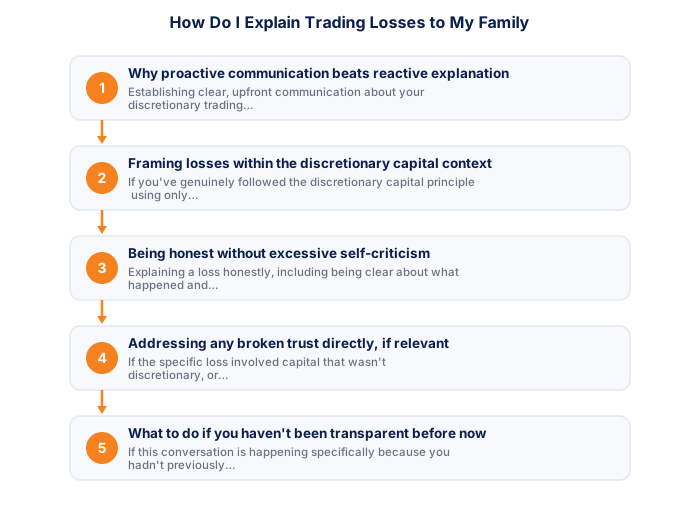
- Why proactive communication beats reactive explanation
- Framing losses within the discretionary capital context
- Being honest without excessive self-criticism
- Addressing any broken trust directly, if relevant
- What to do if you haven't been transparent before now
- Moving forward constructively after this conversation
1. Why proactive communication beats reactive explanation
Establishing clear, upfront communication about your discretionary trading capital and the genuine risk involved, before any specific loss occurs, means that if and when a loss does happen, it confirms an already-understood, accepted risk rather than introducing an unexpected, potentially trust-damaging surprise.
It's worth having this conversation even if it feels slightly awkward or premature before any actual loss has occurred, an upfront discussion during a calm, low-stakes moment is considerably easier for everyone involved than the same conversation happening reactively, under the emotional weight of an actual, already-realised loss.
2. Framing losses within the discretionary capital context
If you've genuinely followed the discretionary capital principle, using only money you could afford to lose entirely without affecting essential financial stability, explaining a specific loss within this already-established context ("this was money we agreed I could afford to lose, and unfortunately this particular outcome happened") is considerably more straightforward than if the loss involves capital that wasn't discretionary in the first place.
It's worth actually referencing this earlier agreement explicitly during the conversation, rather than assuming family members will automatically recall and apply it themselves, a simple, direct reminder, 'this is exactly the kind of outcome we discussed as a real possibility when I set this capital aside,' reinforces the shared understanding you established earlier.
- FSCA-regulated broker verified at fsca.co.za
- Demo account tested for minimum 60 days
- Trading plan written: entry, exits, position sizing
- Risk per trade defined (1-2% of account)
- Backup internet connection tested for load shedding
- Tax implications understood
3. Being honest without excessive self-criticism
Explaining a loss honestly, including being clear about what happened and why, without either minimising the loss inappropriately or descending into excessive self-criticism, supports a more constructive conversation than either extreme would produce.
It's worth practising this balanced tone before the actual conversation if you know you tend toward one extreme or the other, rehearsing a calm, factual explanation, neither dismissive nor self-flagellating, helps you approach the actual discussion with the composure it genuinely benefits from.
South African traders using leveraged instruments should build their risk management framework around the principle that no single trade should be capable of significantly damaging their overall trading capital. This means calculating position sizes before every trade rather than after entry, keeping stop-losses at levels determined by chart structure rather than by the amount you are willing to lose, and reviewing your risk per trade ratio regularly as your account grows or shrinks.
4. Addressing any broken trust directly, if relevant
If the specific loss involved capital that wasn't genuinely discretionary, or if you hadn't been fully transparent about your trading activity beforehand, directly and honestly acknowledging this breach of the trust and transparency as important within shared financial relationships, rather than minimising or avoiding this specific issue, is a necessary, if difficult, part of addressing the situation.
It's worth acknowledging this directly and without excessive defensiveness if it genuinely applies to your situation, a straightforward, honest acknowledgment tends to rebuild trust more effectively than minimising what happened or shifting focus away from the actual breach of transparency involved.
| Item | Detail |
|---|---|
| Regulator | FSCA, fsca.co.za |
| Exchange control | SARB, resbank.co.za |
| Tax authority | SARS, sars.gov.za |
| JSE hours | 09:00-17:00 SAST Mon-Fri |
| Best forex session | 15:00-17:00 SAST |
| CGT annual exclusion | R50,000 (individuals) |
5. What to do if you haven't been transparent before now
If this conversation is happening specifically because you hadn't previously been transparent about your trading activity, using this as a turning point to establish the kind of ongoing, honest communication going forward, rather than treating it as an isolated, one-time disclosure, supports rebuilding trust more genuinely over time.
It's worth treating this as a genuine, fresh starting point rather than something to feel permanently defined by, family relationships can absorb and move past this kind of honest reckoning, particularly when it's followed by consistent, demonstrated transparency going forward rather than a one-time apology alone.
6. Moving forward constructively after this conversation
After this conversation, jointly revisiting your trading capital allocation and communication practices going forward, helps ensure future trading activity, whether profitable or not, operates within a framework both you and your family genuinely understand and have agreed to, reducing the likelihood of needing a similarly difficult conversation again in future.
Disclosure only after a loss tends to feel like a surprise.
Establishing clear, upfront communication about your discretionary trading capital before any loss occurs tends to land far better than disclosure only after the fact.
★ Why It Matters
Worth preparing in advance rather than improvising in the moment: a specific number, the maximum you could lose given your current position sizing, that you've already shared with your family before any loss happens removes most of the difficulty from this conversation when it eventually comes up.
✕ Common mistakes
- Waiting until after a loss to discuss risk for the first time. A number shared in advance is much easier to discuss than one revealed after the fact.
- Downplaying the real possibility of loss before it happens. This makes any actual loss feel like a broken promise rather than an accepted risk.
- Not having a specific Rand figure agreed upon beforehand. Vague risk discussions are harder to have calmly than concrete numbers.
- Treating the conversation as a one-time event rather than ongoing. Family comfort with trading risk benefits from periodic, honest updates.
Will my stop fill at the price I set?
No. Once touched, the stop becomes a market order, so a gap or thin liquidity fills it at whatever is available. A guaranteed stop fills at the level for a fee. stop-loss against mental stop covers it in full.
Should I move my stop to breakeven?
Moving a stop to breakeven caps the downside and raises the chance of being stopped out by noise before the move completes. Stop-loss against mental stop sets out when each is right.
Key Takeaways
- Honest, proactive communication about discretionary capital and realistic risk before losses occur prevents the harder conversation of explaining them after.
- Honest, proactive communication about your discretionary trading capital and realistic risk, before losses occur, prevents the considerably harder conversation of explaining losses after the fact.
- Why proactive communication beats reactive explanation.
- Framing losses within the discretionary capital context.
- Being honest without excessive self-criticism.
Frequently asked follow-up questions
Should I avoid telling my family about smaller losses?
Establishing ongoing transparency about your trading activity generally tends to support healthier family financial relationships than selectively disclosing only some outcomes.
What if my family reacts very negatively despite my honesty?
This is a difficult, personal situation; continuing honest communication and potentially involving a broader conversation about financial goals and boundaries, may help over time.
Does this conversation get easier with experience?
Many traders find that establishing clear upfront communication makes individual loss conversations progressively less fraught over time, since the underlying risk and context are already understood.
