i Short answer
Balancing trading with family works best through clear, predetermined time boundaries, choosing a style that genuinely matches your available time, and communicating openly with family about its demands.
📋 ON THIS PAGE
- Setting explicit, predetermined time boundaries
- Choosing a trading style compatible with family life
- The importance of open communication with family
- Avoiding trading as an emotional escape from other pressures
- Financial transparency about trading within relationships
- Recognising when trading is consuming too much of your life
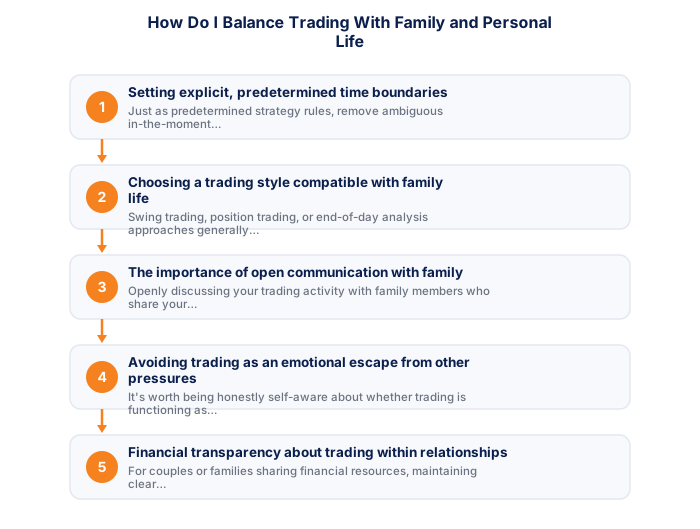
1. Setting explicit, predetermined time boundaries
Just as predetermined strategy rules, remove ambiguous in-the-moment decisions during actual trading, predetermined time boundaries around when and how long you'll engage with trading-related activity each day or week remove the need for ongoing, potentially contentious negotiation about trading's place in your daily schedule. Deciding in advance, for example, a specific 30-minute evening window for analysis and order placement, and genuinely respecting this boundary consistently supports both your trading discipline and your family relationships.
This explicit boundary-setting also helps prevent the kind of compulsive, unstructured checking behaviour, which can otherwise gradually encroach on family time in ways that feel individually small but accumulate into genuine relationship strain over time.
It's worth communicating these boundaries explicitly to family members too, not just holding them privately, since a boundary others don't know about can't help them plan around your trading window, while a shared, mutually understood schedule reduces the friction of trading feeling like an unpredictable intrusion into family time.
2. Choosing a trading style genuinely compatible with family life
Swing trading, position trading, or end-of-day analysis approaches generally integrate more easily alongside family commitments than day trading or scalping, which demand sustained, continuous attention that's difficult to reconcile with the unpredictable, attention-demanding nature of family life, particularly with young children or other significant caregiving responsibilities.
Being honest with yourself about which trading styles fit your actual family circumstances, rather than aspiring to a style that sounds appealing in the abstract but doesn't realistically fit your actual available time and attention, supports a more sustainable, lower-conflict approach to combining trading with family life.
- FSCA-regulated broker verified at fsca.co.za
- Demo account tested for minimum 60 days
- Trading plan written: entry, exits, position sizing
- Risk per trade defined (1-2% of account)
- Backup internet connection tested for load shedding
- Tax implications understood
It's worth revisiting this choice honestly if your family circumstances change significantly, a trading style that fit well during one life stage, before children, during a quieter work period, may need genuine reconsideration once circumstances shift, rather than assuming an earlier choice remains appropriate indefinitely regardless of changing context.
3. The importance of open communication with family
Openly discussing your trading activity with family members who share your household or financial life, including the time commitment involved, the genuinely discretionary nature of the capital being risked (), and realistic expectations about outcomes, helps prevent misunderstandings or conflict that can arise from family members feeling uninformed or surprised by either the time trading consumes or its financial outcomes.
This transparency is particularly important given the genuine risk of financial loss, family members affected by shared finances deserve honest, ongoing communication about this risk, rather than discovering trading losses only after they've already significantly affected shared financial circumstances.
It's worth making this an ongoing conversation rather than a single, one-time disclosure, checking in periodically about how the current arrangement is actually working for everyone involved keeps communication genuinely current, rather than relying on an understanding established once and potentially outdated by how things have actually unfolded since.
4. Avoiding trading as an emotional escape from other pressures
It's worth being honestly self-aware about whether trading is functioning as a genuine, deliberate financial activity within your life, or whether it's increasingly serving as an emotional escape from other life stresses or relationship difficulties, a pattern that, if present, tends to encourage exactly the kind of excessive, undisciplined engagement, while simultaneously avoiding rather than addressing whatever underlying personal or relationship issues are actually driving this escapist pattern.
If you notice this pattern in your own engagement with trading, addressing the underlying issue directly, whether through open conversation with family, or seeking broader support if needed, is considerably more constructive than allowing trading to continue serving this escapist function, which tends to harm both your trading discipline and your family relationships simultaneously.
| Item | Detail |
|---|---|
| Regulator | FSCA, fsca.co.za |
| Exchange control | SARB, resbank.co.za |
| Tax authority | SARS, sars.gov.za |
| JSE hours | 09:00-17:00 SAST Mon-Fri |
| Best forex session | 15:00-17:00 SAST |
| CGT annual exclusion | R50,000 (individuals) |
5. Financial transparency about trading within relationships
For couples or families sharing financial resources, maintaining clear transparency about which specific funds are allocated to trading, how this allocation was decided jointly or with mutual awareness, and how trading outcomes are tracked and communicated, supports trust and reduces the potential for trading-related financial surprises to become a source of relationship conflict.
This connects directly to the discretionary capital discussion elsewhere, capital allocation decisions affecting shared household finances benefit from being made transparently and, where appropriate, collaboratively, rather than unilaterally and without the awareness of others who share in the broader financial consequences of trading outcomes.
6. Recognising when trading is consuming too much of your life
Signs that trading may be consuming a disproportionate, unhealthy share of your time and attention relative to family and personal life include consistently exceeding your own predetermined time boundaries, family members expressing genuine concern about your trading-related time commitment or behaviour, or your own sense that trading-related thoughts and checking behaviour are intruding into time genuinely meant for family or personal activities beyond what feels healthy or sustainable.
If you recognise these signs, revisiting and more strictly enforcing your time boundaries, openly discussing the situation with family, and potentially reducing your trading activity or scale temporarily while you rebuild healthier boundaries are all reasonable, constructive responses, recognising this pattern honestly and addressing it directly reflects the same kind of self-aware discipline.
Swing trading, position trading, or end-of-day analysis approaches generally integrate more easily alongside family life than day trading's demand for continuous attention.
★ Why It Matters
One thing worth trying concretely: block out your trading review time on a shared family calendar the same way you would a work meeting, treating it as informally flexible tends to be exactly what erodes the boundary over a few weeks.
✕ Common mistakes
- Not communicating your trading commitment clearly to family. Vague boundaries create avoidable friction.
- Letting screen time bleed into family time without limits. Defined boundaries protect both trading focus and relationships.
- Assuming family will adapt without an explicit conversation. Proactive discussion prevents most disagreements before they start.
Key Takeaways
- Set clear time boundaries, choose a trading style matching your actual available time, and communicate openly with family about your trading activity.
- Balancing trading with family works best through clear, predetermined time boundaries, choosing a style that genuinely matches your available time, and communicating openly with family about its demands.
- Setting explicit, predetermined time boundaries.
- Choosing a trading style genuinely compatible with family life.
- The importance of open communication with family.
See also: Can I Trade Forex with a Full-Time Job? and How Much of My Savings Should I Risk Trading?.
Frequently asked follow-up questions
Should my partner be involved in my trading decisions?
This depends on your specific relationship and shared financial arrangements, though general transparency about capital allocation and outcomes is broadly advisable given the genuine financial risk involved.
Is it normal to feel guilty about time spent trading?
Some traders do experience this, particularly if time boundaries aren't clearly established; addressing this through the explicit boundary-setting discussed above is generally more constructive than ignoring the feeling.
Can trading ever genuinely benefit family financial goals?
Yes, if approached with appropriate discretionary capital, and realistic expectations, trading can be one component of broader family financial planning, though it shouldn't be relied upon as a primary or guaranteed income source given the genuine risks involved.
