i Short answer
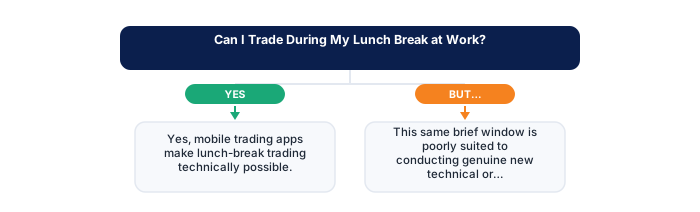
Yes, mobile trading apps make lunch-break trading technically possible. However, the limited time and divided attention make this window better suited to checking positions than doing fresh analysis.
📋 ON THIS PAGE
1. What a lunch break window genuinely supports well
A 30-60 minute lunch break is enough time to check whether a stop-loss or take-profit has triggered, confirm your open positions are behaving as expected, review any pending orders, and do a quick scan of any relevant news that came out during the morning. These are maintenance tasks, not analysis tasks, and a lunch break handles them well.
For South African traders specifically, a typical midday break falls in a relatively quiet stretch between forex sessions: the Asian session has closed and the London session is approaching but hasn't fully hit its midday stride yet. Significant intraday volatility on major pairs tends to be lower in this window than during the London or New York opens, which makes it a more forgiving period for brief, focused checks.
It's worth treating this window as genuinely predetermined rather than open-ended. Deciding in advance exactly what you'll check, open positions, any pending orders, economic calendar for the afternoon, means your lunch break review takes five to ten focused minutes rather than escalating into a full trading session. The time constraint is a feature, not a bug.
The instruments most compatible with a lunch break monitoring approach are those you opened during earlier planning sessions based on fully developed analysis. Positions that have clear, pre-set stop levels and a defined rationale require less real-time monitoring than reactive, intraday setups, making them more suitable for a working trader's schedule.
2. What it's poorly suited for specifically
What a lunch break is poorly suited for is fresh analysis from scratch. Time pressure and divided attention produce lower-quality decisions than dedicated, focused analysis sessions. Opening new positions based on charts you're reviewing for the first time under a 45-minute deadline, while mentally managing the rest of your work day, is a reliable recipe for rushed entries.
This is worth recognising as a general pattern that extends beyond lunch breaks specifically: any trading decision made under genuine time pressure and divided attention, whether from work, family commitments, or other demands, tends to be lower quality than the same decision made with adequate time and focus. The medium matters less than the attention quality.
- FSCA-regulated broker verified at fsca.co.za
- Demo account tested for minimum 60 days
- Trading plan written: entry, exits, position sizing
- Risk per trade defined (1-2% of account)
- Backup internet connection tested for load shedding
- Tax implications understood
The particular risk in a lunch break is that markets may appear to be doing something interesting or moving in a way that creates urgency, but the time available to properly evaluate whether that movement represents a genuine signal or noise is insufficient. Acting on apparent movement without proper evaluation is the trading error that a lunch break most readily invites.
Day trading and scalping strategies that require continuous, real-time attention and fast execution are definitively incompatible with a lunch break approach. These styles depend on the ability to monitor, decide, and act within seconds or minutes, a constraint that cannot coexist with other midday work demands and the brief, bounded nature of a work break.
3. Setting up your morning so lunch becomes just a check-in
The most effective approach is doing your primary analysis and any planned new entries during a dedicated morning or evening session, then using lunch purely as a quick, predetermined check on positions already in place. This separates the analysis and decision work, which requires focused time, from the monitoring work, which genuinely can be done quickly.
This structure is worth protecting deliberately, since the convenience of having your phone available during lunch creates a subtle pressure to do more than a maintenance check. The boundary between 'a quick check' and 'an analysis session under time pressure' is easy to cross without noticing.
If your trading approach involves end-of-day chart analysis and swing positions that require minimal intraday attention, a lunch break fits naturally into your monitoring routine. If your approach requires frequent intraday decisions, the honest conclusion is probably that your work schedule and your trading style are in tension, and resolving that tension is worth addressing directly rather than working around.
Pre-setting alerts on your trading platform for levels that require action, stop moves, target approaches, margin threshold warnings, means your lunch check can be brief and systematic rather than open-ended. If no alerts have triggered, the check takes two minutes. If one has, you have a defined situation to respond to rather than a free-form assessment of where to go next.
4. The attention quality problem worth being honest about
Even a simple check-in suffers if you're eating, chatting with colleagues, or juggling other midday tasks at the same time. The quality of attention you bring to reviewing open positions matters for the accuracy of what you observe and the quality of any decisions that follow.
A useful honesty check: if you genuinely can't give even 30 seconds of focused attention to confirming your positions, with your eyes on the screen and nothing else competing for your concentration, that's a signal to skip the check entirely and rely on the stops you've already set. A half-focused review is often worse than no review at all, because it creates a false sense of having checked without the actual benefit.
| Item | Detail |
|---|---|
| Regulator | FSCA, fsca.co.za |
| Exchange control | SARB, resbank.co.za |
| Tax authority | SARS, sars.gov.za |
| JSE hours | 09:00-17:00 SAST Mon-Fri |
| Best forex session | 15:00-17:00 SAST |
| CGT annual exclusion | R50,000 (individuals) |
The attention quality problem is particularly relevant for position management decisions, deciding whether to move a stop, add to a position, or take partial profits. These decisions benefit from genuine analytical focus and a clear head. Making them while partially distracted during a lunch break, under time pressure, typically produces inferior outcomes compared to making them during a dedicated session with adequate time.
Developing an honest personal awareness of when your attention is genuinely adequate for trading decisions, versus when you're nominally present but effectively distracted, is one of the more underrated aspects of trading discipline. The traders who manage work-life-trading combinations well tend to be those who are willing to skip a check entirely rather than conduct a poor-quality one.
5. Workplace discretion considerations worth keeping in mind
Whether or not your employer knows you trade, keeping brief lunch checks discreet makes sense from a professional standpoint. Looking visibly preoccupied or distracted during the working day, even briefly, creates perceptions that aren't worth managing. A quick check on your phone is indistinguishable from any other personal activity; a full laptop session with charts is more conspicuous.
This discretion is worth extending to how you discuss trading with colleagues, if you choose to mention it at all. Trading is a personal financial activity, and keeping it separate from your professional identity tends to serve both dimensions better than mixing them. Colleagues who know you trade actively sometimes have a tendency to ask questions or offer opinions at inconvenient times, keeping the activity private avoids that.
There's also a psychological dimension to workplace discretion. Bringing your trading mindset into your work environment, checking positions between meetings, thinking about trades during calls, creates a mental blending of contexts that tends to reduce quality in both directions. Maintaining a clear separation, where work time is genuinely work time and trading time is genuinely trading time, tends to make both more effective.
6. A realistic, sustainable lunch break routine
Treat the lunch break as a brief maintenance window within your broader daily routine: quick, focused, and bounded. Don't try to squeeze full trading sessions into it. A sustainable routine might look like: open your trading app, check each open position against your original plan, confirm stops are correctly placed, note anything requiring attention in your journal for the evening review, close the app.
The risk worth flagging here isn't the time constraint itself, it's the temptation to manage a position you opened earlier based on a lunchtime market move that looks significant in the moment. Price action always looks more significant in real time than it does in retrospect on a completed candle. Reacting to what a position is doing right now, rather than what your original analysis said about it, is the decision pattern most likely to produce suboptimal outcomes from a lunch break trading habit.
A useful routine to establish alongside the lunch check: a brief end-of-day review session, even 15 minutes, where you assess the day's positions with full context rather than the compressed, partial context of a lunch break. The lunch check maintains operational continuity; the end-of-day review provides the analytical depth that good position management requires.
✕ Common mistakes
- Managing an existing position under time pressure. Closing a trade because your break is ending is a worse reason than any your strategy provides.
- Opening new positions without enough time to monitor them. A rushed entry during a short window often skips proper analysis.
- Checking charts compulsively throughout the workday. This can quietly increase trading frequency beyond what your strategy calls for.
- Assuming a lunch break is enough time for fresh analysis. It's usually better suited to checking existing positions only.
Key Takeaways
- Yes, mobile trading apps make lunch-break trading possible, though limited time and attention make this better suited to checking positions than active analysis.
- Yes, mobile trading apps make lunch-break trading technically possible.
- However, the limited time and divided attention make this window better suited to checking positions than doing fresh analysis.
- What a lunch break window genuinely supports well.
- What it's poorly suited for specifically.
Frequently asked follow-up questions
Is it risky to place new trades during a lunch break?
This carries more risk than during your dedicated analysis sessions, given the rushed, divided attention involved, though predetermined orders set earlier reduce the need for active new decisions during this window.
Should I avoid checking trading apps at work entirely?
This is a personal choice depending on your specific workplace culture and your own ability to maintain discretion and focus.
Does a 30-minute lunch break realistically allow any trading at all?
It allows brief checking and predetermined order management, though genuine new analysis generally requires more extended, focused sessions.
